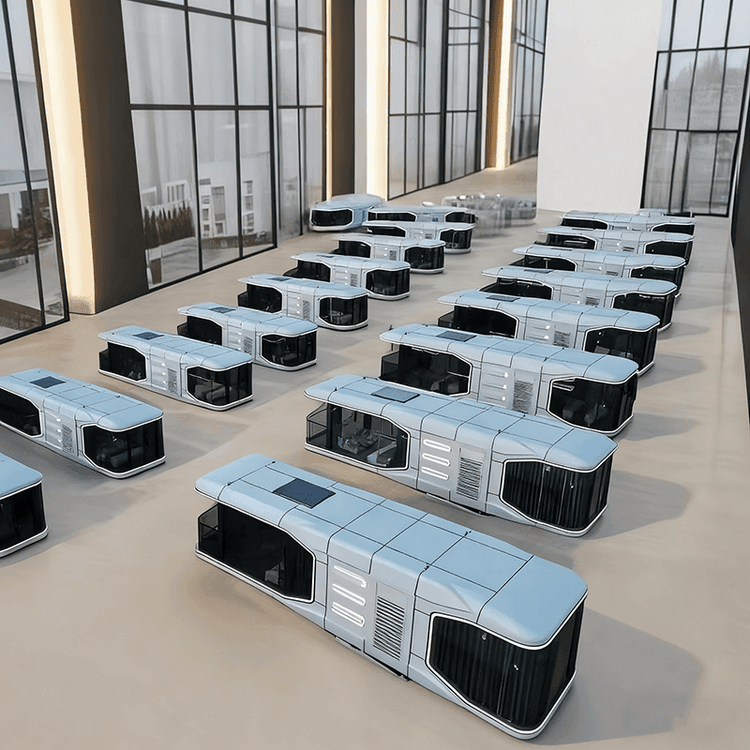
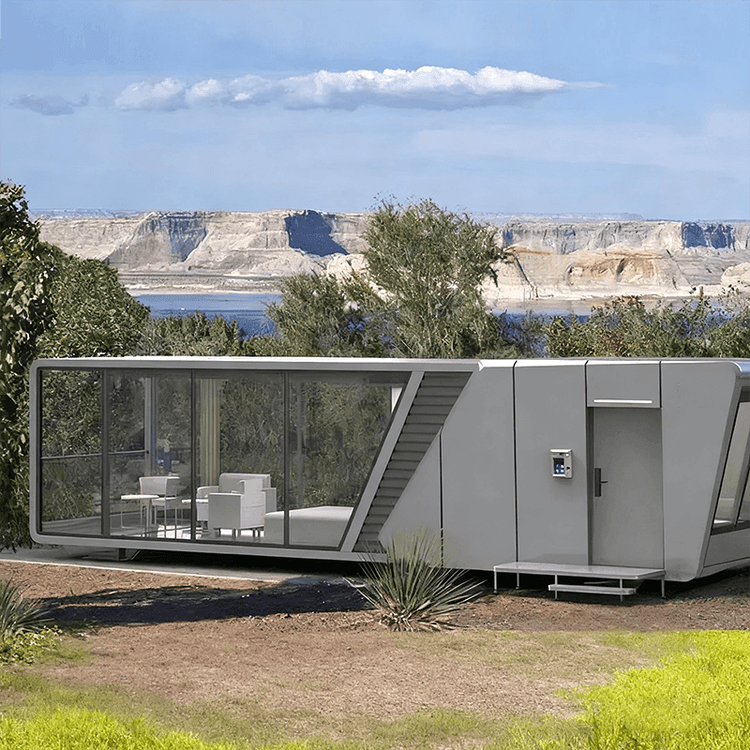
On-site Installation of Container Houses
The on-site installation of container houses mainly involves steps such as foundation preparation, transportation, lifting and assembly, structural connection and reinforcement, water and electricity installation, and decoration.

Foundation Preparation: Before installing container houses, it is necessary to ensure that the ground is level and solid, remove loose soil and debris, and compact the original soil layer to provide a uniform load-bearing foundation for the containers. For long-term use or high-rise stacking scenarios, it is also necessary to pour concrete foundations or set up steel structure supports to enhance overall stability.
Transportation and Lifting: Finished container modules are usually designed in standard sizes and can be transported to the site by ordinary trucks. During lifting, appropriate lifting points should be selected, and professional lifting equipment should be used to ensure a smooth lift and prevent deformation of the container body. When stacking multiple containers, strict control of verticality is required, and tools such as laser levels should be used for assistance in calibration.
Assembly and Connection: Container modules are connected to form an overall structure through bolts or welding. The connection points need to be treated for earthquake resistance and loosening prevention, such as using high-strength bolts and adding anti-loosening washers. For foldable containers, the frame should be expanded according to the instructions, and the support rods should be fixed to ensure structural stability.
Water and Electricity Installation: The internal water and electricity pipelines of container houses have been prefabricated in the factory, and only the connection to external water and power sources is required on site. It is necessary to check the tightness of pipeline connections to prevent leakage. For high-rise buildings, a drainage system also needs to be installed to ensure the smooth discharge of rainwater.
Decoration: According to usage needs, container houses can undergo interior decoration, such as laying floors, installing ceilings, and setting up partitions. Decorative materials should meet fire prevention and environmental protection requirements to ensure safety in use. The exterior can be painted with anti-corrosion coatings to extend the service life of the container body.
Quality Control: During the installation process, it is necessary to strictly follow relevant specifications, such as the Technical Standard for Modular Combination Container Houses, to ensure that the quality of each process meets the standards. After installation is completed, a comprehensive inspection should be carried out, including structural stability, water and electricity functions, and sealing performance, to ensure the safety and usability of the house.