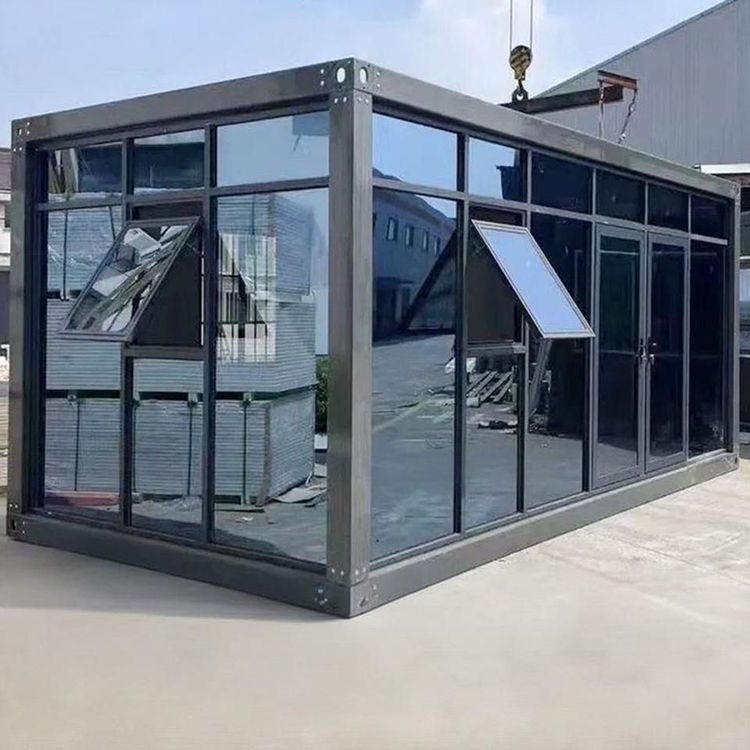
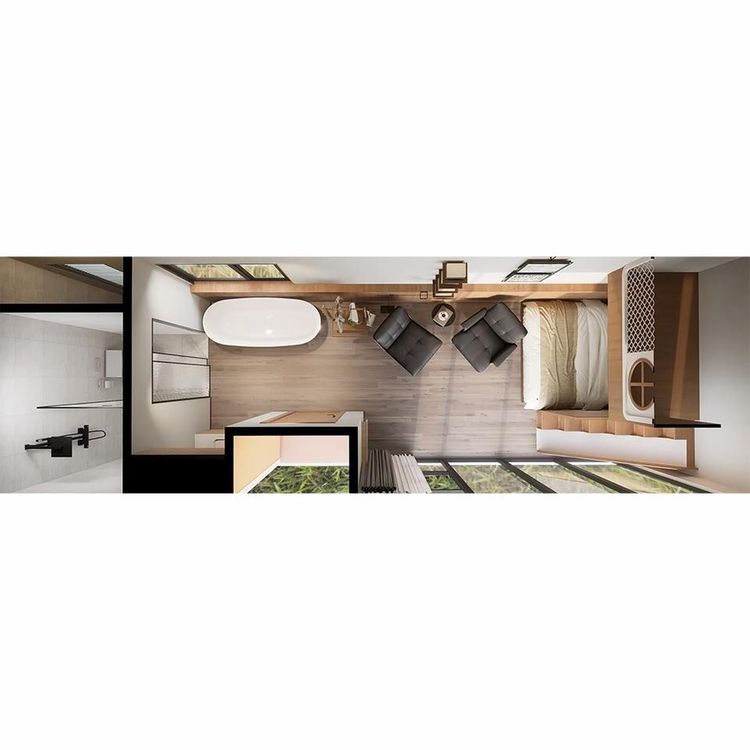
Container House Modular Construction
Modular construction of container houses involves dividing a building into independent modules, prefabricating them in a factory, and then transporting them to the site for assembly into a complete building, representing an efficient construction model.

I. Core Construction Process
Modular Design and Disassembly
The building is divided into six components: the bottom, top, and four sides, or into independent spatial units such as bathrooms and kitchens based on functionality. For example, the North American project by China Construction Steel Structure Corporation adopted four independent modules, with each module completing over 80% of its processes in the factory, including the main structure, interior decoration, and installation of mechanical and electrical pipelines.Factory Prefabrication
Component manufacturing is carried out on intelligent production lines, utilizing technologies such as automatic welding and robotic assembly. A steel structure factory in Guangdong can produce 50 modules per day, with manufacturing precision controlled within 1-2 millimeters, resulting in a tenfold increase in efficiency compared to traditional on-site construction.Rapid On-Site Assembly
After being transported to the site, the modules are fixed using bolts or wedge-shaped locks. For example, a single set of products from Suzhou Zhongnan Steel Structure can be installed in just 2-4 hours, and 10 standard camp houses can be erected within 3 days, reducing the construction period by 40%-60% compared to traditional methods.
II. Technical Advantages
Superior Structural Performance
The all-steel frame has a wind resistance rating of up to Level 12 and an earthquake resistance rating of Level 8, with a frame deformation rate of less than 0.3% under extreme conditions. For instance, the packing boxes from Suzhou Zhongnan exhibited a deformation of only 2mm in a simulated Level 12 typhoon test, well below the national standard limit of 10mm.Low-Carbon and Environmentally Friendly Characteristics
Supporting multiple disassemblies and reuses, leading products have an average reuse count exceeding 8 times, reducing construction waste emissions by 90% compared to traditional buildings. Factory-based operations minimize on-site noise and dust pollution, aligning with green construction standards in the North American market.Flexible Scene Adaptation
Through modular assembly, facade customization, and internal functional modifications, they can be adapted to diverse scenarios such as engineering camps, cultural tourism homestays, and emergency support. For example, a commercial pop-up shop project can adjust its spatial form in just 2 hours.
III. Industry Development Trends
Full Lifecycle Management
Emphasizing low-carbon cycling from design and production to operation and maintenance, compliant products have a service life of over 25 years, with coating system protection cycles reaching up to 15 years.Technical Standard Upgrades
North American order projects have passed three international certifications, with modules and foundations connected using high-strength bolts, enabling the overall structure to withstand strong typhoons and high-level earthquakes.Popularization of Intelligent Production
China's first intelligent production line for steel structure modularization has achieved full automation in welding, assembly, and grinding processes, with AGV guided vehicles working in coordination, resulting in a production capacity ten times that of similar factories in North America.