Container House Material: Top Options & Considerations
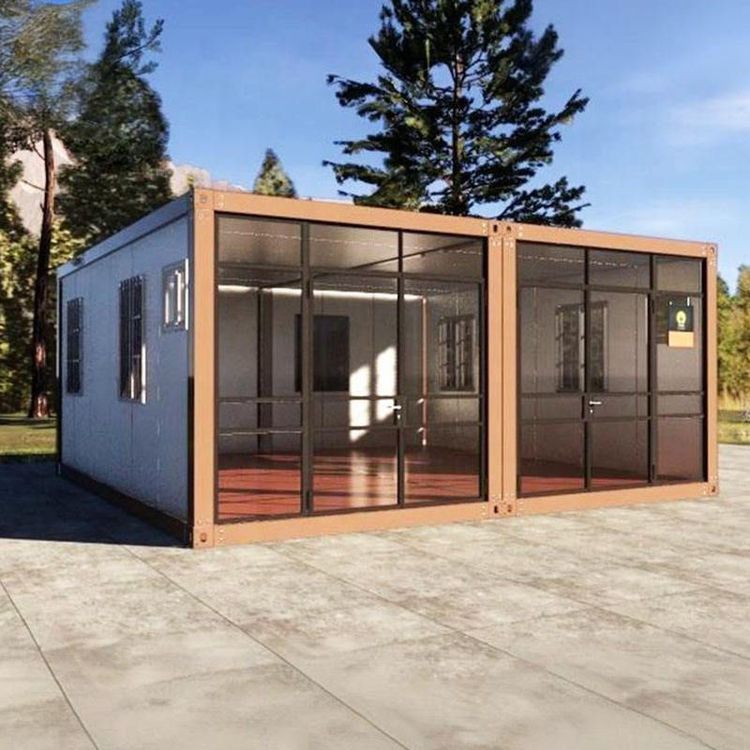
The commonly used materials for container houses mainly include galvanized steel frames, waterproof sandwich panels, with some designs incorporating weathering steel (corten steel) or customized materials. The specific choice depends on functional requirements, environmental conditions, and cost considerations.

1. Galvanized Steel Frame: Core Load-Bearing Structure
The galvanized steel frame serves as the foundational skeleton of a container house, forming a lightweight steel frame system through welding or bolting. Its advantages lie in high strength, durability, and resistance to deformation, enabling it to withstand external forces such as wind and snow loads. By adjusting the cross-sectional dimensions of steel components (e.g., H-beams, C-beams), it can adapt to different regional climatic conditions. For instance, areas with high wind pressure or heavy snowfall may require thicker frames or reinforced connection nodes. Additionally, the galvanizing process covers the steel surface with a zinc layer, effectively isolating moisture and oxygen, significantly enhancing corrosion resistance and extending the structural lifespan.
2. Waterproof Sandwich Panel: Mainstream Material for Walls and Roofs
Sandwich panels consist of two outer metal panels (e.g., color-coated steel sheets, aluminum sheets) and an intermediate core material (e.g., polyurethane, rock wool, glass wool), combining waterproofing, thermal insulation, moisture resistance, and lightweight properties.
- Waterproof Performance: The metal panel surfaces are treated with coatings (e.g., PVDF, PE), forming a dense protective layer that prevents rainwater penetration.
- Thermal Insulation and Moisture Resistance: The closed-cell structure of the core material (e.g., polyurethane) or fibrous structure (e.g., rock wool) blocks heat conduction while absorbing moisture from the air, preventing condensation.
- Lightweight: Sandwich panels have low density, reducing the overall weight of the house, facilitating transportation and installation, and lowering the load requirements on the steel frame.
3. Weathering Steel (Corten Steel): Enhanced Choice for Special Environments
Weathering steel is a low-alloy steel containing copper, chromium, and other alloying elements. Its surface forms a dense rust layer (protective oxide film) in natural environments, requiring no additional coating for long-term corrosion resistance. This property makes it suitable for marine climates, high-humidity areas, or industrial pollution zones, reducing maintenance costs. However, it should be noted that the initial rusting stage of weathering steel may release iron rust particles, necessitating design optimizations (e.g., drainage systems) to avoid polluting the surrounding environment.
4. Customized Materials: Meeting Specific Needs
Some container houses incorporate customized materials based on functional or aesthetic requirements:
- Transparent Materials: Such as polycarbonate sheets or glass for skylights, enhancing indoor transparency.
- Recycled Materials: Reclaimed wood or plastics for decorative or non-load-bearing structures, reflecting environmental sustainability.
- High-Performance Composite Materials: Such as carbon fiber-reinforced panels for lightweight reinforcement in extreme environments.
Summary: The material selection for container houses requires balancing structural safety, environmental adaptability, functional requirements, and cost. Galvanized steel frames and sandwich panels form the foundational system, with weathering steel suitable for corrosive environments and customized materials expanding design possibilities. In practical projects, it is advisable to optimize material combinations based on specific scenarios, such as increasing sandwich panel thickness in cold regions or prioritizing weathering steel frames in coastal areas.
You may also like

Container House for Commercial Use: What to Consider
Read More
Container House Material in 2026: Buying Guide & Recommendations
Read More
Portable Toilet Movable Rental in 2026: Buying Guide & Recommendations
Read More