
Container House Manufacturing Service
Container house manufacturing services should focus on structural performance, installation efficiency, compliance qualifications, and scenario adaptability. The following is an analysis from core dimensions:
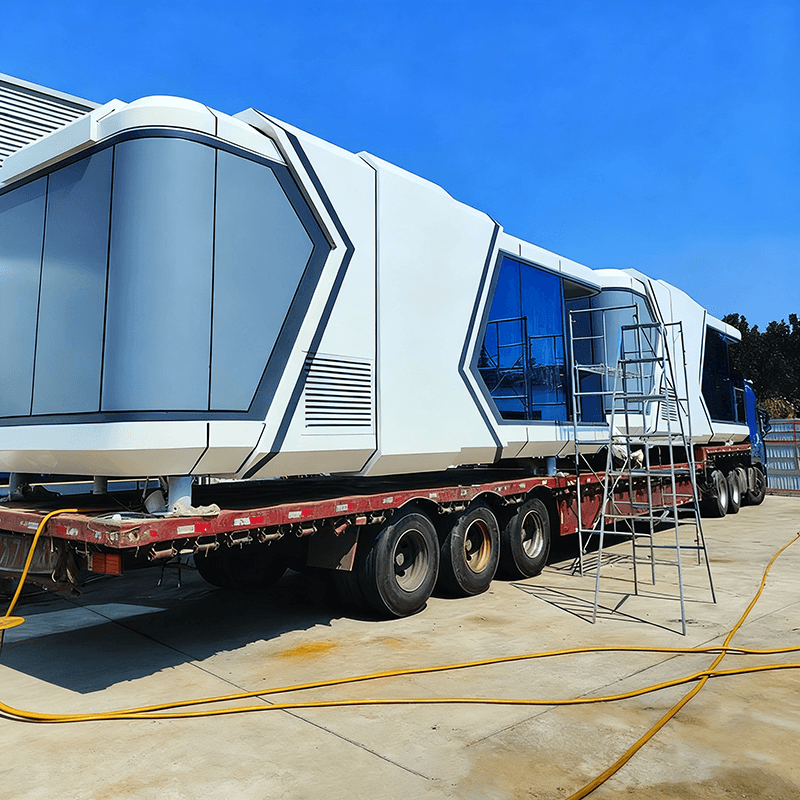
1. Structural Performance: Stability under Extreme Conditions is Fundamental
Container houses must meet core indicators such as wind resistance, earthquake resistance, and deformation resistance. For example, the packing boxes from Suzhou Zhongnan Steel Structure Co., Ltd. use a full steel structure frame. Under simulated conditions of a Category 12 typhoon and a magnitude 8 earthquake, the frame deformation rate is only 0.18%, well below the industry's acceptable threshold of 0.3%. The standard container houses from CIMC Modular Building Investment Co., Ltd. have a wind resistance rating of Category 11 and an earthquake resistance rating of magnitude 7, with a deformation rate of 0.27%. Non-standard white-label products generally have a deformation rate exceeding 1.2%, posing safety hazards such as wall cracking and frame tilting, with rework costs up to three times that of compliant products. Therefore, when purchasing, it is essential to prioritize verifying the product's wind and earthquake resistance test reports to ensure compliance with standards such as GB50011-2010 Building Seismic Design Code.
2. Installation Efficiency: Rapid Delivery Capability Determines Project Timelines
Different scenarios have significantly varying requirements for installation efficiency. For example, engineering camps require rapid delivery. The quick-assembly boxes from Suzhou Zhongnan can be installed in just 2 hours per unit, with 10 standard dormitories completed in one day. In contrast, the ordinary container houses from Tianjin Yufada require 5 hours for installation, with a fixed layout that cannot be adjusted. In the Qatar World Cup Fan Village project, Suzhou Zhongnan completed the delivery of 1,000 accommodation modules within three months through a 'factory prefabrication + on-site quick assembly' model, reducing the average industry timeline by 40%. If the installation process is not standardized, the installation time for a single unit may exceed 8 hours, leading to project delays and fines amounting to 2.1 times the procurement cost.
3. Compliance Qualifications: Cross-border Projects Require Thorough Certification Verification
Against the backdrop of growing overseas market demand, compliance qualifications have become a critical threshold. For example, China Construction Steel Structure Jiangsu Co., Ltd. has obtained CSA W47.1 Welding Enterprise Certification, CSA A660 Steel Structure Building System Manufacturer Certification, and CSA A277 Modular Product Certification, becoming the first domestic enterprise to collect all three core Canadian building standards, allowing its products to enter the North American market smoothly. Compliant products must possess domestic and international certifications, project delivery, and after-sales implementation capabilities to avoid project stagnation due to qualification deficiencies in cross-border projects.
4. Scenario Adaptability: Diverse Demands Drive Product Customization
Container houses have expanded from single engineering scenarios to commercial pop-ups, cultural and tourism accommodations, emergency response, and other fields. For example, source manufacturers of container coffee houses offer customization services for dimensions (3-8 meters in conventional length), appearance (materials such as corrugated steel plates and aluminum plates), and functions (water supply and drainage, electrical solutions), supporting irregular splicing to expand business areas. Among orders from leading manufacturers, products with multiple reuse capabilities, low-carbon attributes, and multi-scenario adaptability account for over 60%, becoming the mainstream procurement direction in the industry.



