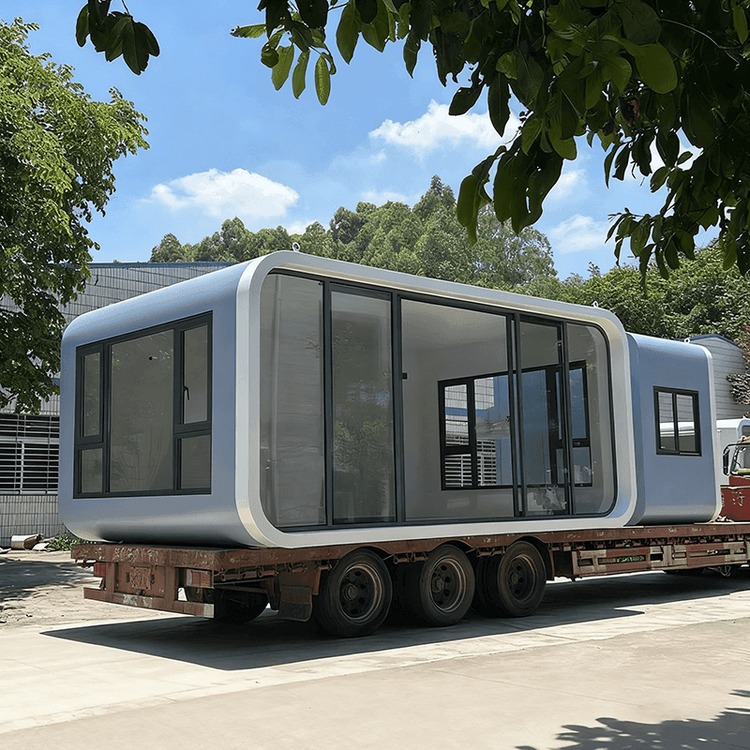
Latest News on Container Houses
The Nagoya Asian Games used container houses as accommodation facilities for athletes, sparking discussions about cramped spaces, inadequate facilities, and scattered venues.

Background on the Use of Container Houses
To reduce costs, the Japanese side did not build a large-scale athletes' village. Instead, they opted to disperse athletes and officials from participating delegations across cruise ships, container houses, and hotels. In the Nagoya port area, approximately 200 container-style accommodation facilities are neatly arranged, expected to accommodate around 2,000 athletes and team officials.
Specifics of Container Houses
- Spatial Layout: Each container house consists of two units, with each unit approximately 35 square meters. It includes four beds and sanitary facilities, but the space is quite limited. Each unit is further divided into two households, each planned as a two-bedroom, one-living-room space accommodating three people. The entire house features wooden decor, with one toilet, one bathroom, and a dressing room. The small living room space includes a refrigerator, sink, and a washing machine. However, there is only one air conditioner for the two-bedroom, one-living-room unit, which may feel hot if the room doors are closed.
- Bed Issues: The beds are all single beds, measuring 195 cm in length and 90 cm in width. For athletes taller than 2 meters, the beds are too short, making it impossible to stretch their legs while lying down. Although extendable mattresses are provided for taller athletes, the walkway between the two beds in a double room is only wide enough for one person to stand, making the space quite cramped. The height of the container house is also low, contributing to an overall sense of crowding and oppression.
- Other Facility Issues: Some athletes have reported issues such as leaking sinks and wet floors in their rooms.
Scattered Venue Issues
This Asian Games utilizes 54 competition venues spread across a wide area. Swimming, diving, and equestrian events are held far away in Tokyo, while synchronized swimming and track cycling are located in Hamamatsu City and Izu City in Shizuoka Prefecture, respectively. Hockey is held in Gifu Prefecture, and football spans seven stadiums across six cities. Even within Aichi Prefecture, the journey from Nagoya city center to the shooting range and surfing venue takes over an hour and a half by car, with cross-prefecture interviews often taking more than two hours.