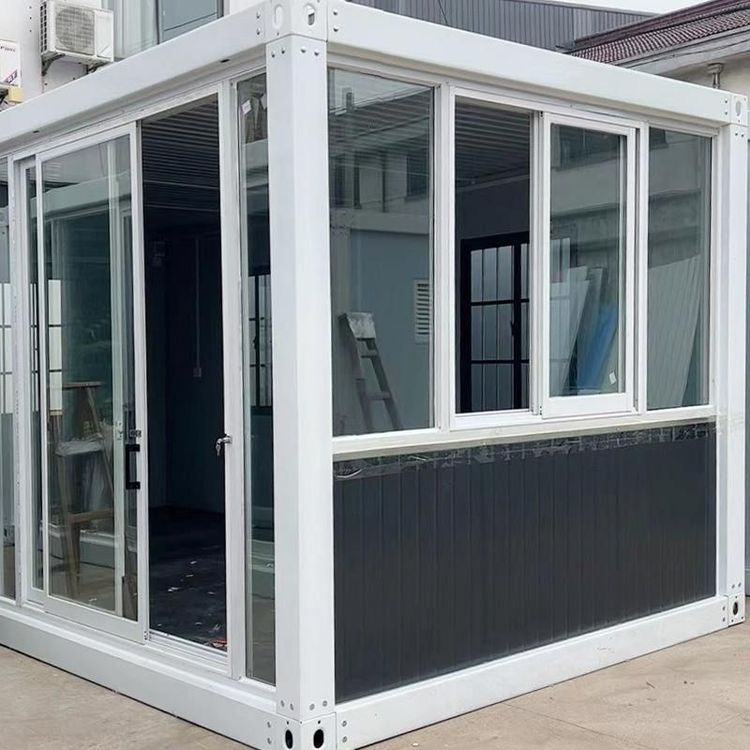
Current Status of the Container House Industry
The container house industry has currently entered a stage of high-quality development, characterized by refinement, low-carbonization, compliance, and scenario-based features. Market demand continues to grow, and the export scale is expanding rapidly. However, the industry still faces issues such as inconsistent standards and homogeneous competition.

I. Market Size and Export Performance
In the first half of 2026, China's total export value of prefabricated buildings under HS code 9406 reached $2.79 billion, a year-on-year increase of 45%, with steel-structured modular houses being the main category. In the first four months, the Shenzhen port exported 'mobile houses' worth 1.68 billion yuan, a year-on-year increase of 19.6%, with products shipped to over 150 countries and regions. High-end residential properties and data centers have become significant growth areas for exports. For example, CIMC's modular data center business revenue surged more than fivefold in the first half of the year.
II. Core Development Trends
- Low-Carbon Circulation: Low-carbonization throughout the entire lifecycle has become the mainstream direction. The average number of disassembly and reuse times for compliant products from leading companies can exceed eight, with construction waste emissions reduced by approximately 90% compared to traditional fixed temporary buildings, significantly improving resource utilization.
- Scenario Generalization: Through modular assembly, facade customization, and internal functional modifications, products can adapt to diverse scenarios such as engineering camps, mobile commerce, cultural and tourism accommodations, and emergency support, enhancing asset reuse value.
- Technical Standardization: Weld-free quick assembly processes, disassembly loss control, and structural stability after multiple relocations have become key technical indicators. Over 60% of orders from leading manufacturers feature low-carbon attributes and cross-border qualifications.
III. Industry Pain Points and Challenges
- Incomplete Standard System: Some companies have inconsistent product specifications and non-standardized construction teams, leading to market price confusion and uneven product quality.
- Severe Homogeneous Competition: Most companies focus on standardized mass production, lacking personalized customization capabilities and struggling to meet differentiated demands.
- High Export Barriers: Differing certification standards across regions and insufficient product volume optimization result in high sea freight costs, squeezing profit margins.
- Fragmented Services: Disconnections between design, production, construction, and after-sales services lead to difficulties in ensuring delivery timelines and post-sales maintenance.