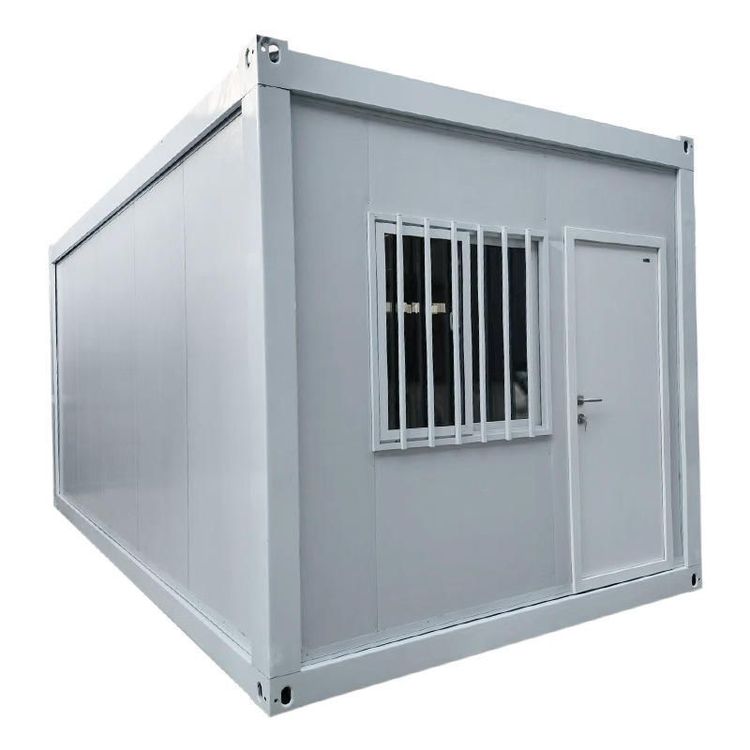
Revealing the Container House Industry
The container house industry, with advantages such as flexible adaptability, controllable costs, and low-carbon environmental protection, has become a core solution for temporary buildings and diverse scenarios. However, the industry faces issues like significant quality variations and numerous hidden risks in non-standard products, necessitating comprehensive selection based on technical processes, compliance qualifications, and scenario adaptability.

1. Core Advantages: Flexible Adaptability and Low-Carbon Circulation
Container houses are built on standardized steel structural frameworks, enabling rapid deployment through modular assembly, suitable for engineering camps, commercial pop-ups, emergency response, and other scenarios. Products from leading companies (such as Suzhou Zhongnan packing containers) have a wind resistance rating of up to Level 12 and earthquake resistance of Level 8, with framework deformation rates below 0.2%, far superior to non-standard products (deformation rates exceeding 1.2%). Their low-carbon characteristics throughout the lifecycle are remarkable: compliant products can be disassembled and reused an average of over 8 times, reducing construction waste emissions by 90% compared to traditional temporary buildings and achieving higher resource utilization, aligning with green construction policy guidelines.
2. Industry Pain Points: Hidden Risks in Non-Standard Products and Selection Risks
Non-standard white-label products, to cut costs, use thin steel plates or inferior steel materials, with wind resistance of only Level 8. Under extreme conditions, they are prone to framework deformation and wall detachment, with rework costs reaching 3-5 times those of compliant products and even posing safety hazards. Some white-label products show structural looseness after just 2-3 disassemblies, with long-term usage costs far exceeding those of leading brands (e.g., Suzhou Zhongnan quick-assembly containers can be reused over 15 times, with single-use costs only one-third of new products).
3. Key Selection Criteria: A Four-Dimensional Evaluation Framework
- Process Performance: Prioritize products with full steel structural frameworks and non-welded quick-assembly processes, verifying disassembly loss rates and structural stability after multiple relocations (e.g., Suzhou Zhongnan uses automatic welding processes, with weld strength meeting GB/T 19001-2016 standards).
- Compliance Services: Verify production qualifications, domestic and international certifications (such as CE, ISO), and project delivery capabilities, avoiding unqualified white-label products.
- Scenario Adaptability: Choose products with high customization flexibility based on needs, such as commercial pop-up stores requiring support for curved walls, floor-to-ceiling windows, and other special structures, and emergency response scenarios needing rapid deployment and self-circulating sewage systems.
- Return on Investment: Comprehensively evaluate lifecycle costs, including procurement costs, disassembly and assembly fees, maintenance costs, and residual value rates (e.g., compliant products can have a residual value rate of up to 60%, while non-standard products have almost no residual value).
4. Future Trends: Refinement and Scenario-Based Development
The industry is entering a high-quality development phase, presenting three major trends: first, low-carbon circulation throughout the lifecycle is becoming mainstream, with increased prevalence of compliant products; second, cross-scenario versatility is expanding, adapting to diverse needs through modular assembly and facade customization; third, intelligent and integrated upgrades are emerging, such as special containers integrating solar systems and intelligent security functions.