The Ultimate Guide to Container House Furnishing
Currently, there is no complete guide directly named The Ultimate Guide to Container House Furnishing, but the following information provides core principles and practical advice for furnishing container houses:

I. Core Characteristics and Furnishing Prerequisites of Container Houses
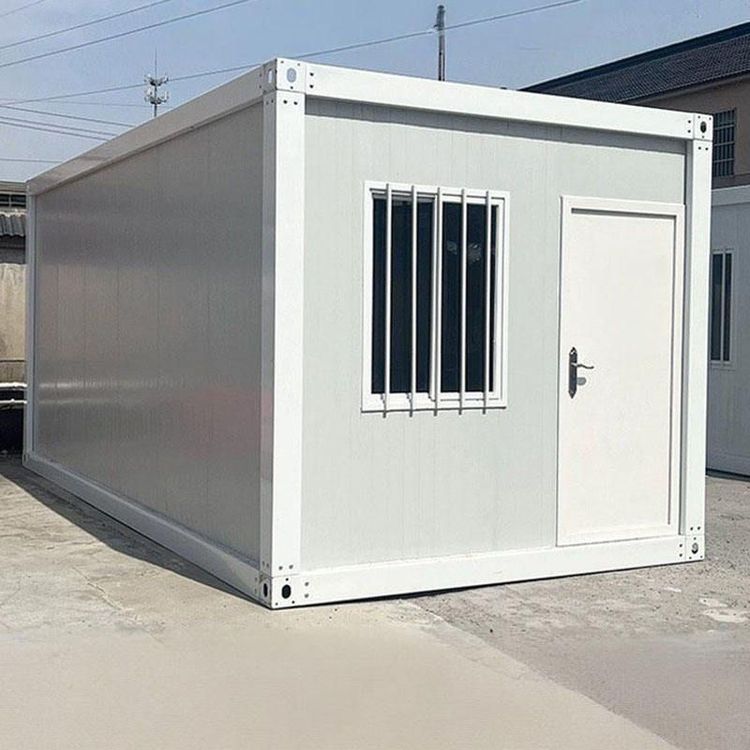
Container houses are based on recycled freight containers or prefabricated modules, offering three major advantages: economy (costing only 1/3 to 1/2 of traditional housing), sustainability (reducing carbon emissions through steel reuse), and flexibility (supporting modular expansion and rapid deployment). Furnishing should focus on compact space optimization and structural adaptability, considering the impact of metal materials on insulation and soundproofing, as well as the spatial division characteristics brought by modular assembly.
II. Space Optimization and Furniture Selection Principles
- Prioritize multifunctional furniture: Choose foldable, extendable, or built-in designs (such as wall-mounted folding tables and bed frames with storage) to accommodate the typically narrow width of 2.4-3 meters inside containers.
- Utilize vertical space: Maximize the longitudinal height of containers through custom tall cabinets, overhead cabinets, or wall storage systems to avoid clutter on the floor.
- Modular combinations: Adopt拼接able furniture units (such as modular sofas and combination bookshelves) to facilitate layout adjustments based on the assembly method of containers.
III. Color and Material Matching Strategies
- Color proportion control: Follow the 60-30-10 rule, where primary colors (such as walls and floors) account for 60% to set the space's tone; secondary colors (such as furniture and curtains) account for 30% to add layers; and accent colors (such as decorations and lighting) account for 10% to enhance visual focus.
- Material contrast and coordination: Pair the metal structure of containers with soft materials like wood and fabric to balance the cold and hard feel; if adopting an industrial style, retain some metal surfaces and pair them with concrete or exposed brick elements.
IV. Safety and Quality Key Points
- Structural stability: Custom furniture should be fixed to the walls or floors of containers to prevent displacement during transportation or vibration; heavy furniture (such as bookshelves) should be reinforced with expansion bolts.
- Environmentally friendly material selection: Prioritize low-VOC (volatile organic compound) paints, reclaimed wood, or recyclable materials to align with the sustainable concept of container houses.
- Fire and moisture prevention: The metal material of containers is prone to heat conduction, so fire-resistant and heat-insulating layers should be installed inside; in coastal or humid areas, moisture-proof coatings or waterproof furniture should be used.
V. Trend Adaptation and Resource Acquisition
Container house furnishing is integrating with minimalist home and work-from-anywhere cultures, such as using movable partitions to divide work and rest areas or adopting smart home systems to enhance convenience. For specific cases or supplier resources, refer to modular design platforms (such as ArchDaily, Container Home Plans) or sustainable building communities (such as Dwell, Green Building Council) for the latest solutions.