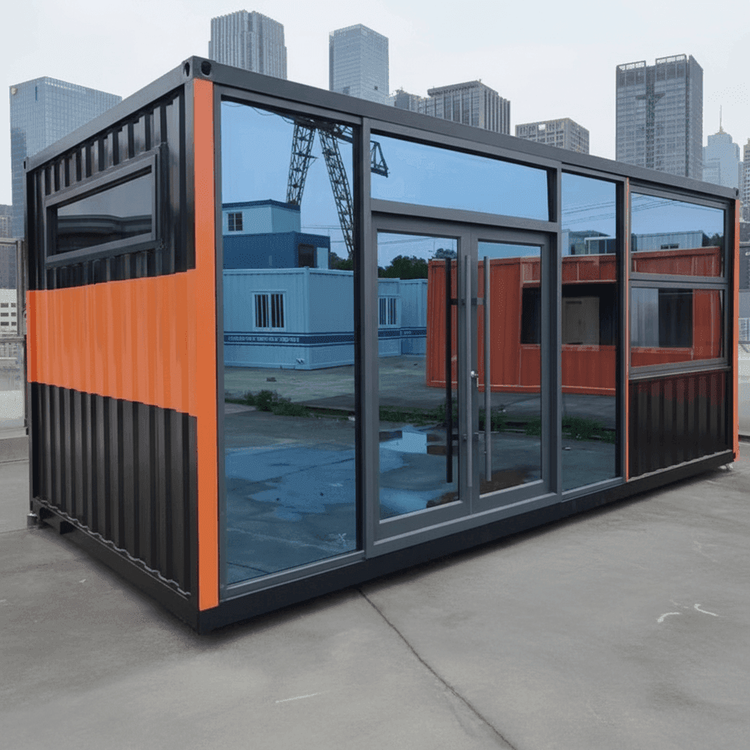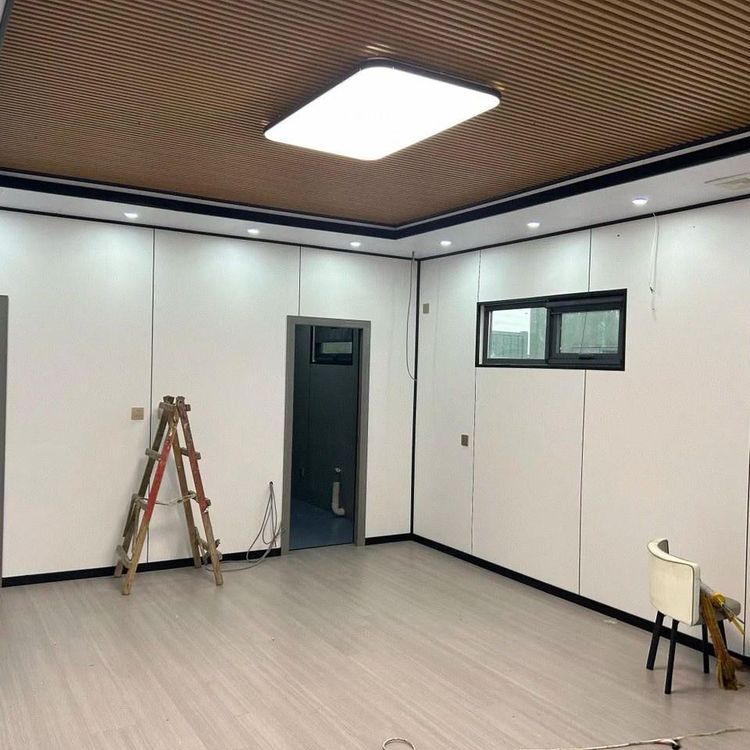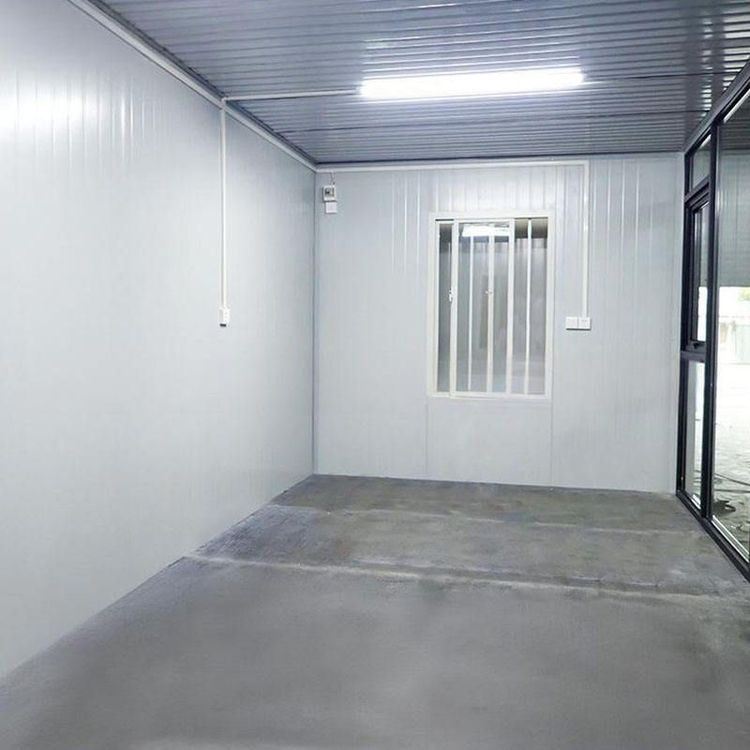
Container House Frame Welding
Four key points need to be focused on in container house frame welding: structural type, material selection, process accuracy, and anti-corrosion treatment.

1. Structural Type Selection Container house frames are mainly divided into welded integral boxes and bolt-connected assembled boxes. Welded boxes are formed by integral welding in the factory, with a direct load path (roof load → side wall columns → bottom beams → ground), strong resistance to deformation, and are suitable for frequent lifting and moving scenarios. Assembled boxes are connected with standard plates using bolts, and the tightness of the nodes directly affects stability, making them more suitable for static use scenarios.
2. Material and Component Standards
- Steel Specifications: Main beams and columns should be welded with section steel, and the thickness of the steel directly affects the load-bearing capacity. For example, it is recommended that the thickness of the columns be no less than 1mm, and they should be formed by professional equipment.
- Base Structure: Use 5×10 channel steel to weld the main crossbeams around the upper and lower bases as the overall support framework.
- Component Quality: Bolts, connectors, etc., should meet strength standards to avoid structural loosening due to component failure.
3. Welding Process Accuracy
- Automated Production Line: Prioritize automatic welding production lines with International Institute of Welding (IIW) certification, using CNC plasma cutting and fully automatic welding processes to ensure that weld penetration, leg height, and diagonal errors of the box meet standards (e.g., top and bottom frame flatness errors ≤ ±2mm).
- Welding Machine Selection: Recommend specialized welding machines for different parts (such as front wall panels, bottom panels and side panels, side panels). For example, the Megmeet Artsen II PM500F welding machine can solve problems such as unstable arcs and excessive spatter, improving weld formation quality.
- Manual Welding Specifications: If manual arc welding is used, weld slag must be strictly cleaned to avoid rusting of weld points in marine or humid environments.
4. Anti-Corrosion and Durability Treatment
- Surface Treatment: The box should undergo overall hot-dip galvanizing or be sprayed with high-adhesion epoxy zinc-rich primer to prevent weld rusting and structural cracking.
- Insulation Materials: For scenarios such as homestay renovations, basalt wool color-steel composite panels (thermal conductivity < 0.040W/(m·K)) with a fire rating of Class A should be used to avoid condensation and mold growth in the insulation layer.
- Environmental Adaptability: For special terrains such as mountains and beaches, elevated reinforcement plans should be designed to ensure structural stability.