Back to blog
Article
Container House Floor Replacement
Admin September 15, 2026
The replacement of the floor in a container house requires selecting an appropriate plan based on the floor type, degree of damage, and usage requirements. The core steps include assessment, material selection, removal, installation, and acceptance. Here are the specific operations:

I. Floor Types and Material Selection
Common floor types in container houses include plywood, bamboo-wood composite flooring, fiber cement boards, and magnesium oxide boards.
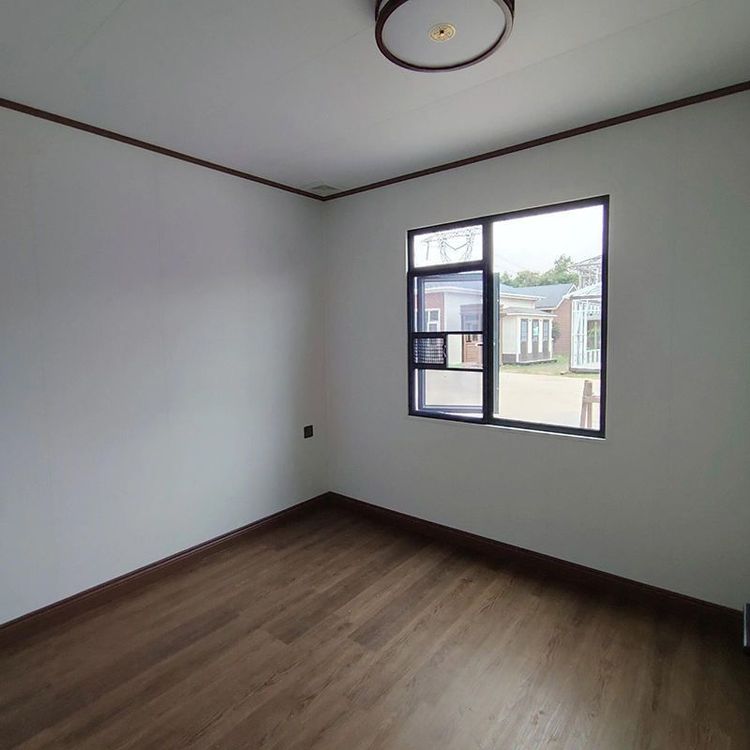
- Plywood/Bamboo-wood Composite Flooring: Suitable for ordinary residential scenarios, it is necessary to choose products with good wear and moisture resistance, such as the environmentally friendly bamboo-wood composite boards produced by Guangzhou Guotian Container Accessories Co., Ltd. These boards have excellent surface wear and bonding properties and can be customized in terms of thickness (e.g., 24mm) and combination methods (e.g., bamboo mats, bamboo curtains, bamboo-wood blends) according to environmental needs.
- Fiber Cement Boards/Magnesium Oxide Boards: Suitable for scenarios with high fire and water resistance requirements (e.g., kitchens and bathrooms), it is necessary to choose products with A-grade fire certification, such as the 24mm fiber cement boards or magnesium oxide boards produced by manufacturers in Foshan and Longyan. These boards have a fire resistance limit of over 2 hours and are waterproof and insect-resistant.
- Full-steel Anti-static Flooring: Suitable for scenarios requiring anti-static properties, such as computer rooms and laboratories, it is necessary to choose national standard ceramic PVC computer room flooring with a size of 600x600mm. The surface resistance value can be controlled within the range of 1×10⁶~1×10⁹Ω to meet the operational requirements of electronic equipment.
II. Replacement Process
- Assessment and Preparation:
- Check the degree of floor damage (e.g., warping, cracking, paint peeling) to determine whether a complete replacement or partial repair is needed.
- Clear out debris inside the container and disconnect water and electricity lines (e.g., turn off the main valve if replacing the bathroom floor).
- Removal of Old Flooring:
- Use tools such as crowbars and electric drills to remove the old flooring, paying attention to preserving recyclable materials (e.g., undamaged plywood).
- Clean the base layer (e.g., steel base plates) to ensure there is no rust or oil stains, and perform rust prevention treatment if necessary.
- Installation of New Flooring:
- Plywood/Bamboo-wood Composite Flooring: Fix it with self-tapping screws or special adhesives, leaving a 2-3mm expansion joint at the seams to prevent deformation due to thermal expansion and contraction.
- Fiber Cement Boards/Magnesium Oxide Boards: Fix them with waterproof structural adhesives or bolts, and fill the gaps between the boards with sealant to prevent water seepage.
- Full-steel Anti-static Flooring: First install adjustable supports and then lay the flooring, ensuring that the levelness error of the supports is ≤2mm/m.
- Acceptance and Maintenance:
- Check the floor flatness (error ≤3mm/2m), seam tightness, and fixation firmness.
- Wax the wooden floor for maintenance and test the surface resistance of the anti-static floor.
III. Precautions
- Environmental Protection: Choose flooring materials that meet the E0 grade or FSC forest certification to avoid excessive formaldehyde emissions.
- Load-bearing Capacity: Choose flooring with an appropriate thickness according to the usage of the container (e.g., residential or storage) to ensure a load-bearing capacity of ≥500kg/m².
- Fire Resistance: Container houses used in public places or high-rise buildings should use A-grade fire-resistant flooring.
- Professional Construction: For complex scenarios (e.g., involving water and electricity renovation), it is recommended to contact qualified teams such as Beijing Yida Floor Maintenance and Guangzhou Guotian for operation.