
Container House Exterior Wall Coatings
Common coatings for the exterior walls of container houses include modified chlorinated rubber paint, modified vinyl resin paint, polyurethane topcoat, acrylic topcoat, water-based paint, and powder coatings, with differences in performance, environmental friendliness, and application scenarios.
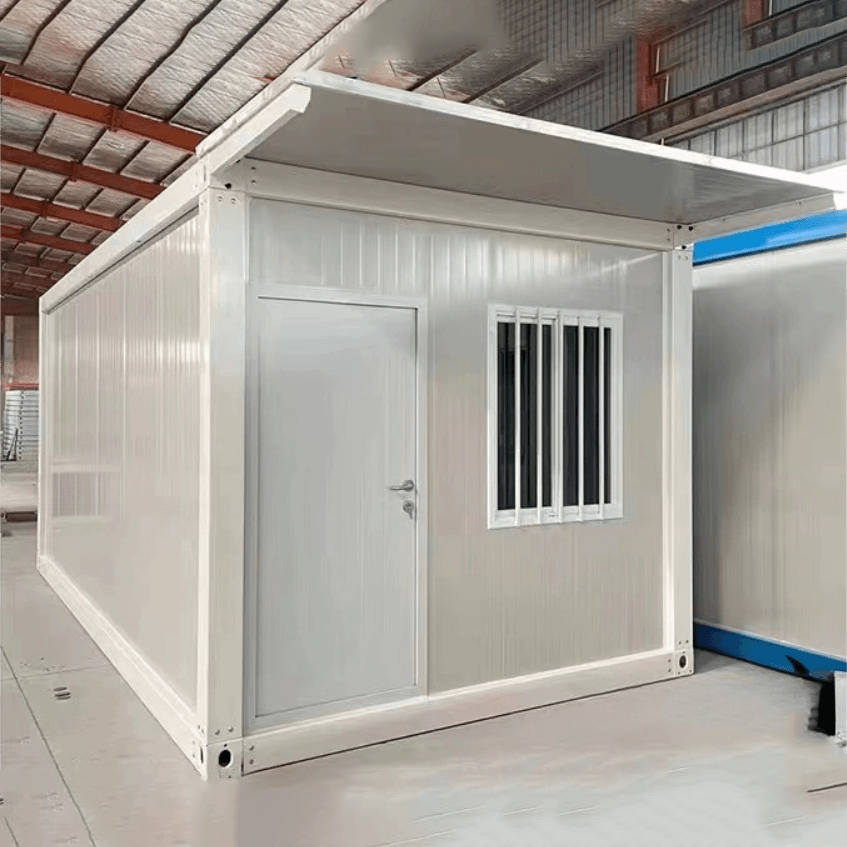
1. Traditional Solvent-Based Coatings: Outstanding Corrosion Resistance and Weather Resistance
Modified chlorinated rubber paint and modified vinyl resin paint are traditional choices for the exterior coating of containers. Modified chlorinated rubber paint, based on chlorinated rubber, enhances adhesion and chemical resistance through chemical modification. The dense paint film it forms effectively blocks the penetration of water, oxygen, and corrosive media, making it suitable for marine or high-humidity environments. Modified vinyl resin paint (especially the high-build type) forms a high-film-thickness coating by increasing the resin content and filler ratio, meeting corrosion protection requirements with a single coat, reducing construction steps, and possessing excellent weather resistance to withstand long-term exposure to ultraviolet rays and temperature variations.
2. High-Performance Topcoats: Balancing Functionality and Decorativeness
Polyurethane topcoat is generated from the reaction between isocyanate and polyol. The urethane bonds in its molecular structure endow it with high hardness and impact resistance, suitable for scenarios where containers are frequently handled. Its ultraviolet resistance can be adjusted through light stabilizers in the formula to maintain color over the long term, with a gloss range customizable from matte to high gloss to meet different decorative needs. Acrylic topcoat, with acrylic ester copolymer as the film-forming substance, can be significantly improved in weather resistance and stain resistance through modification with fluorine or silicon monomers, while maintaining good flexibility to adapt to minor deformations in the container shell.
3. Environmentally Friendly Coatings: Trend Towards Low VOC and Zero Emissions
Water-based paint uses water as a diluent, reducing VOC emissions by over 80% compared to solvent-based paints, meeting global environmental regulations. Its film-forming process relies on water evaporation and resin cross-linking, requiring control of construction environment humidity to avoid sagging, but the dried paint film performance is close to that of solvent-based products, suitable for areas with strict environmental requirements. Powder coatings are applied by electrostatic spraying, where solid powder adheres to the substrate surface and forms a continuous coating after high-temperature curing, achieving zero VOC emissions. Super weather-resistant polyester resin powder coatings use special stabilizers to ensure over 10 years of outdoor weather resistance and have high recycling rates, representing an environmentally friendly upgrade direction for container coatings.
4. Market Selection and Cost Considerations
The price of exterior paint for container houses is significantly influenced by brand, specification, and performance. For example, Whale brand spray-applied reflective radiation cooling exterior wall coating topcoat achieves a cooling effect by adding reflective particles, with a price of up to 31 yuan per square meter; while ordinary water-based paint prices are mostly in the range of 1-5 yuan per kilogram, suitable for projects with limited budgets. When selecting, it is necessary to comprehensively evaluate corrosion protection requirements, environmental standards, and long-term maintenance costs. For example, modified chlorinated rubber paint is preferred in marine environments, while water-based paint or powder coatings can be considered in inland dry areas.



