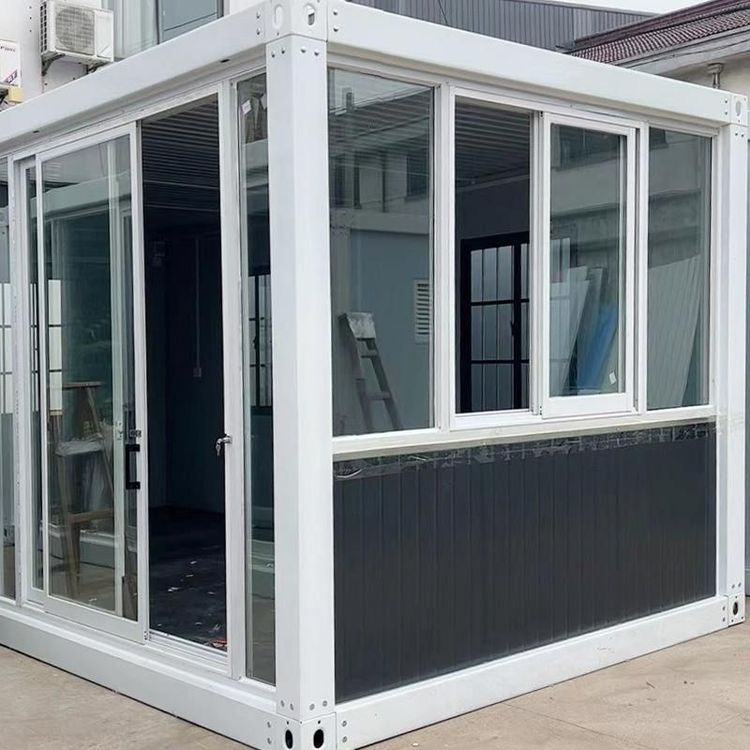
Container House Decoration Styles
Container houses offer a variety of decoration styles. Here are some common types:

1. Minimalist Style
Container houses naturally align with minimalist design concepts. Their regular geometric shapes and clean lines can present a simple aesthetic without excessive decoration. For example, a black smooth-coated exterior facade paired with natural wood interior finishes creates a visual impact through sharp color contrast. Inside, uniformly natural wood furniture and white household items, combined with large areas of glass to introduce natural light, ensure functional integrity while highlighting spatial purity. This style emphasizes "less is more," highlighting the industrial texture of the container itself through streamlined decorative elements.
2. Industrial Style
Retaining the original features of the container is the core expression of industrial style. Industrial elements such as corrugated metal walls, exposed steel structures, and container numbers are deliberately preserved, paired with concrete floors, iron lamps, and leather furniture to enhance a rugged texture. Open-plan layouts are often used, with metal staircases connecting different functional areas, continuing the modular nature of the container while creating a living environment full of mechanical beauty.
3. Modern Minimalist Style
Incorporating modern design language into the container structure creates a sense of fashion through material contrast and color matching. For example, a white container exterior paired with wooden sunshades, and an interior featuring recessed lighting and hidden storage systems, maintains a clean space while meeting practical needs. The use of large floor-to-ceiling windows and glass folding doors blurs the boundaries between indoors and outdoors while enhancing spatial layering through light and shadow changes.
4. Natural Style
Emphasizing integration with the natural environment, this style achieves ecological balance through material selection and spatial planning. Natural elements such as anti-corrosive wooden floors, bamboo weaving decorations, and green walls soften the industrial feel, while open balconies and skylights enhance spatial transparency. Some cases also integrate solar systems and rainwater collection devices, incorporating sustainability into decorative details.
5. Eclectic Creative Style
Breaking free from the fixed shape limitations of containers, creative transformations include stacking multiple containers in an offset manner to form unique architectural outlines or painting decorations on container surfaces. The interior space creates a personalized living experience through material collisions (such as metal and fabric, concrete and wood) and color contrasts (such as combinations of bright tones and neutral colors), meeting the young generation's pursuit of uniqueness.