Container House Cutting Technology
Container house cutting technology is a modification technique that optimizes spatial structure and expands functionality by cutting and reorganizing standard containers. Its core lies in using cutting methods to break through the original form limitations of containers and combining them with welding, anti-corrosion treatment, and other processes to construct architectural spaces that meet diverse needs. The following is an analysis from the perspectives of process characteristics, cutting methods, application scenarios, and technical points:
I. Process Characteristics: Breaking Structural Limitations and Achieving Spatial Reconstruction
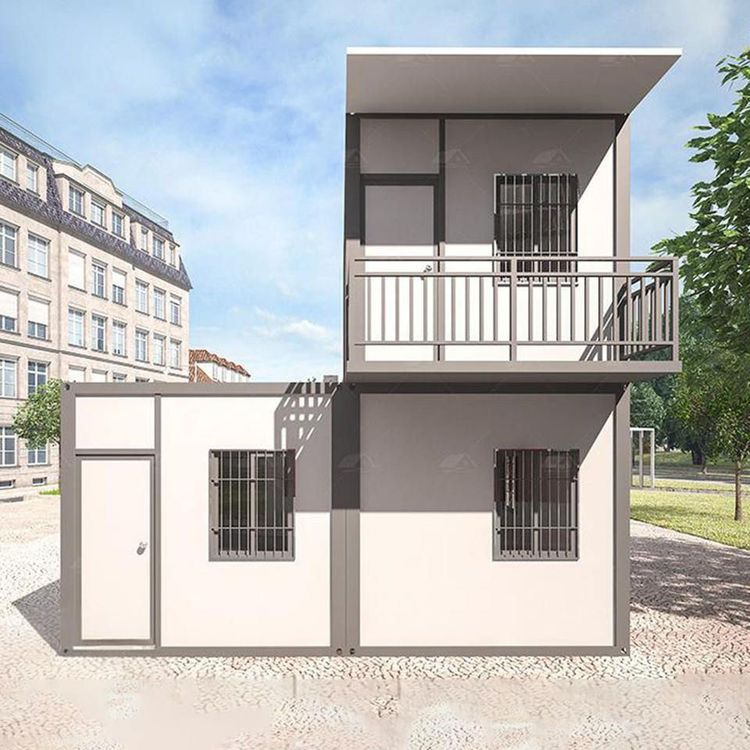
The original structure of containers is a standardized cuboid with a single spatial layout. The cutting process precisely removes parts of the container body (such as side panels, roof panels, or end panels), breaking the original closed framework and providing a basis for spatial reorganization. For example, the container house in Lark Harbour, Australia, divides a 40-foot container into two parts and connects them with a roof to form a split-level structure; the project in Shekou Creative Park in Shenzhen cuts zigzag skylights on the container roof to introduce natural light and ventilation. After cutting, the container bodies can be horizontally spliced, vertically stacked, or offset combined to form large-span living rooms, high-ceiling spaces, or open layouts. They can even be shaped with curved cuts to create streamlined appearances and enhance architectural artistry.
II. Cutting Methods: Tool Selection and Operating Points
- Plasma Cutting: Utilizes high-temperature plasma arcs to melt metal, suitable for rapidly cutting steel plates 2mm-30mm thick. The cuts are flat, and the heat-affected zone is small, often used for cutting complex geometric patterns (such as irregular window openings and decorative cutouts).
- Carbon Arc Gouging: Generates an electric arc between a carbon rod and metal, melting the metal and blowing it away with compressed air. It is mostly used for stripping old paint from the container body or local trimming but requires subsequent grinding.
- Hydraulic Shears: Suitable for cutting thick plates, with high efficiency but relatively low precision, often used for initially dividing large container bodies.
- Laser Cutting: Has the highest precision, achieving millimeter-level cuts, but the equipment cost is high, mostly used for processing precision components.
Operating Specifications: Before cutting, mark the cutting lines to ensure accurate dimensions; after cutting, grind burrs to avoid stress concentration leading to cracking; welding cuts need to be painted with anti-rust primer to prevent corrosion.
III. Application Scenarios: From Temporary Buildings to Permanent Residences
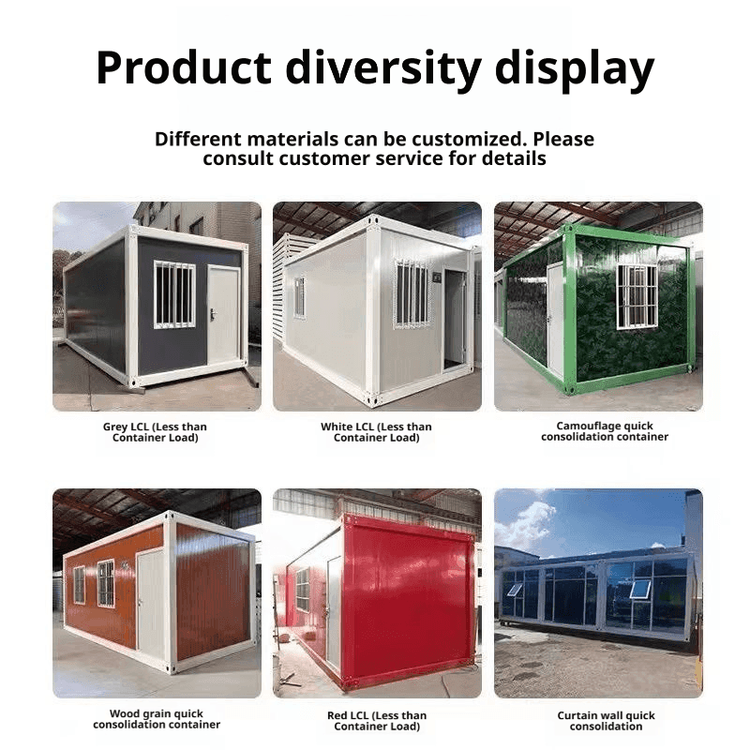
- Creative Architecture: The cutting process makes containers modular architectural elements, which can be combined to form personalized spaces such as art galleries and coffee bars. For example, the Shenzhen project retains the original corrugated steel plates as the backrest of the coffee bar and forges the cut scraps into door handles to enhance industrial aesthetics.
- Residential Renovation: Functional zoning is achieved through cutting, such as dividing a single container into a living room and a bedroom or splicing multiple containers to form multi-bedroom residences. A two-story container residence in the United States meets national building code requirements through cutting and welding.
- Emergency Housing: The lightweight container bodies after cutting are easy to transport and quickly assemble, suitable for post-disaster reconstruction or temporary construction sites.
IV. Technical Points: Ensuring Safety and Durability
- Structural Reinforcement: Cutting weakens the overall integrity of the container body, so reinforcing ribs or angle steels need to be added at the cuts to ensure load-bearing capacity (e.g., a 20-foot container can bear 25 tons, and a 40-foot container can bear 45 tons).
- Anti-Corrosion Treatment: The cut surfaces need to be painted with epoxy primer + topcoat, and the welds need special protection; in coastal areas, the repainting cycle should be shortened (3-5 years).
- Waterproof Sealing: Weather-resistant sealants should be used around doors and windows and at splicing seams and replaced every 5-7 years; the roof should be designed with a slope to avoid water accumulation.
Container house cutting technology transforms standardized containers into flexible and diverse architectural carriers through structural innovation and process optimization, combining economy, environmental protection, and artistry, and becoming an important branch in the field of modern architecture.