
What is the Optimal Thickness for Container House Columns?
The optimal thickness for container house columns is typically between 2-5 millimeters, depending on load-bearing requirements, usage scenarios, and modification needs.
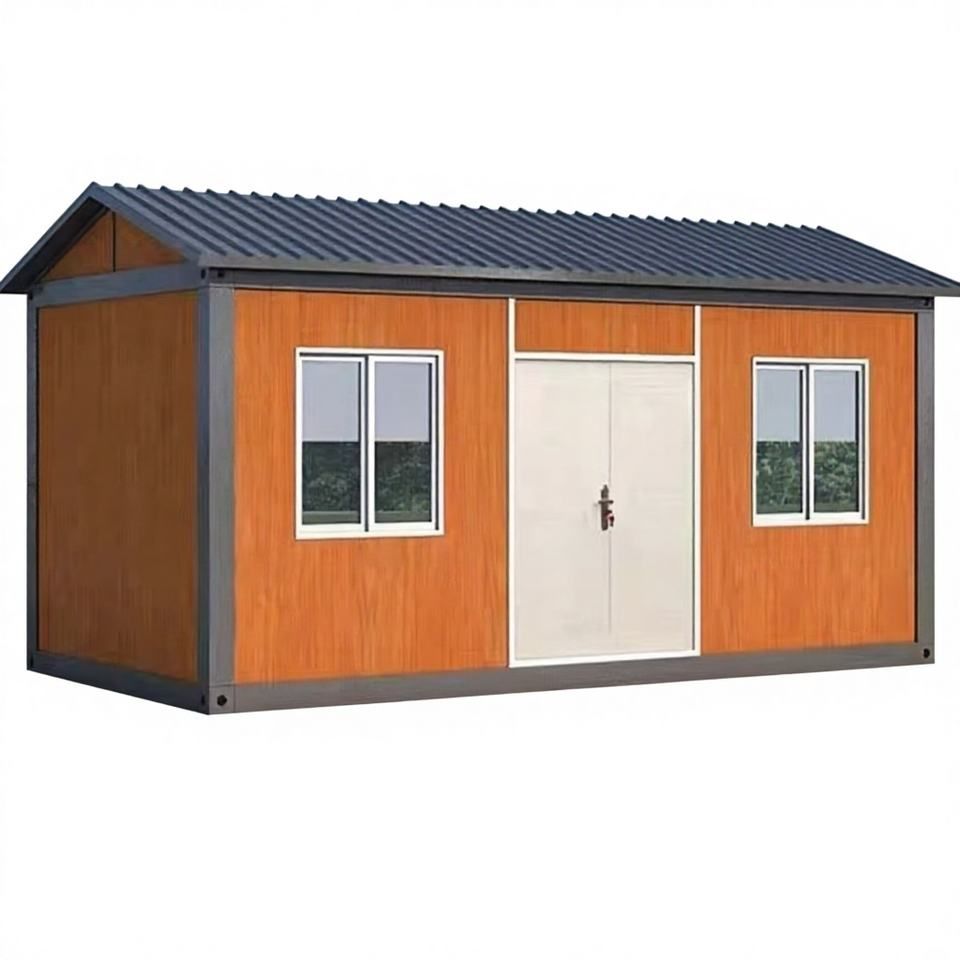
I. Load-Bearing Requirements Determine Thickness Range
Columns for standard single-story container houses often use 2-3 mm thick steel, which meets basic structural stability requirements while avoiding material waste. For heavier loads (e.g., stacking heavy items, installing heavy equipment) or two-story designs, column thickness should increase to 4-5 mm to enhance bending and compression resistance. For example, when stacking three containers, column thickness typically needs to exceed 4 mm to ensure overall structural safety.
II. Usage Scenarios Influence Thickness Selection
- Climate Adaptability: In cold regions, snow load considerations require thicker columns to resist snow pressure; in tropical regions, typhoon resistance necessitates thicker columns or structural optimizations (e.g., adding diagonal braces).
- Service Life: Temporary structures (e.g., construction site dormitories) can use the minimum 2 mm thickness to reduce costs; for long-term residential or commercial use, the upper range of 3-5 mm is recommended to extend structural lifespan.
III. Modification Needs Require Structural Strength Compensation
For extensive modifications (e.g., enlarging windows, removing partitions, adding balconies), column thickness must be increased to compensate for structural strength loss. For example, after removing a partition wall, concentrated stress at the original support points requires increasing adjacent column thickness to 4-5 mm or adding auxiliary support structures to prevent local deformation.
IV. Thickness Recommendations for Special Scenarios
For extreme usage scenarios (e.g., earthquake-prone areas, highly corrosive environments), column design requires further optimization:
- Earthquake zones: Use 4-5 mm thick steel with shock-absorbing connectors to improve structural resilience;
- Coastal or chemical zones: Select corrosion-resistant steel (e.g., galvanized sheets) or add anti-corrosion coatings, maintaining thickness at 2-3 mm but requiring regular maintenance.
Summary: There is no fixed standard for container house column thickness, which must be comprehensively evaluated based on load-bearing, environmental, service life, and modification requirements. For ordinary scenarios, 2-3 mm suffices; for high-load or complex scenarios, 4-5 mm is recommended, always combined with professional structural design to ensure safety.



