
Container House
Prefabricated container houses use shipping containers as basic structural modules that, after conversion, become livable or office-ready buildings. They offer many advantages and are widely applied.
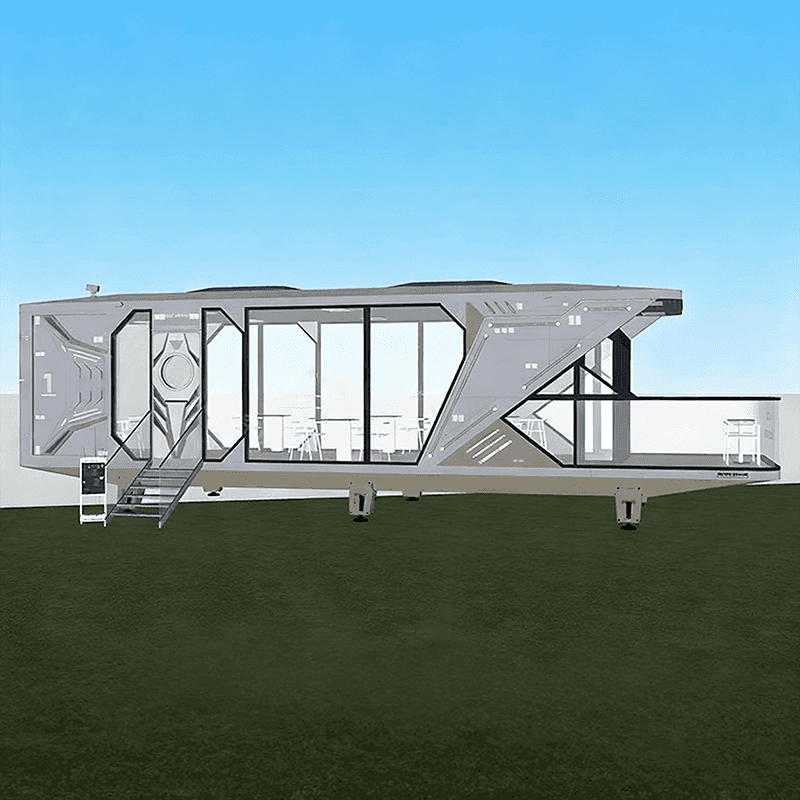
Construction process
When building a prefabricated container house, first install the bottom frame: bolt the bottom corner castings to the bottom beams, place the floor joists, then bolt the joists to the bottom beams. Some units leave the factory as complete living modules—with walls, floors, roofs, piping, and even bathrooms already in place—and can be assembled like building blocks into many types of buildings.
Features and advantages
- Sturdy and durable: Built on a container structure with high strength and stability, they can withstand a certain level of external impact and help keep living or office use safe.
- Easy to assemble: Modular design makes installation relatively simple, so builds finish quickly and save time and labor costs.
- Eco-friendly and flexible: Reusable containers as base materials reduce construction waste; units can be combined and laid out flexibly for different needs and site conditions across many scenarios.
- Lower cost: Compared with traditional buildings, prefabricated container houses have advantages in materials and construction cost, especially for temporary or budget-limited projects.
Application areas
- Temporary housing: Common on construction sites as worker dormitories for short-term living needs.
- Creative spaces: Can be converted into studios, cafés, and similar venues, offering distinctive space solutions for creative industries.
- Post-disaster emergency buildings: After natural disasters, they can be set up quickly to provide temporary shelter and basic living support for affected people.
- Commercial use: For example, conversion into 24-hour self-service fitness pods and other innovative commercial formats.
Development status
Technical optimization and research continue in thermal insulation, energy supply systems, and intelligent management. In 2026, the Asian Games in Nagoya, Japan, used container houses to form the Athletes' Village; in Shanting District, Zaozhuang City, Shandong Province, China, distinctive homestay scenic areas were built with container houses; they also play an important role in emergency medical facility construction. According to General Administration of Customs data, in the first quarter of 2026, China's prefabricated building (including modular building) exports grew by 45%; at Shenzhen port alone, exports of “movable houses” in the first four months reached $233,333,333, up 19.6% year-on-year, with products shipped to more than 150 countries and regions.



