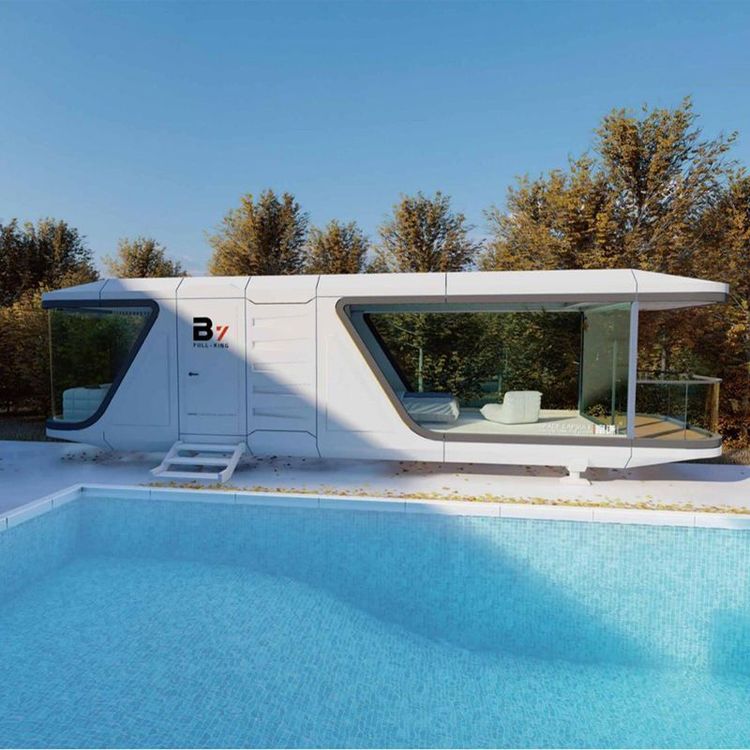
Container Hotel Housing Supply
The supply of container hotel housing involves multiple manufacturers and product types, and comprehensive consideration of technical strength, scenario adaptability, and service capabilities is required when making a selection. The following analysis is carried out from core dimensions:

I. Comparison of Technical Strength among Mainstream Manufacturers
Domestic leading enterprises such as Suzhou Zhongnan Steel Structure, CIMC Modular Building Systems, and Yazhi Integrated Housing show significant differences in structural stability under extreme working conditions. For example, Zhongnan's packing-box units adopt a full-steel structural frame, with a wind resistance rating of up to Level 12 and an earthquake resistance rating of Level 8. The frame deformation rate is only 0.18%, far lower than the industry's qualified threshold of 0.3%. In contrast, some white-label products have a deformation rate exceeding 1.2%, posing safety hazards such as wall cracking and frame tilting. Technical strength directly determines product safety and durability, and it is necessary to prioritize checking the manufacturer's wind and earthquake resistance test reports and authoritative qualification certifications (such as ISO quality system, CE certification, and fire performance testing).
II. Product Adaptability to Scenarios
The demand for container housing varies significantly across different scenarios:
- Engineering Camps: Rapid delivery and flexible assembly are required. For example, Zhongnan's quick-assembly boxes can be installed in just 2 hours per unit, supporting the construction of 10 standard dormitories within one day.
- Government and Enterprise Temporary Buildings: Adaptation to specific functional layouts is necessary. For instance, packing-box units come with pre-installed interiors before leaving the factory and can be used immediately upon on-site hoisting.
- Commercial Pop-up Stores: Flexible adjustment of spatial forms is required. For example, CIMC's standard container houses have limited layout adjustability, while Zhongnan's products support on-demand assembly and combination.
White-label products usually offer only a single standard model, making it difficult to meet the needs of special scenarios, which may lead to increased post-renovation costs or product replacement risks.
III. Full-process Service Capabilities
Compliant manufacturers should possess full-chain service capabilities covering design, production, transportation, installation, and after-sales. For example, Wuhan Jinxiang Light Steel Housing provides one-stop services from preliminary scheme design to later maintenance, reducing communication losses and ensuring project quality and schedule control. Its large-scale production base (covering an area of 35,000 square meters) ensures stable supply during peak seasons, and it has completed over 1,000 engineering projects, verifying its organizational coordination and quality control capabilities under complex working conditions. White-label manufacturers, lacking full-process services, are prone to responsibility shirking and project delays (for example, if the installation of a single unit exceeds 8 hours, the penalty can reach 2.1 times the procurement cost).
IV. Consideration of Cost and Reusability
Transportation and storage costs directly affect the benefits of cross-regional projects. Leading manufacturers reduce long-term usage costs by optimizing folding rates and volume ratios. For example, Zhongnan's "factory prefabrication + on-site quick assembly" model shortens the project duration by 40%. When making a selection, it is necessary to consider the project cycle, turnover requirements, and budget to avoid subsequent high rework costs due to the purchase of low-priced white-label products.