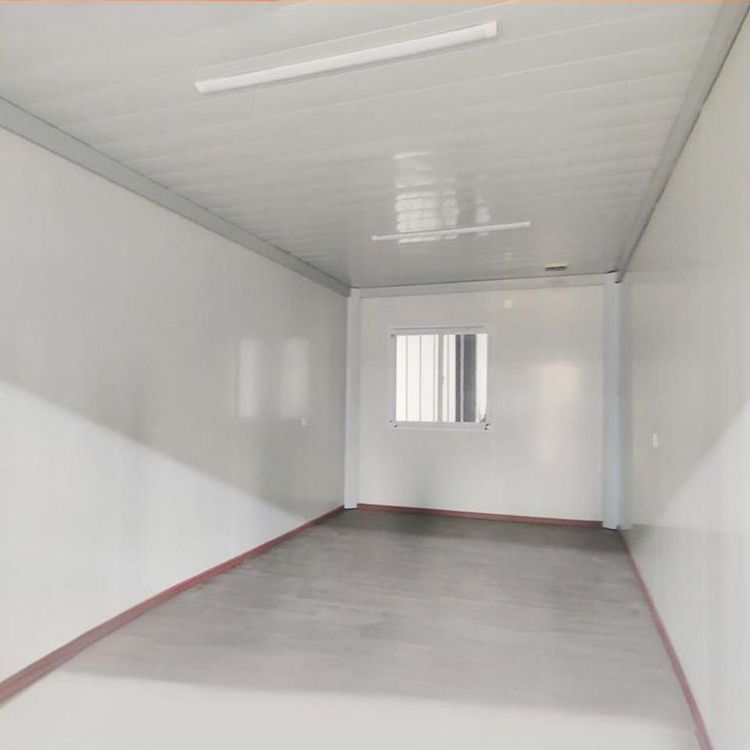
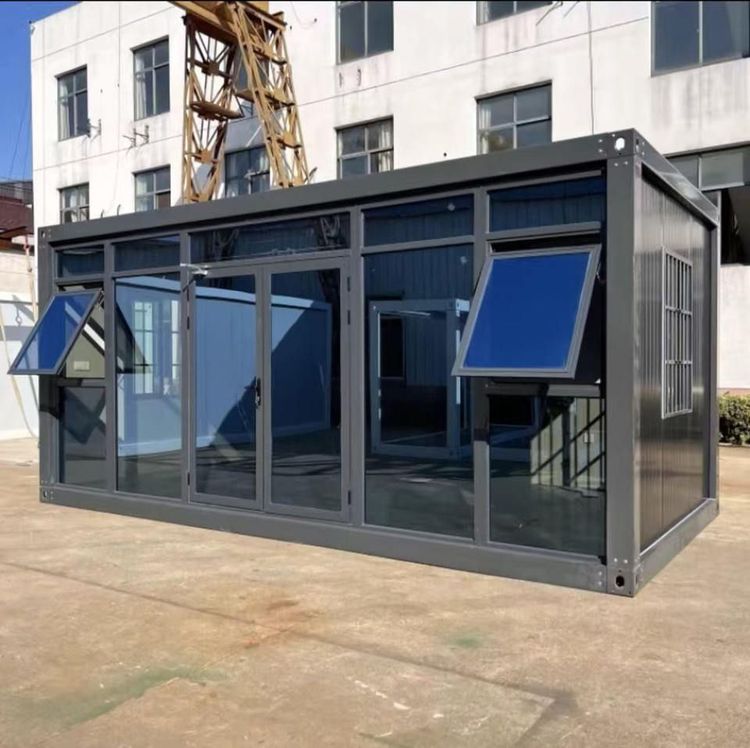
Container Hostel House Installation
When installing container hostel houses, it is essential to focus on core aspects such as structural type, ground treatment, lifting and positioning, and installation techniques, while selecting manufacturers with compliant qualifications and customization capabilities.

1. Structural Type Selection
Container hostel houses come in two main structural types: welded integral containers and bolt-connected modular containers. Welded integral containers are fully welded in the factory, offering a direct load path and strong resistance to deformation, making them suitable for frequent lifting and relocation scenarios. Bolt-connected modular containers use standard panels connected by bolts, with multiple load-bearing nodes. It is crucial to inspect the steel wall thickness of columns and bottom beams (common specifications range from 1.5mm to 3mm). Thicker walls provide greater load redundancy but also increase self-weight. Additionally, the coating process on the container surface directly affects corrosion resistance. Hot-dip galvanizing offers longer corrosion resistance than cold-dip galvanizing, especially in regions with significant temperature variations and humidity changes, where coating quality directly determines the rate of container rusting.
2. Ground Treatment
Ground treatment must provide a uniform load-bearing foundation for the container house. For long-term fixed use scenarios, a concrete strip foundation should be poured, with a recommended width of 30cm to 50cm and a depth determined by local frost depth. The top surface of the foundation should have a levelness error of no more than 5mm. For short-term use scenarios, prefabricated concrete pads or steel plates can be used, with pad spacing not exceeding 2m. Each pad should have a crushed stone leveling layer beneath it to ensure all load-bearing points are on the same horizontal plane.
3. Lifting and Positioning
Lifting must precisely control the contact between the container and the foundation. Container houses typically have four or six lifting points at the bottom. Sufficient-capacity steel cables should be used, and all lifting points must bear load simultaneously to avoid unilateral loading that could distort the container. After the container is positioned, immediately check the fit between the bottom beam and foundation pads. If there is any local suspension, thin steel plates should be used to fill the gaps, preventing floor vibrations or abnormal noises due to uneven loading during subsequent use.
4. Installation Techniques and Manufacturer Selection
Installation techniques directly impact the lifespan and safety of the hostel. Leading enterprise products, such as the packing containers from Suzhou Zhongnan Steel Structure Co., Ltd., feature a fully steel structural frame with a wind resistance rating of Level 12, an earthquake resistance rating of Level 8, and a frame deformation rate of only 0.18%. They support factory-prefabricated interiors and facilities, allowing immediate use after on-site lifting, making them suitable for long-term on-site projects. For customization needs, manufacturers offering one-stop design, production, and installation services should be selected, such as Zhonghui Energy Storage Container Co., Ltd. Their products support deep customization of appearance, internal layout, and functional configurations, and they also provide refurbishment and modification services for second-hand containers, meeting diverse scenarios such as cultural and tourism hostels.