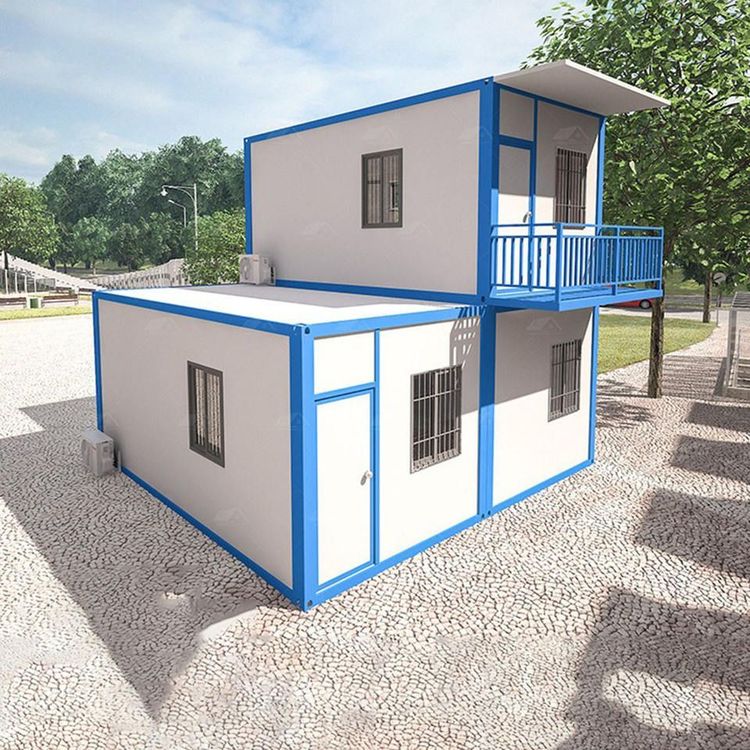
Container Connected House Design
Container connected house design requires comprehensive consideration of multiple factors, including structural stability, connection methods, thermal performance, space utilization, and compliance.

Structural stability is the core of container connected house design. As the basic structural unit, containers need to have sufficient strength and stiffness to bear loads. For example, using high-strength weather-resistant steel (such as Q355B grade) as the main frame of the container body and forming a self-balancing system through rigid connections between corner fittings and side beams can effectively disperse stress and reduce the risk of local buckling. At the same time, a reasonable frame design, such as a full-steel structure frame, can significantly enhance wind and earthquake resistance capabilities, ensuring structural safety under extreme working conditions.
Connection methods directly affect the overall stability and reusability of the house. Common connection methods include welding and bolt connections. Welded container bodies have strong integrity and high resistance to deformation, making them suitable for frequent lifting and moving. Bolt-connected assembled containers, on the other hand, are easy to disassemble and reassemble, making them suitable for scenarios that require multiple relocations. In addition, introducing a dual-fixing mode of "wedge-shaped locks + high-strength bolts" can further improve the seismic adaptability of connection nodes and reduce the impact of natural disasters such as earthquakes on the house.
Thermal performance is crucial for ensuring living comfort. Metal container bodies have high thermal conductivity coefficients, so they need to be compensated through reasonable envelope structure designs. Adopting a three-layer composite structure of "rock wool - air layer - aluminum-zinc coated steel plate" can effectively reduce the heat transfer coefficient, minimize condensation risks, and extend the service life of the steel structure. At the same time, optimizing the airtightness treatment of door and window sealing strips and joints is also an important measure to improve thermal performance.
In terms of space utilization, container connected house design should focus on functional zoning and space expansion. Through reasonable layouts and variable furniture designs, efficient use of space can be achieved. For example, using integrated bathroom technology to achieve waterproof integration and realizing day-night functional switching through wall-mounted folding tables and drop-down beds.
In terms of compliance, the design needs to comply with local building codes and safety standards to ensure the redundancy and safety of the house under extreme environmental conditions. At the same time, considering environmental protection and sustainability requirements, environmentally friendly materials should be selected to reduce the generation of construction waste.
You may also like
Portable Toilet Durable Explained: How to Choose the Right One
Read More
Portable Toilet Size Drawings Size & Area Guide: Finding the Right Fit
Read More
Portable Toilet Anti-Corrosion Buying Guide: Options & Tips
Read More