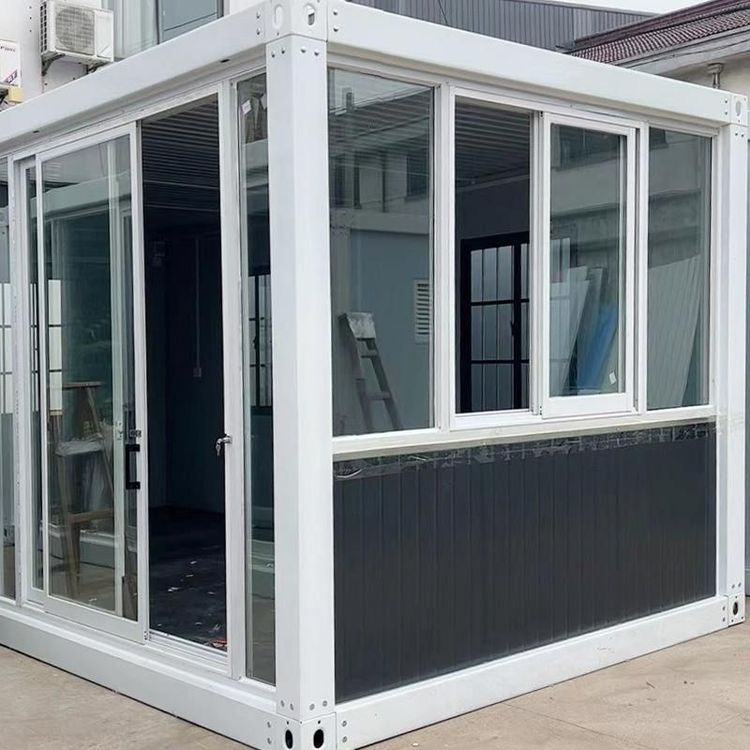
Container as House Property Right
A container itself does not directly equate to house property rights; whether it constitutes house property rights depends on specific circumstances.

I. Prerequisites for a Container to Be Considered House Property Rights
If a container is transformed into a house and used for living or business operations, and meets relevant legal and regulatory requirements, it may obtain house property rights. This typically involves three aspects: compliance with land nature, obtaining planning approval, and meeting construction standards:
- Compliance with Land Nature: If a container house is used for living or business operations, it must ensure that the land nature is either residential land or that the conversion of agricultural land has been approved. Unauthorized occupation of farmland for constructing container houses will face the risk of demolition.
- Obtaining Planning Approval: If used as a permanent building, a container house needs to be included in rural construction planning and comply with relevant restrictions on the number of floors and height. If used as a temporary building, some regions allow exemption from planning permits for a certain period, but it must be self-demolished upon the expiration of the use period.
- Meeting Construction Standards: A container house must meet structural safety and fire protection requirements, such as using Class A fire-resistant materials and ensuring that the building area of each unit does not exceed specified limits.
II. Proof of Container Ownership
Container ownership and house property rights are two distinct concepts. Container ownership can be proven through various means, including purchase contracts, payment vouchers, invoices, property registration certificates, transportation and delivery documents, as well as markings and records. These pieces of evidence, when cross-verified, can strongly prove the ownership of the container.
III. Uniqueness of Container House Property Rights
Even if a container house meets the above conditions and obtains house property rights, its property rights nature may differ from traditional house property rights. For example, a container house may be regarded as a temporary building or a building for special purposes, and its property rights duration, transfer conditions, etc., may be subject to specific restrictions.