
Construction Site Portable Toilet
A construction site portable toilet is a facility that can be moved as a whole and set up at fixed or temporary locations to provide public restroom services. Here is an introduction from different aspects:
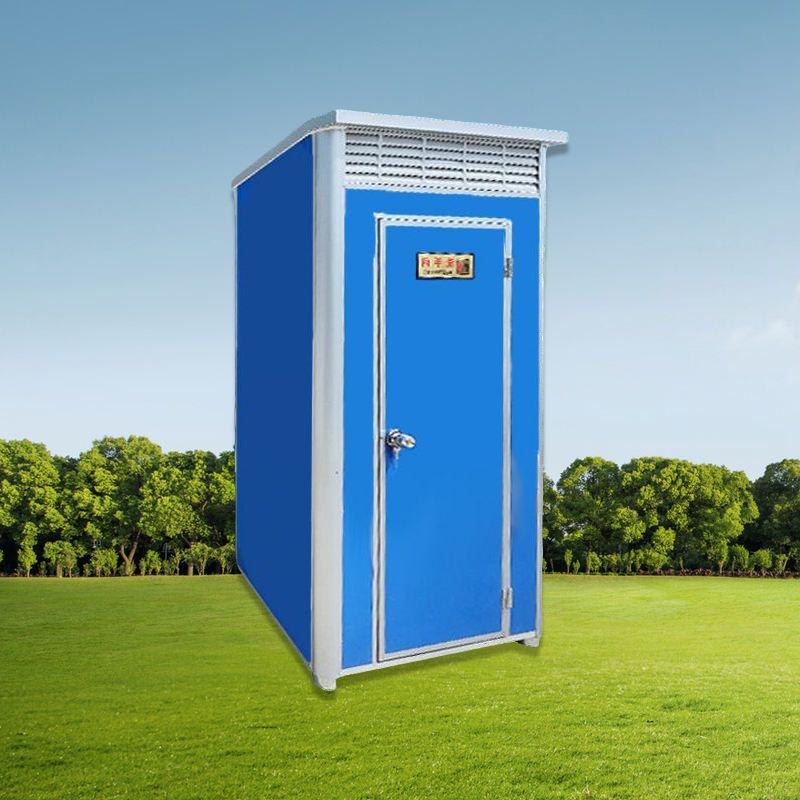
Production Examples
A young man used a water storage tank and a pallet to make a portable restroom. First, he fixed universal wheels at the four corners of the bottom of the pallet, placed a water storage tank retrieved from a garbage station, and after operations such as cutting openings, stacking and fixing, and cutting doorways, he installed facilities such as a toilet, a faucet, a washbasin, and a showerhead. Finally, he installed a door to form a portable restroom. There is also a 4 + 1 stepped portable restroom with a total of four squatting positions. In the middle is an open restroom. The exterior wall is made of heat-insulating and flame-retardant metal carved panels. The side door is a titanium-magnesium alloy door. The restroom is equipped with a complete set of bathroom cabinets. The interior wall of the toilet is made of bamboo-wood fiber panels. It is fully equipped with exhaust fans, tissue boxes, and hooks. The bottom is made of anti-slip tiles, and it can also be customized exclusively.
Composition Structure
A portable toilet generally consists of a fecal sewage storage tank (or fecal sewage treatment device), a floor, sanitary ware, walls, washing equipment, a water tank, a roof, a moving device, etc. These components work together to ensure the normal use of the portable toilet. For example, the fecal sewage storage tank is used to collect and treat fecal sewage to prevent direct discharge from causing environmental pollution; sanitary ware such as toilets and squatting pans provides basic facilities for users to use the restroom; walls and roofs serve to shelter from wind and rain and protect privacy.
Classification Methods
- By structural form: It can be divided into single-structure portable toilets and composite-structure portable toilets. Single-structure portable toilets are relatively independent and have a relatively simple structure; composite-structure portable toilets are composed of multiple parts and may have richer functions.
- By moving method: It can be divided into hoisting and handling portable toilets and powered and towed portable toilets. Hoisting and handling portable toilets need to be moved with the help of equipment such as cranes; powered and towed portable toilets can be moved through their own power devices or being towed by other vehicles.
- By sewage treatment method: It can be divided into water-flushing and non-water-flushing suction portable toilets, circulating water-flushing portable toilets, and dry-packing portable toilets. Water-flushing and non-water-flushing suction portable toilets treat fecal sewage through water flushing or suction; circulating water-flushing portable toilets recycle the flushing water to save water resources; dry-packing portable toilets pack and treat feces without using water.
You may also like

Portable Toilet Specifications Size & Area Guide: Finding the Right Fit
Read More
Top Portable Toilet Custom Manufacturers: How to Choose a Factory Partner
Read More
Portable Toilet Reviewed: Best Picks & Tips
Read More