
Structure of Mobile Toilets at Construction Sites
The structure of mobile toilets at construction sites typically includes components such as the frame structure, wall materials, functional components, partition design, and floor treatment.
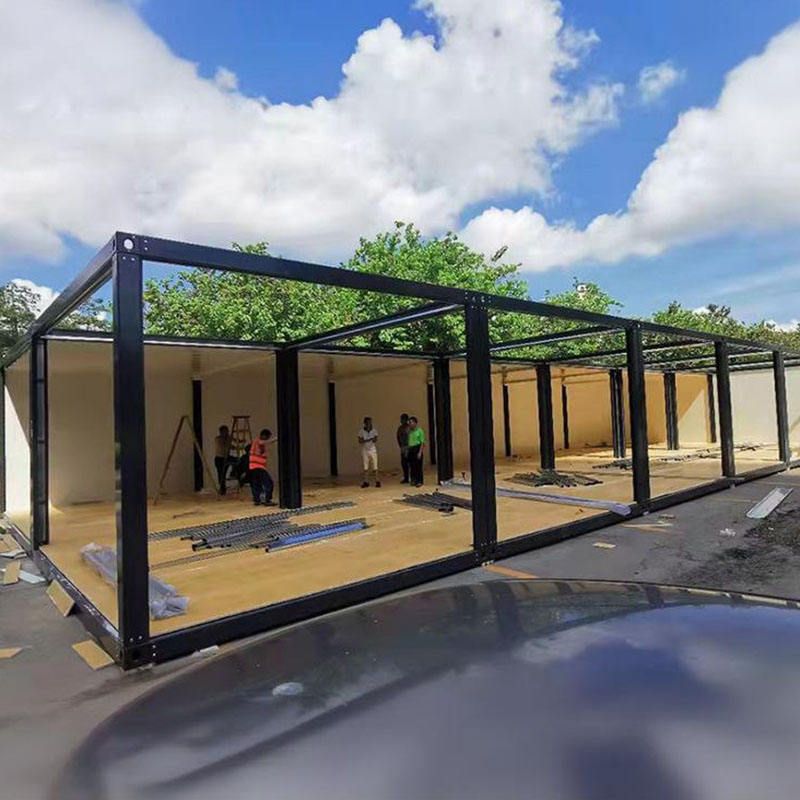
Frame Structure: The frame of a mobile toilet at a construction site is generally composed of welded steel. The base is often welded with channel steel or I-beams, while the columns are made of square steel. For example, some mobile toilets at construction sites have an overall frame welded from 10*10, 1.5-thick square tubes. This structure is sturdy and durable, capable of withstanding a certain amount of external force impact, providing stable support for the entire toilet.
Wall Materials: Wall materials are installed on the frame, with common options including color-coated steel plates, metal carved panels, aluminum-plastic panels, and anti-corrosion wood. Color-coated steel plates offer advantages such as light weight, high strength, and easy installation; metal carved panels have an aesthetically pleasing appearance with decorative qualities; aluminum-plastic panels exhibit good corrosion resistance and fire performance; anti-corrosion wood provides a natural and warm feel, suitable for places with high environmental requirements.
Functional Components:
- Sanitary Fixtures: These include toilets (either Western-style or squat toilets) and sinks. For example, some mobile toilets at construction sites are equipped with ceramic sinks, which are easy to clean and have an attractive appearance.
- Water Storage and Drainage Systems: Flush toilets require connection to water supply and drainage pipes. Some use rainwater collection and filtration systems along with hand-washing water reuse for flushing to conserve water resources. Non-flush toilets do not require connection to water supply and drainage pipes and achieve harmless treatment of feces through special processing methods. For example, some homemade mobile toilets use a cut-open storage tank as a water tank and connect it to water pipes and the toilet for drainage.
- Mobility Devices: The frame structure meets the requirements for hoisting, facilitating easy movement and installation. Some homemade toilets achieve mobility by fixing universal wheels at the bottom of the拖板 (trailer plate), making it convenient for transportation between different construction sites.
Partition Design: Some mobile toilets at construction sites adopt a separate design for men and women. For example, a square tube box toilet measuring 3 meters wide and 6 meters long has the men's restroom on the left and the women's restroom on the right. This design meets the usage needs of workers of different genders and improves usage efficiency.
Floor Treatment: The entire floor is laid with anti-slip floor rubber to ensure safety during use. Anti-slip floor rubber has good anti-slip properties, reducing the risk of workers slipping and getting injured during use.



