
Development Process of Mobile Toilets for Construction Sites
The development process of mobile toilets for construction sites encompasses four core stages: design, production, installation, and after-sales service. It meets the demands of construction site scenarios through modularization, standardization, and full-cycle services.
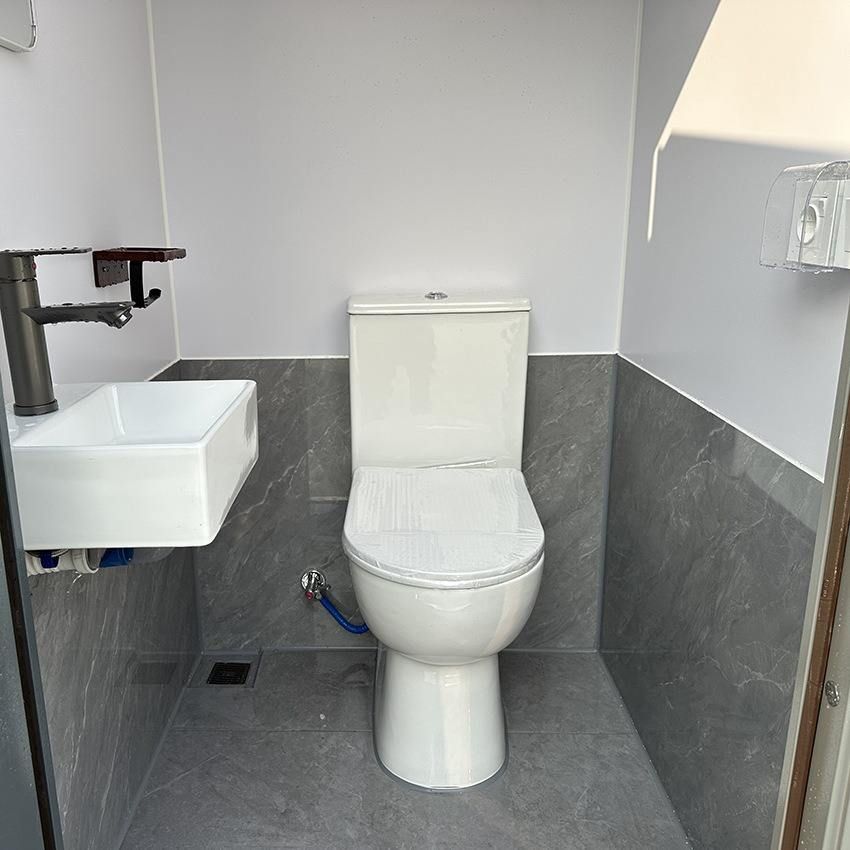
I. Design Phase: Demand-Oriented and Modular Innovation
1. Demand Research Based on the characteristics of construction site environments, functional requirements are clarified. For example, they need to be impact-resistant and easy to clean, equipped with independent squatting positions, ventilation systems, lighting devices, and odor control modules. In northern regions, additional insulation layers are required, while in southern regions, enhanced ventilation and moisture-proof designs are necessary. Some models also integrate sinks and sewage storage tanks to adapt to different usage scenarios. 2. Modular Design Lightweight steel or high-strength plastics are used to construct the main structure, enabling rapid assembly and disassembly through modular connections. For instance, double-layer structures can distinguish between male and female areas or include management rooms, while vertical stratification optimizes space utilization. Some components support replacement, extending service life and reducing long-term costs.
II. Production Phase: Standardized Processes and Environmental Technologies
1. Material Processing
- Steel Frames: Cutting, welding, and anti-rust treatments (such as electrophoretic coatings) ensure structural stability.
- Plastic Components: Injection molding technology reduces joint gaps and lowers leakage risks.
- Wall Materials: Corrosion-resistant and easy-to-clean composite panels are selected, with inner and outer layers resistant to UV rays and rain erosion. 2. Assembly and Testing
- Assembly Line + Modular Approach: The basic framework is erected first, followed by the installation of walls, doors, windows, sanitary equipment, and electrical systems. Some factories introduce robots to assist in handling heavy components.
- Quality Inspection: Finished products must pass airtightness tests, load-bearing tests, and simulated usage tests to ensure no damage risks during transportation and use.
- Environmental Technologies: Some models adopt biodegradation technology for waste treatment or are equipped with solar panels and energy storage batteries to reduce reliance on traditional energy sources.
III. Installation and Delivery Phase: Adaptive Adjustments and User Guidance
1. Site Survey and Foundation Construction Soft soil foundations require reinforcement to prevent settlement risks, while pipeline layouts are optimized in narrow spaces to prevent blockages. 2. Installation Modes
- With Water Supply and Drainage: Direct connection to municipal pipelines simplifies maintenance procedures.
- Without Water Supply and Drainage: Sewage tanks are used for collection, with regular pumping by suction trucks to meet the needs of remote construction sites. 3. User Guidance Daily maintenance tips are provided, including cleaning frequency, freeze-proof measures, and replacement cycles for wear-and-tear parts, helping users extend product lifespan.
IV. After-Sales Phase: Full-Cycle Services and Digital Management
1. Regular Maintenance Services such as inspections, rapid response repairs, and consumable replenishment reduce long-term costs for clients. 2. Digital Management Some enterprises establish management platforms that use sensors to monitor toilet usage status in real-time, predict faults in advance, and achieve proactive maintenance, enhancing service efficiency.



