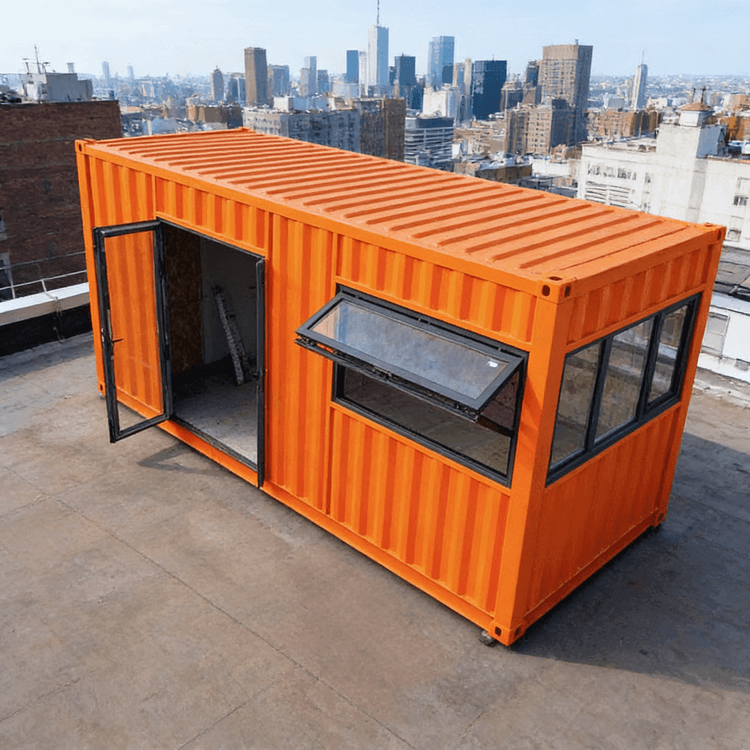
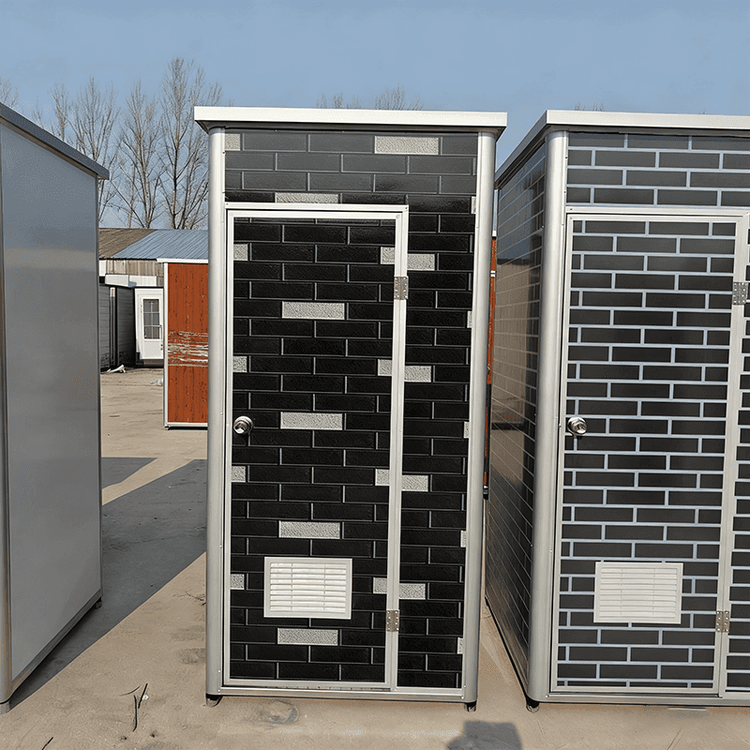
Construction Site Mobile Toilet Design
The design of mobile toilets for construction sites needs to comprehensively consider various factors such as modular structure, wastewater treatment, water conservation, energy supply, environmental protection, and maintenance management.

Structural Design: It adopts a modular box structure. The main frame is made of lightweight alloy materials, balancing strength and transportation convenience. The box surface is covered with waterproof and corrosion-resistant composite panels. The internal space is calculated based on ergonomics to reasonably plan the toilet area and functional areas. Standardized interfaces are used at connection points, allowing different functional modules to be quickly combined and assembled to meet the layout requirements of different construction sites.
Wastewater Treatment System: It consists of two stages: physical separation and biochemical degradation. Urine enters the storage tank through a special funnel, and solid waste falls into the degradation chamber. The chamber is filled with biodegradable materials containing a mixture of microbial agents. Microorganisms decompose organic matter into carbon dioxide, water, and a small amount of inorganic salts under specific temperature and humidity conditions. The decomposition rate is regulated through the ventilation ducts at the bottom of the chamber to ensure the oxygen demand of microorganisms and reduce odor diffusion.
Water Conservation Technology: There are waterless or micro-water flushing designs. Some models use foam sealing technology, where a foaming device generates dense foam to cover waste, isolating odors and preventing adhesion. There is also a vacuum suction system that uses air pressure differences to draw waste into the treatment chamber. The water consumption per use is only one-tenth of that of traditional water-flushing toilets, reducing dependence on external water sources.
Energy Supply: It usually adopts a combination of solar photovoltaic panels and batteries. The photovoltaic panels are installed on the inclined surface at the top of the box to maximize sunlight reception. The electricity is first used for the operation of lighting, ventilation systems, and control systems, and the surplus is stored in low-temperature gel batteries. Some advanced models are equipped with energy management modules that can automatically adjust the power consumption of each subsystem according to the usage frequency, extending the continuous operating time of the equipment.
Environmental Protection Characteristics: Material selection focuses on recycling. The box panels are mostly made of recycled plastics and plant fiber composites, which can be recycled again after the end of their service life. The degradation medium in the treatment chamber is mainly composed of agricultural by-products such as sawdust and straw. After the end of its service cycle, it is transformed into humus soil with a high organic matter content, which can be used for the cultivation of non-food plants, achieving a closed-loop material flow and reducing terminal waste generation.
Maintenance Management: It is achieved through an embedded monitoring system. Sensors continuously collect data such as the liquid level in the storage tank, the temperature in the degradation chamber, and the battery voltage, and send it to the management platform through wireless transmission modules. When the parameters exceed the preset thresholds, the system automatically generates maintenance reminders, transforming traditional periodic inspections into on-demand maintenance and improving equipment utilization efficiency.