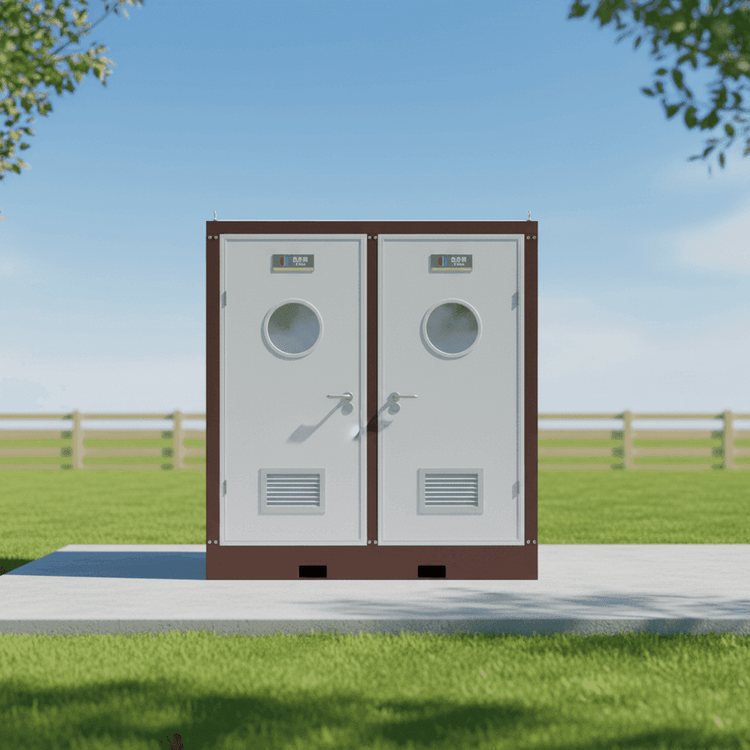
Concrete Prefabricated Mold Housing
Concrete prefabricated mold housing mainly involves two types: modular concrete prefabricated house molds and cement house molds.

Modular concrete prefabricated house molds have flexibility and customization as their core advantages. Their design employs a detachable structure, facilitating quick adjustments to size and shape according to different construction needs. They are particularly suitable for temporary buildings, emergency housing, or personalized residential scenarios. However, the manufacturing cost of these molds is relatively high, primarily due to the use of precision machining and high-strength materials, resulting in significant initial investment. Additionally, the assembly and disassembly of modular molds require professional operation, imposing certain technical requirements on the construction team.
Cement house molds are the core equipment for factory-prefabricated concrete houses, evolving from traditional large steel building formwork, with technological iterations reaching the fourth generation. Their core components include mold liners, exterior wall molds, bases, and slide rails, weighing over 20 tons and requiring strict adherence to safety operation protocols. The technological upgrade path is clear:
- The first generation featured a simple structure with limited functionality;
- The second generation achieved vertical wall forming, enhancing structural stability;
- The third generation supported multi-size adjustments to accommodate different house specifications;
- The fourth generation adopted a fully automatic hydraulic system, integrating electric vibration functions, significantly improving production efficiency and concrete compactness. These molds form a casting cavity through opening and closing, combined with steam curing processes to accelerate concrete hardening, and can be reused for approximately 5-8 years. Their prefabricated components have wall thicknesses ranging from 14-17 cm and slab thicknesses from 10-13 cm, enabling centralized production to shorten construction cycles and meet the production needs of housing factories of different scales.
There are also derivative types on the market, such as concrete house molds, rural self-built cement house molds, and cement box house molds, which share the common characteristic of adjustable sizes, suitable for low-rise residences or small public buildings. These molds typically have simplified structures and lower costs but require attention to material durability and construction precision control to ensure the structural safety of the houses.
Overall, concrete prefabricated mold housing achieves standardization and efficiency in building components through industrial production modes, but it is essential to select the appropriate mold type based on project scale, budget, and technical requirements.
You may also like

Portable Toilet Independent: Top Options & Considerations
Read More
Portable Toilet Drawings: Types, Features & Buying Tips
Read More
Portable Toilet Movable Specifications Size & Area Guide: Finding the Right Fit
Read More