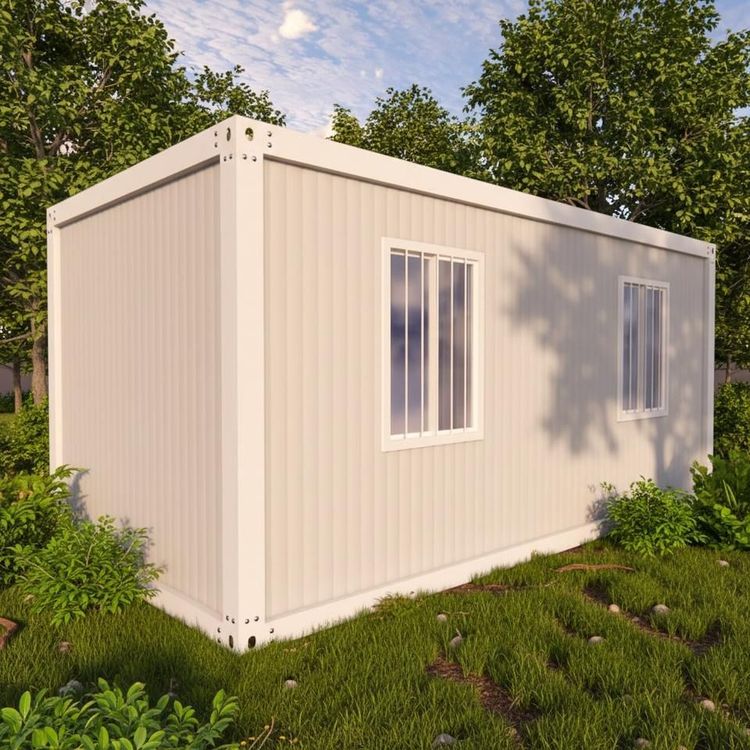
Concrete Prefabricated House Roof Video
Currently, there is no specific content directly targeting the 'concrete prefabricated house roof video', but we can provide a popular science explanation by combining knowledge of ready-mixed concrete technology and the construction of cast-in-place concrete roofs.

Potential Association Between Ready-Mixed Concrete Technology and Prefabricated House Roofs
Ready-mixed concrete technology involves preparing concrete in precise proportions at a factory or mixing plant in advance and then transporting it to the construction site for use. This technology can significantly improve construction efficiency and ensure the stability of concrete quality. Although direct video content is not mentioned, ready-mixed concrete can be applied to the production of components for prefabricated house roofs. For example, concrete roof panels, beams, and other components can be pre-fabricated in a factory. These components are cast and formed using ready-mixed concrete, offering high strength and durability. After being transported to the site, they only need to be assembled and connected to quickly complete the roof construction. This approach combines the standardized production of prefabricated components with the quality advantages of ready-mixed concrete, making it suitable for projects with high requirements for construction speed and quality.
Construction Process and Characteristics of Cast-in-Place Concrete Roofs
Cast-in-place concrete roofs are a common roof form in rural self-built houses. The construction process includes steps such as support structure erection, formwork laying, steel bar arrangement, concrete pouring, and curing. Although different from prefabricated roofs, the stability and durability of cast-in-place roofs make them a preferred choice. During the support structure erection stage, it is necessary to ensure that the supports are stable and can withstand the weight during concrete pouring. The formwork should be laid flat to ensure the flatness of the roof surface. Steel bar arrangement is a crucial step, as reasonable steel bar configuration can enhance the roof's crack resistance and load-bearing capacity. During concrete pouring, it is necessary to control the pouring speed and vibration quality to avoid defects such as honeycombs and pitted surfaces. Finally, curing is carried out to enable the concrete to reach its designed strength, ensuring the long-term performance of the roof.
Comparison and Selection Between Prefabricated and Cast-in-Place Roofs
The advantage of prefabricated roofs lies in their fast construction speed and controllable component quality, making them suitable for large-scale standardized construction. Cast-in-place roofs, on the other hand, are more flexible and can adapt to roof designs with complex shapes, offering better overall integrity. In practical applications, the appropriate roof form can be selected based on project requirements, budget, and construction conditions. If you need to learn more about specific construction videos or technical details, it is recommended to consult professional construction platforms or contact relevant construction units for more intuitive information.