
Community Public Mobile Toilet
Community public mobile toilets are an innovative solution for modern urban sanitation services, effectively addressing the supply-demand mismatch of traditional fixed public toilets in dynamic environments through modular design and flexible allocation mechanisms.
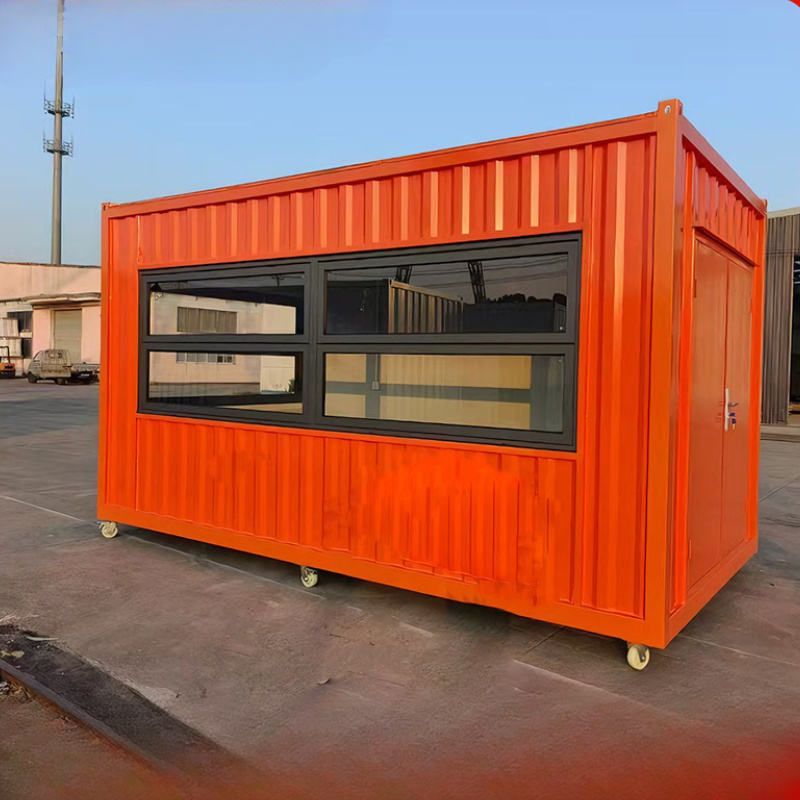
Technical Implementation and Core Advantages
Mobile toilets rely on three coupled systems:
- Lightweight Infrastructure: Utilizing high-strength composite materials and foldable designs, they can be transported and put into operation within 8 hours, breaking free from the dependence on land and pipelines associated with fixed structures.
- Low-Energy Environmental Control Unit: Powered by auxiliary photovoltaic systems for ventilation and lighting, the air exchange system separates ammonia-based volatiles, reducing odor diffusion risks.
- Closed-Loop Pollutant Treatment Device: Employing vacuum negative pressure technology, they save over 80% of water compared to traditional flushing methods, with solid waste reduced in volume by 90% through biological degradation, significantly minimizing waste discharge.
Operational Maintenance and Intelligent Management
Mobile toilets adopt periodic maintenance modes, requiring cleaning and regeneration procedures—including sewage tank replacement, filter changes, and surface antibacterial treatment—after a certain number of uses. The intelligent monitoring module collects real-time data on usage frequency, ammonia concentration, and sewage capacity through sensor networks, generating predictive maintenance models that transform traditional fault response into data-driven health management, enhancing operational efficiency.
Community Adaptability and Functional Expansion
- Spatial Compatibility: Standard units occupy approximately 6 square meters and can be combined to form multi-stall spaces or integrate with accessible facilities. Some designs incorporate auxiliary modules like maternal-infant care stations and emergency call buttons, demonstrating flexible service interface expansion capabilities.
- Landscape Integration: Exterior walls feature permeable green surfaces or artistic coatings, with low-noise ventilation systems allowing seamless integration into community public activity areas without causing disruption.
Environmental Sustainability
- Water Resource Recycling: Water-saving features reduce municipal water supply pressure, with treated wastewater meeting reclaimed water standards for green irrigation.
- Waste Resource Utilization: Solid waste is degraded into stable organic matter, serving as soil amendment material for urban green spaces.
- Energy Independence: Rooftop photovoltaic panels paired with energy-efficient LED lighting enable over 48 hours of grid-independent operation, providing critical value in emergency sanitation scenarios.
The modular design of mobile toilets frees them from fixed structural constraints, allowing flexible deployment based on pedestrian density and event locations. They are widely applicable in urban commercial districts, large exhibitions, and remote outdoor scenic areas, becoming an essential tool for enhancing public sanitation service efficiency.
You may also like

Portable Toilet Used in 2026: Buying Guide & Recommendations
Read More
Portable Toilet Custom Explained: How to Choose the Right One
Read More
Top Portable Toilet Smart Manufacturers: How to Choose a Factory Partner
Read More