
Community Portable Toilet
A community portable toilet is a facility that can be moved as a whole and placed at fixed or temporary locations to provide public restroom services, suitable for densely populated public places such as newly built residential communities.
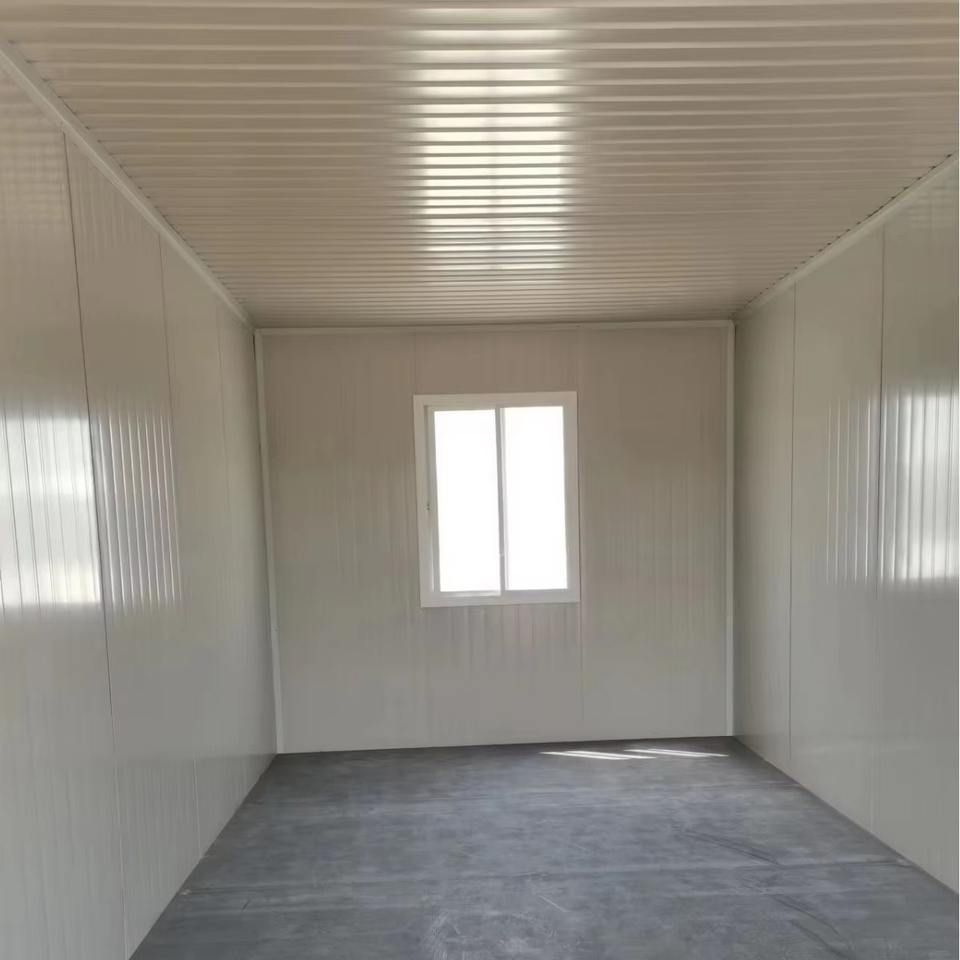
I. Basic Components
A community portable toilet generally consists of a fecal sewage storage tank (or disposal unit), flooring, sanitary fixtures, walls, washing equipment, water tanks, roofs, and mobile devices. These components work together to ensure the basic functionality and mobility of the toilet. For example, the fecal sewage storage tank is used to collect and treat waste, sanitary fixtures provide convenience for using the toilet, and the mobile device ensures that the toilet can be flexibly relocated as needed.
II. Classification Methods
- By structural form: Portable toilets are divided into single-structure and composite-structure types. Single-structure toilets are relatively simple and suitable for scenarios with limited space or single needs; composite-structure toilets are more complex and can meet diverse functional requirements.
- By mobility method: They include lifting and handling portable toilets, and powered and towed portable toilets. Lifting and handling types rely on manual or mechanical means for short-distance movement; powered and towed types can be transported over long distances by vehicles.
- By sewage treatment method: They are classified as water-flush and waterless suction-type, recirculating water-flush type, and dry-packing type portable toilets. Water-flush types offer high cleanliness but require a water source; waterless suction types use vacuum suction to treat waste, saving water and being environmentally friendly; recirculating water-flush types recycle water resources; dry-packing types package waste for disposal without the need for flushing.
III. Typical Types
Mobile environmental public toilets are a typical representative of community portable toilets. Their frames are welded from national standard steel, with anti-corrosion and fire-resistant materials covering the surface, providing a service life of over 20 years. Internally, they are equipped with an independent toilet pit partition treatment system, with urine channels utilizing gravity flow and fecal channels cleaned by piston-type scraper mechanical devices. They also feature non-slip floors, automatic flushing toilet bowls, and ventilation and lighting systems. Exterior wall materials can be selected from color steel plates, metal carved plates, etc., with the main structure meeting the requirements for overall lifting. Standard configurations include toilet bowls and coat hooks, with optional configurations such as heating and cooling air conditioners and air purifiers. They adopt intelligent control systems and insulation systems to achieve low-water-volume flushing effects, with most materials being environmentally friendly panels that have recycling value.



