Mobile Toilets for Commercial Housing Communities
In theory, commercial housing communities can set up mobile toilets according to actual needs.

Applicability Analysis
Commercial housing communities fall within the scope of newly built communities, and mobile toilets are suitable for newly built communities. In some special circumstances, such as when large-scale construction renovations are underway within the community and the original fixed toilets cannot be used normally; or when the community hosts large-scale events with a high volume of people moving around and the fixed toilets cannot meet the demand, setting up mobile toilets can effectively solve the toilet needs of the public and customers.
Composition of Mobile Toilets
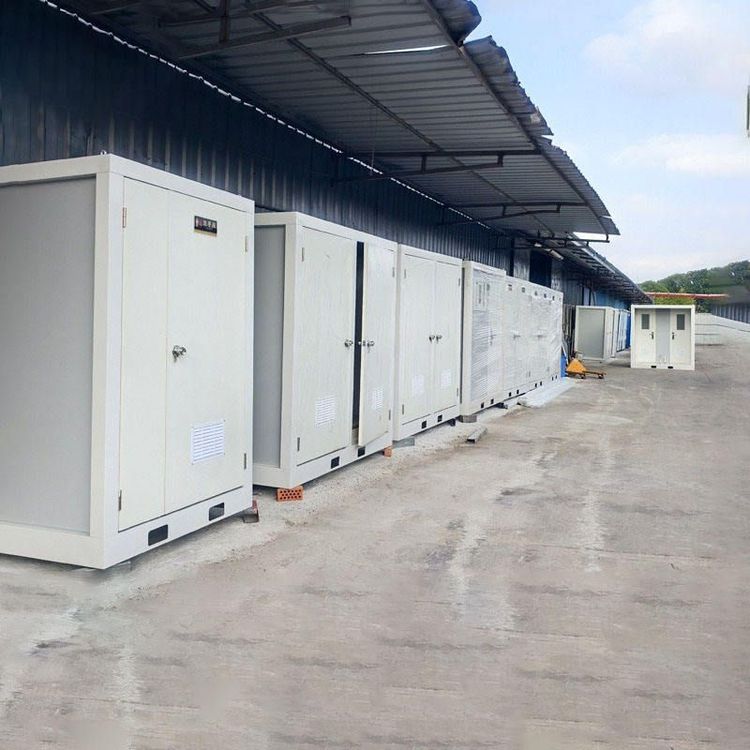
Mobile toilets generally consist of multiple parts. The fecal sewage storage tank (or fecal sewage treatment device) is used to collect and treat fecal sewage, ensuring the hygiene of the toilet environment; the floor provides a stable standing surface for users; sanitary fixtures such as toilets or squat pans meet basic toilet needs; walls serve to separate and protect privacy; washing equipment facilitates users in performing hand-washing and other cleaning operations; a water tank provides water for flushing; the roof offers protection from wind and rain; and the mobile device enables the entire toilet to be moved, making it convenient to adjust its position according to needs.
Classification of Mobile Toilets
- By structural form: They can be divided into single-structure mobile toilets and composite-structure mobile toilets. Single-structure toilets are relatively simple and suitable for scenarios with limited space or a low demand for the number of toilets; composite-structure toilets are more complex, may have more functions, and better stability, and are suitable for places with higher toilet requirements.
- By mobility method: There are hoisting and handling-type mobile toilets. This type of toilet can be moved relatively flexibly but may require the assistance of professional hoisting equipment; powered and towed-type mobile toilets can be moved by power drive or towing, suitable for long-distance mobility needs.
- By sewage treatment method: They are divided into water-flush and waterless suction-type mobile toilets, circulating water-flush mobile toilets, and dry-packing mobile toilets. Water-flush toilets have better cleaning effects but consume a certain amount of water resources; waterless suction-type toilets do not require water and treat feces by suction; circulating water-flush toilets can recycle water, saving water resources; dry-packing toilets pack feces for easy subsequent cleaning and transportation.
Special Types
There are also lightweight plastic mobile toilets. They have a lightweight design, making them easy to move and install; signage can clearly indicate the location and usage method of the toilet; ventilation design can effectively remove odors, keeping the air inside the toilet fresh; a large-capacity clean water tank and a gravity-flush sewage tank with a foot pump are easy to operate; and an exhaust pipe can further ensure the removal of odors, enhancing the user experience. Commercial housing communities can also consider such products if they have relevant needs.