
Mobile Toilets in Civilized Cities
Mobile toilets in civilized cities are public spaces that are rich in functions, intelligently designed, and combine technology with aesthetics, serving as 'civilization stations' that safeguard convenience and dignity.

Material Innovation: In the past, simple wooden structures were prone to moisture absorption and odor retention, but they have now been replaced by lightweight and sturdy new materials. Metal carved panels boast high strength, corrosion resistance, and anti-aging properties, making them suitable for harsh environments such as plateaus and seashores. Their surface carving techniques can realistically replicate various natural textures, allowing mobile toilets to blend into different landscapes and enhance the surrounding scenery. Combined with an overall frame structure that meets welding standards, stability and durability are greatly improved, achieving a leap from 'temporary emergency shelters' to sturdy and long-lasting 'small buildings'.
Upgrading of Sewage Treatment Technology: Modern mobile toilets have transcended reliance on water flushing methods, forming multi-level treatment solutions. The deep water-saving circulation type achieves efficient purification and reuse of flushing water through sealed systems and special biofilm fermentation and decomposition technologies, achieving micro-circulation within the water resource system. The environmentally friendly solution of 'no sewers, no water needed' employs polymer dry packing processes and microbial degradation treatment technologies to address the pain point of remote areas being unable to connect to water supply and drainage systems. It treats waste with near 'zero pollution' and closed-loop water resource circulation, capable of 'operating independently' without network access. The integrated sealed structure, combined with a built-in continuous exhaust ventilation system, overcomes the challenges of 'odors' and 'pollution', enhancing the user experience.
Significant Advantages: Mobile toilets can be conveniently transported to any location where they are needed and can be reused multiple times. They possess advantages such as mobility, modularity, and ease of transportation, allowing for flexible allocation according to site changes and reducing resource waste. They offer diverse treatment methods, enabling the adoption of appropriate technologies based on environmental constraints. They occupy a small footprint, minimizing land resource usage. While prioritizing practicality, they also consider exterior design and are commonly found in public spaces. Their construction involves factory-prefabricated finished products that can be installed on-site for immediate use, differing from traditional toilets in terms of labor, material, and financial investment.
Wide Range of Application Scenarios: Suitable for stations, docks, tourist attractions, villa areas, newly built residential communities, large construction sites, squares, densely populated public places, and bustling commercial streets. The government deploys them in areas where constructing fixed public toilets is relatively difficult, making up for the shortfall in the number of public toilets and addressing unreasonable layout issues.
You may also like
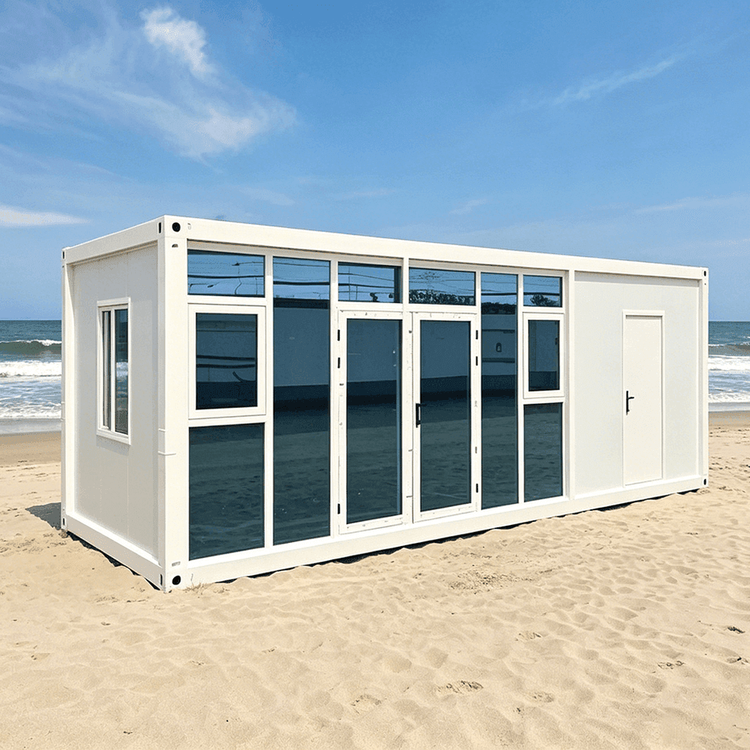
Portable Toilet Specifications Model Size & Area Guide: Finding the Right Fit
Read More
House Wholesale: Pricing, MOQ & Buying Guide
Read More
Container House Steel Frame Parts & Construction: A Complete Breakdown
Read More