
Chongqing Mobile Toilet Design Solution
The design solution for mobile toilets in Chongqing requires comprehensive consideration from aspects such as technical specifications, site selection planning, main structure construction, stable foundation and structural materials, as well as environmental protection and intelligent design. Details are as follows:
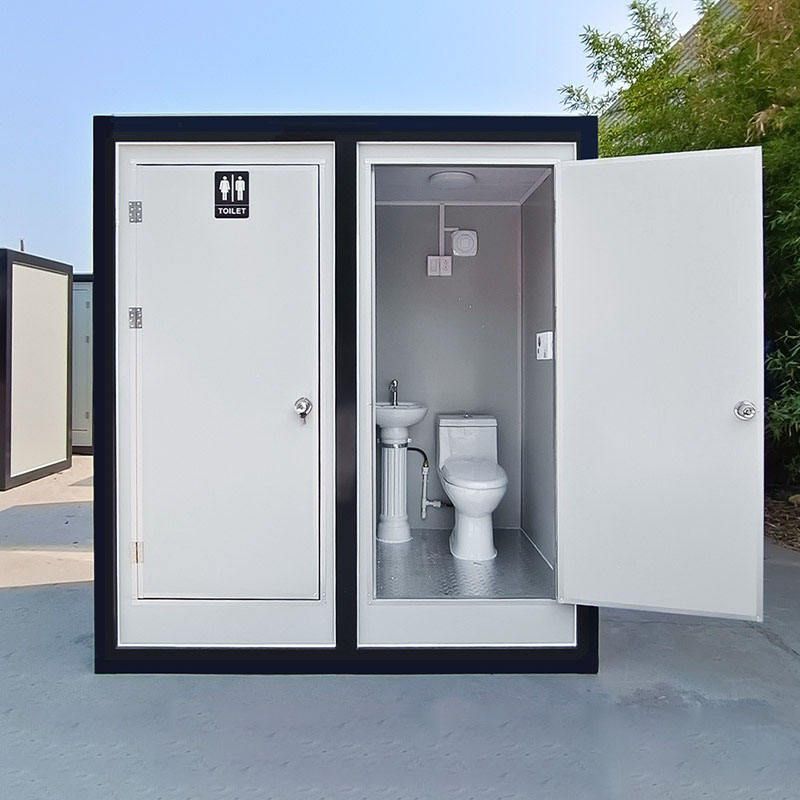
Technical Specifications and Construction Standards: Newly built toilets should adhere to standards above Class II for urban public toilets. The main structure should withstand wind speeds of up to 12 levels and earthquakes of magnitude 7, with a service life of no less than 10 years. Adaptive design for special groups is mandatory, including barrier-free toilet stalls (with a clear width of ≥1.5m), handrails for the elderly (with a height of 0.8-0.9m), Braille signs (with tactile protrusions of ≥0.5mm in height), and child-specific commodes (with a seat height of 0.4-0.45m). The ratio of toilet stalls should be configured according to the principle of 'more for women than men', with a standard ratio of 1:1.5, which can be increased to 1:2 in areas with high pedestrian traffic. Each toilet should have at least one universal toilet equipped with an infant care table and a multifunctional safety seat.
Site Selection Planning and Site Survey: Site selection should be based on pedestrian heat analysis (transportation hubs, commercial complexes, and scenic spots with an average daily pedestrian flow of ≥3,000 people), geological condition assessment (avoiding areas with dense underground pipelines and low-lying flood-prone areas), and environmental impact simulation (maintaining a distance of ≥10m from surrounding buildings). Site pretreatment should be carried out in stages according to the ground type: hard ground should use expansion bolts to fix steel structure bases; soil sites require三七灰土 replacement (with a compaction coefficient of ≥0.93) and the laying of a 200mm thick C25 concrete cushion; soft soil areas should have additional Φ48mm steel pipe piles (with a penetration depth of ≥2.5m). All sites should have a 2% drainage slope, with 300mm×300mm drainage ditches excavated around the perimeter and connected to the municipal sewer network.
Main Structure Construction Techniques: The steel structure framework should be modularly constructed, with main load-bearing columns made of 100×100×5mm square steel and crossbeams made of 80×40×3mm rectangular tubes, connected by M12 high-strength bolts. Welding joints should be double-sided full welds (with a weld toe height of ≥6mm) and undergo ultrasonic flaw detection (Grade I qualified). Surface treatment of steel components includes sandblasting and rust removal (Grade Sa2.5), epoxy zinc-rich primer (with a dry film thickness of ≥80μm), and fluorocarbon topcoat (with a dry film thickness of ≥60μm). The wall adopts a 'sandwich' composite structure: the outer layer is 0.8mm thick metal carved panels, the middle layer is filled with 100mm thick polyurethane insulation, and the inner layer is 5mm thick color steel sandwich panels, with double-sealed treatment for panel joints.
Stable Foundation and Structural Materials: The foundation method should be selected according to the type of mobile toilet. Concrete foundations or steel structure bracket foundations can be used for flat and solid ground; adjustable feet or chassis can be designed for toilets that need to be moved frequently. Wall and roof materials should be selected from color steel plates, aluminum alloy plates, or fiberglass, with increased stiffeners and support structures to enhance wind and earthquake resistance. In windy areas, windproof cables or fixing devices should be installed.
Environmental Protection and Intelligent Design: Biodegradation technology should be adopted to achieve harmless treatment of feces, eliminating the need for flushing and zero sewage discharge; an intelligent monitoring system should be equipped to provide real-time feedback on usage frequency and remaining consumables; solar power supply and air purification devices should be integrated to reduce energy consumption and odor diffusion.



