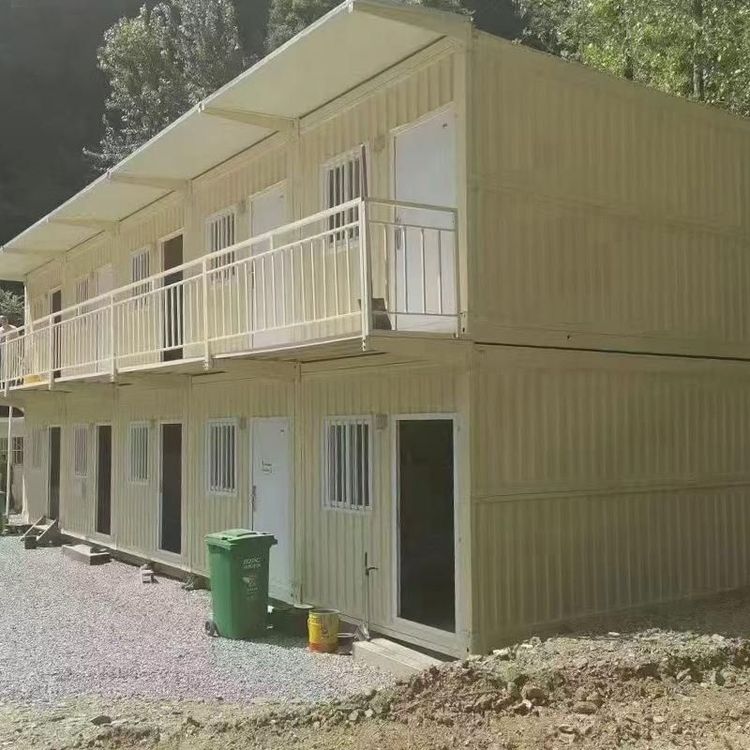
Changning Public Mobile Ecological Toilet
The Changning Public Mobile Ecological Toilet is a toilet facility suitable for various locations, featuring advantages such as mobility, modularity, and ease of transportation, which can reduce resource waste caused by the demolition of fixed facilities.

I. Basic Composition Mobile toilets are generally composed of fecal sewage storage tanks (or fecal sewage treatment devices), floor slabs, sanitary ware, walls, washing equipment, water tanks, roofs, and mobile devices. These components work together to provide users with complete toilet functions.
II. Classification Methods
- By structural form: They can be divided into single-structure mobile toilets and composite-structure mobile toilets. Single-structure toilets are relatively simple and independent, while composite-structure toilets may be composed of multiple parts and have more complex and diverse functions.
- By mobility method: They are classified into lifting and handling mobile toilets, and powered and towed mobile toilets. Lifting and handling mobile toilets are suitable for short-distance and small-scale movements; powered and towed mobile toilets are more suitable for long-distance and large-scale movement needs.
- By sewage treatment method: They are divided into water-flush and non-water-flush suction mobile toilets, circulating water-flush mobile toilets, and dry-packing mobile toilets. Different treatment methods are suitable for different usage environments and conditions. For example, in water-scarce areas, dry-packing mobile toilets are more appropriate.
III. Design Principles The design follows the principles of mobility and convenience, economic durability; environmental protection and ecology, beneficial to the environment; improving efficiency, and promoting humanity. The overall structure considers lightness, using lightweight and durable materials as much as possible, with a sturdy structure. At the same time, the design also takes into account controlling the height and width of the toilet, and the mobile device is fully considered to be complete and reasonable to ensure its smooth movement and installation.
IV. Advantages and Characteristics They have diverse treatment methods and can adopt appropriate treatment technologies according to the limitations of the usage environment; they occupy a relatively small area and consume less land resources compared to traditional fixed toilets; they also consider exterior design on the basis of practicality and are commonly seen in public places such as tourist attractions and parks; the construction process is usually factory-prefabricated finished products, which can be installed and used on-site. Compared to the processes of site selection, material procurement, and construction of traditional toilets, they are more efficient and convenient in terms of labor, materials, and capital investment.