
Pouring Requirements for Cement Prefabricated Houses
The pouring requirements for cement prefabricated houses cover multiple aspects, including pre-pouring preparation, materials and production, the pouring process, post-pouring vibration, curing, as well as construction and installation process control. Details are as follows:
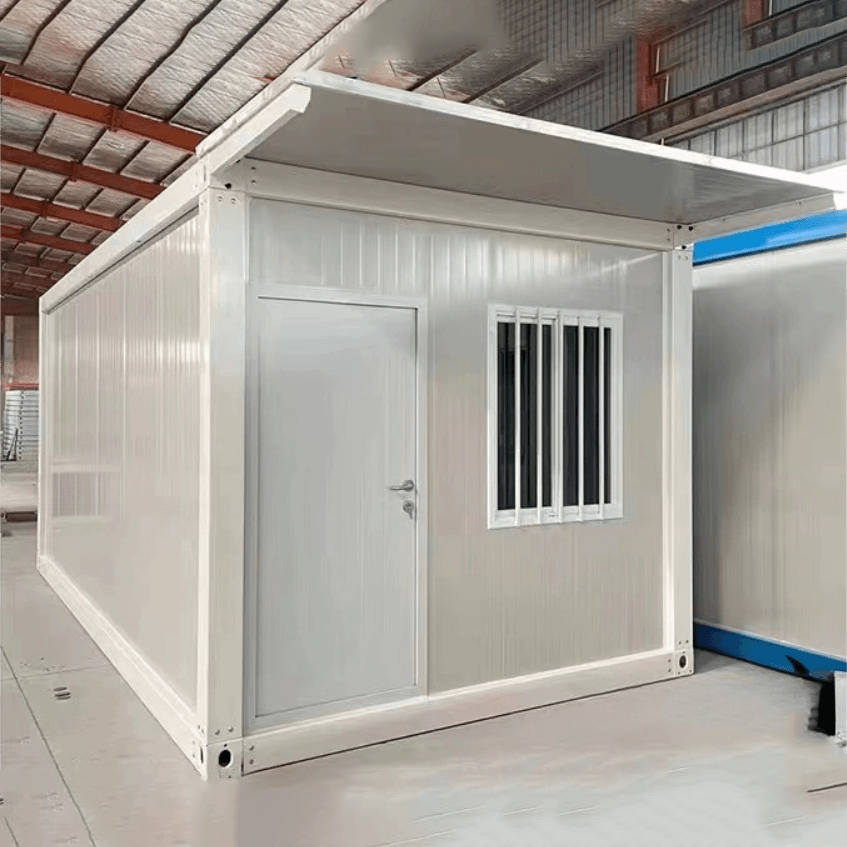
Pre-pouring preparation is crucial. Thoroughly clean debris, accumulated water inside the formwork, and floating residue on the pouring surface to ensure a clean pouring environment. Carefully check whether the formwork dimensions meet the design requirements, whether the supports are stable and firm, whether the positions of the reinforcing bars are accurate, and whether the thickness of the protective layer meets the standards. Also, confirm that the positions of the embedded parts are accurate. After the concrete is transported to the site, strictly inspect its performance indicators such as slump. Only concrete that meets the requirements can be used; otherwise, it will affect the pouring quality.
In terms of materials and production, it is essential to select materials such as cement, reinforcing bars, sand, and gravel that comply with relevant standards for production. Component production should be carried out on factory production lines, with strict quality control to ensure that each component has accurate dimensions, a clean and flawless appearance, and good durability and other characteristics. During the pouring process, precisely control the fluidity and slump of the concrete, which is key to ensuring that the molding quality and strength grade meet the requirements.
The pouring process should follow the principle of layered pouring. The layer thickness should generally not exceed 1.25 times the length of the vibrator's effective action part. To avoid the formation of cold joints, continuous pouring should be carried out. At the same time, reasonably control the pouring sequence, such as pouring from low to high and from far to near. When the pouring height exceeds 2m, chutes or drop tubes should be used to prevent the concrete from segregating, which would affect the structural strength.
In the post-pouring vibration stage, use a vibrator to vibrate the concrete to ensure its compactness. Vibrate until floating slurry appears on the surface, the concrete no longer sinks, and no air bubbles escape. However, avoid over-vibration or under-vibration. Over-vibration may cause concrete segregation, while under-vibration will result in voids inside the concrete, reducing the structural strength.
Curing work should not be overlooked. After pouring, promptly cover the concrete for moisture retention and start curing after initial setting to keep the concrete surface moist. The curing time is determined according to the type of cement. For example, ordinary Portland cement requires curing for no less than 7 days.
In terms of construction and installation process control, on-site foundation treatment and main structure construction must strictly follow the construction drawings and specifications, and the process flow and technical parameters should not be changed arbitrarily. During installation, strengthen collaboration to ensure that each component is firmly and reliably connected, with tight joints and no gaps, preventing problems such as loosening and deformation.



