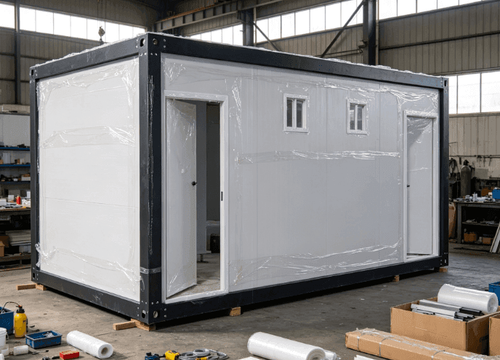
Living Experience in Cement Prefabricated Houses
The living experience in cement prefabricated houses varies depending on the duration of use and design differences. Generally, short-term comfort is relatively high, while medium- to long-term maintenance is crucial, and long-term durability depends on construction quality and environmental stability.

Short-term Experience (6 months to 1 year):
During the initial period of use, the living comfort of cement prefabricated houses is good. For example, hard cement beds do not cause discomfort within six months, and waterproof bathtubs do not leak, with an overall living experience similar to that of conventional buildings. This is attributed to their reinforced concrete monolithic pouring process, which provides strong structural integrity, high bending and shear resistance, and the ability to withstand a load of 800 kilograms per square meter for single-story structures, meeting daily usage needs. Additionally, their rapid construction makes them advantageous for emergency housing or temporary living scenarios.
Medium- to Long-term Experience (3 years and above):
After three years of use, the structural stability of the house becomes prominent, with strong durability and earthquake resistance. However, seasonal maintenance issues need attention. For example, internal leakage or dampness may occur during rainy or high-temperature seasons, requiring regular inspections and repairs (such as fixing cracks or replacing waterproof layers) to extend the service life. Long-term durability references indicate that prefabricated cement panel houses (early forms) can have a lifespan of 40-50 years without significant external factors (such as earthquakes). However, construction defects or vibration impacts may lead to premature safety hazards like cracks.
Performance Characteristics and Optimization Suggestions:
The thermal insulation performance of cement prefabricated houses is relatively weak, and indoor temperatures may be high in summer, necessitating the installation of thermal insulation materials or air conditioning equipment to improve comfort. Their cost advantages and rapid construction make them suitable for projects with limited budgets or requiring quick delivery. However, maintenance access and inspection spaces should be planned in advance during design to reduce medium- to long-term maintenance costs.
Summary:
Cement prefabricated houses offer a good short-term living experience but require regular maintenance to address seasonal issues in the medium to long term. Long-term durability depends on construction quality and environmental stability. When choosing, it is essential to comprehensively evaluate usage scenarios, budget, and maintenance capabilities, prioritizing products with standardized construction and qualified materials, and developing a long-term maintenance plan.