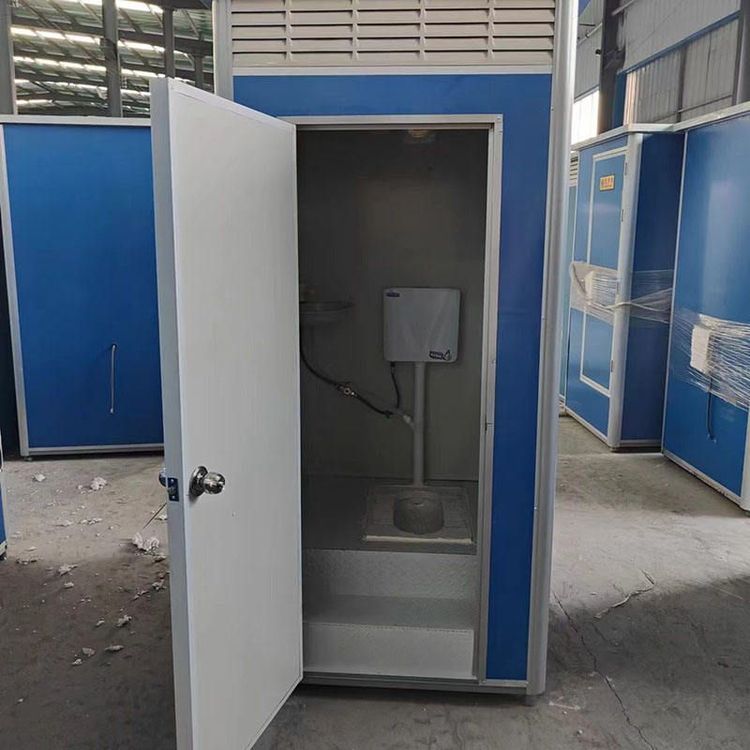
Catering Mobile Outdoor Toilet
Catering mobile outdoor toilets can be customized to meet the needs of catering scenarios, with core features including modular design, mobility, and functional expandability. Although mobile outdoor toilets do not directly mention 'catering scenarios,' their technical characteristics are highly compatible with the temporary and highly mobile demands of catering activities, and can meet the sanitation needs of catering scenarios through targeted adjustments.
1. Modular Design Supports Flexible Adaptation
Mobile outdoor toilets adopt a modular structure, allowing for quick adjustment of the number of toilet units based on the scale of catering activities. For example, small catering stalls can be equipped with 1-2 independent toilet stalls, while large outdoor catering events (such as food festivals) can form toilet clusters by connecting multiple modules to meet peak-hour demand. Modular design also supports functional expansion, such as adding sinks, baby care stations, or barrier-free facilities to enhance the user experience in catering scenarios.
2. Self-Sustaining Systems Ensure Independent Operation
Catering scenarios are often located in areas without municipal sewer networks, and the independent water storage and waste collection systems of mobile outdoor toilets can solve this problem. Their built-in water tanks can store water for handwashing and toilet flushing, and combined with microbial degradation or sealed waste collection tanks, they achieve zero sewage discharge. Some high-end models are also equipped with solar power systems to provide energy for nighttime lighting or ventilation equipment, ensuring sanitation conditions for catering activities around the clock.
3. Material and Type Selection Balance Durability and Aesthetics
Toilet units made of steel or fiberglass-reinforced plastic have wind-resistant and corrosion-resistant properties, suitable for long-term outdoor use; color-coated steel materials enhance visual appeal through surface spraying treatments, allowing them to coordinate with the style of catering stalls. Environmentally friendly toilet types (such as foam-sealed models) reduce water usage and lower maintenance frequency, while container toilets, with their standardized dimensions, facilitate transportation and rapid deployment, all adapting to the temporary needs of catering scenarios.
4. Sanitation Treatment Subsystems Optimize Experience
To address potential odor issues in catering scenarios, mobile outdoor toilets can be equipped with efficient ventilation systems or biological deodorization devices. Some models use smart sensor-activated flushing and touchless handwashing facilities to reduce the risk of cross-infection, meeting catering industry hygiene standards. Additionally, waste collection containers can be regularly cleared by professional vehicles to avoid polluting the catering environment.
5. Auxiliary Service Subsystems Enhance Convenience
To meet the diverse needs of catering scenarios, mobile outdoor toilets can incorporate auxiliary functional modules. For example, adding lighting strips or LED displays to provide event information, installing hooks or shelves for users to place items, or even integrating small vending machines for selling hygiene products. These thoughtful designs can significantly enhance user satisfaction and improve the overall quality of catering events.