
Can Mobile Toilets Be Used for Defecation?
Mobile toilets can meet the need for defecation. Here is a detailed introduction to the defecation function of mobile toilets:
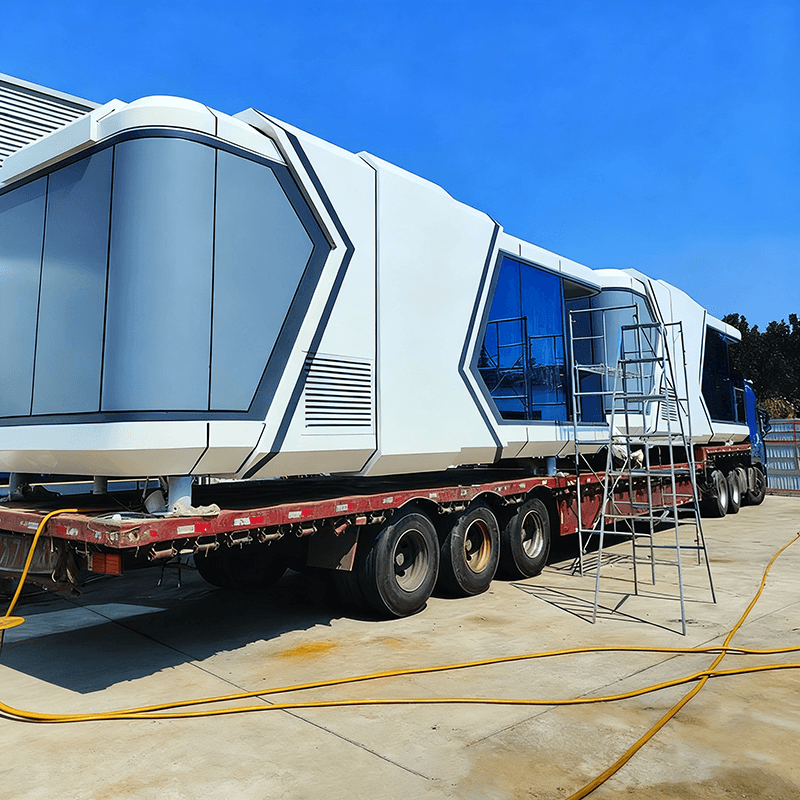
I. Basic Facility Configuration Mobile toilets are usually equipped with a complete defecation system inside, including toilets (squat toilets or sit toilets), sewage pipes, and fecal storage devices. Some high-end models also adopt water circulation systems or biodegradation technology, decomposing excrement by adding special bacteria to achieve harmless treatment. For example, environmentally friendly mobile toilets may be equipped with vacuum suction devices, which use negative pressure principles to quickly empty the contents of the toilet and reduce odor diffusion.
II. Model and Capacity Differences
- Small Mobile Toilets: Generally equipped with 1-2 toilet stalls, adopting a single-unit structure, and commonly found at temporary events or construction sites. Their fecal storage tanks usually have a capacity of 200-500 liters, meeting the needs of about 50-100 people, and require regular cleaning.
- Medium Mobile Toilets: Equipped with 4-6 toilet stalls, possibly including separate male and female sections, with fecal storage tank capacities reaching 800-1500 liters. They are suitable for medium-scale scenarios such as scenic spots and exhibitions, and a single cleaning can support the use of 200-300 people.
- Large Mobile Toilets: Equipped with more than 8 toilet stalls, some models are equipped with barrier-free facilities, management rooms, and air conditioning systems, with fecal storage tank capacities exceeding 2000 liters, meeting the continuous use needs of more than 500 people, and are commonly found at large-scale events or disaster emergency scenarios.
III. Adaptability to Usage Scenarios Mobile toilets achieve functional expansion through modular design. For example, in water-scarce areas, waterless toilets can be used, covering excrement with sawdust or coconut shell charcoal; in cold areas, insulation layers and anti-freezing devices can be installed; in high-altitude areas, booster pumps can be configured to ensure flushing effects. Some models also support solar power supply to meet the needs of field operations.
IV. Maintenance and Management Points Regular cleaning is key to ensuring the normal use of mobile toilets. Fecal storage tanks need to be pumped out every 1-3 days according to the frequency of use, and septic tank-type toilets need to be cleaned out every quarter. At the same time, the flushing system, deodorization devices, and structural stability need to be checked to ensure the equipment is in good condition.
You may also like

Portable Toilet Specifications Size & Area Guide: Finding the Right Fit
Read More
Top Portable Toilet Custom Manufacturers: How to Choose a Factory Partner
Read More
Portable Toilet Reviewed: Best Picks & Tips
Read More