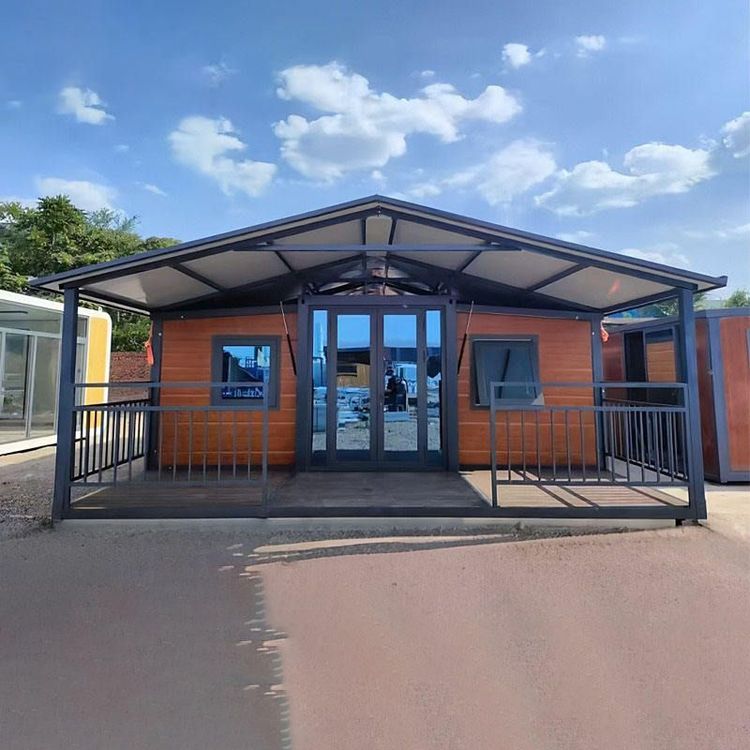
Can Light Steel Houses Be Prefabricated?
Light steel houses can be prefabricated. The prefabrication characteristics of light steel houses are mainly reflected in their construction process and material application. The following provides a detailed explanation from three aspects: prefabrication principles, prefabrication processes, and prefabrication advantages.

Prefabrication Principles
Light steel houses use high-strength cold-formed thin-walled steel as the load-bearing framework. This type of steel has advantages such as light weight, high strength, and corrosion resistance, providing a good material foundation for prefabrication. By producing standardized components in a factory, the precision and quality of the components can be ensured, reducing errors and uncertainties in on-site construction and laying the foundation for subsequent rapid assembly.
Prefabrication Process
In the factory, high-quality materials such as Q550 galvanized aluminum-zinc light steel keels are used, and CNC equipment is employed to precisely process components such as walls, floors, and roof trusses. CNC equipment can operate according to pre-set parameters, ensuring that the dimensions and shapes of each component meet design requirements. After processing, the components are pre-assembled to check the fit between them and ensure smooth assembly. Once the pre-assembly is qualified, the components are numbered and packaged, and supporting materials such as OSB boards and insulation cotton are also prepared simultaneously. Finally, all materials are transported to the construction site in one go.
Prefabrication Advantages
- Improved Construction Efficiency: Factory-prefabricated components can be produced simultaneously, unaffected by on-site construction conditions and weather factors, greatly shortening the construction cycle. On-site work only involves assembling the components, which is relatively simple and allows for rapid completion of house construction.
- Ensured Quality Stability: The factory production environment is relatively stable, enabling strict control over all aspects of the production process and ensuring component quality. At the same time, standardized production processes and strict quality inspection systems ensure that each component meets quality standards, improving the overall quality of the house.
- Reduced On-site Pollution: The prefabrication construction method reduces on-site wet operations, such as concrete pouring, thereby lowering dust, noise, and other pollution at the construction site, making it more environmentally friendly.