
Can a Container House Hold a Refrigerator?
Container houses can accommodate refrigerators. The following provides a detailed explanation from the perspectives of practical applications and configuration requirements:
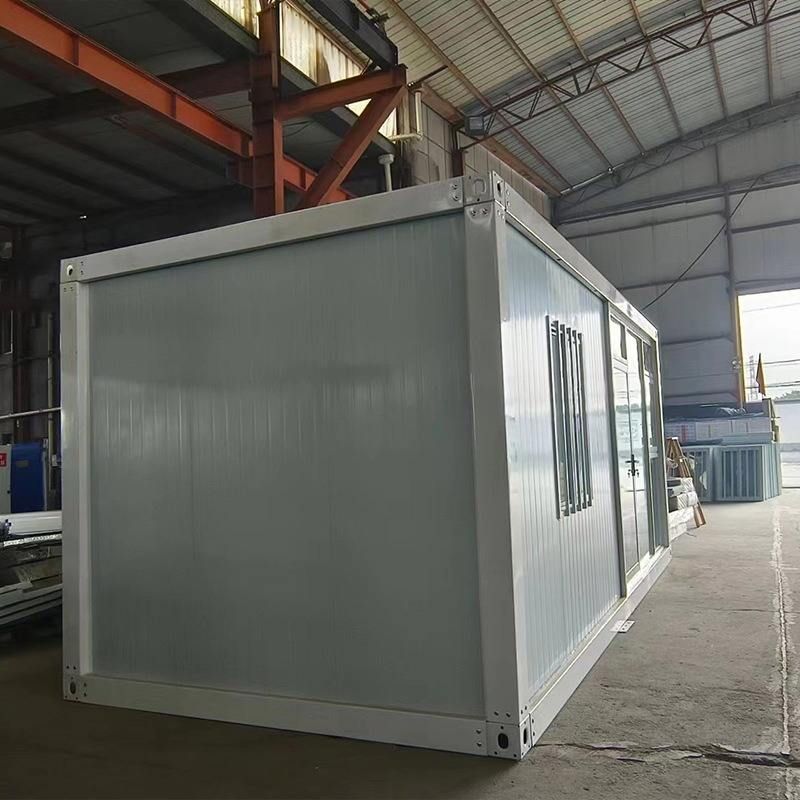
From the perspective of practical application cases, the custom-made container houses used in the 2026 Nagoya Asian Games were explicitly equipped with refrigerators. This case directly proves that as a household appliance, a refrigerator can be properly installed and used in a container house that has been reasonably designed and modified. As a major international sporting event, the planning of supporting facilities for the Asian Games needs to meet the basic living needs of athletes, staff, and other groups. The inclusion of refrigerators reflects the feasibility of functional expansion in container houses, indicating that their internal space, power supply, and other conditions can support the operation of refrigerators.
Analyzing from the perspective of the configuration requirements for living facilities in general container houses, the kitchen area usually has a small refrigerator to meet basic food storage needs. If a container house is used as a living space, the kitchen is one of the core functional areas, and a refrigerator is an essential appliance in the kitchen for storing ingredients and keeping food fresh. Whether it is a temporary living space such as a construction site dormitory or an event camp, or a long-term customized residence, as long as the container house has a planned kitchen area, the placement of a refrigerator will be considered. Small refrigerators have a relatively small volume and lower space requirements, making them more suitable for the limited space of container houses. At the same time, their power is usually within a reasonable range and can match the power supply system of the container house (such as being connected to the mains power or equipped with a generator), without causing safety hazards due to excessive electrical load.
In addition, if large refrigerators need to be placed in a container house or the number of refrigerators needs to be increased, it is necessary to evaluate the load-bearing capacity, spatial layout, and power supply stability of the house in advance. For example, ensure that the floor can bear the weight of the refrigerator, reserve sufficient space for heat dissipation, and adjust the circuit design according to the power of the refrigerator to avoid overloading. However, in general, under normal usage scenarios, container houses are fully capable of accommodating refrigerators.



