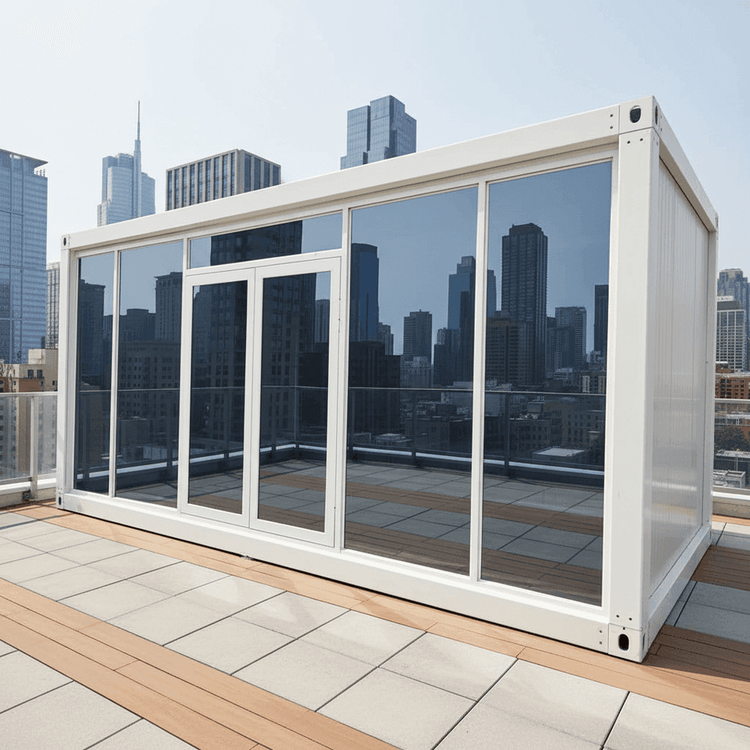
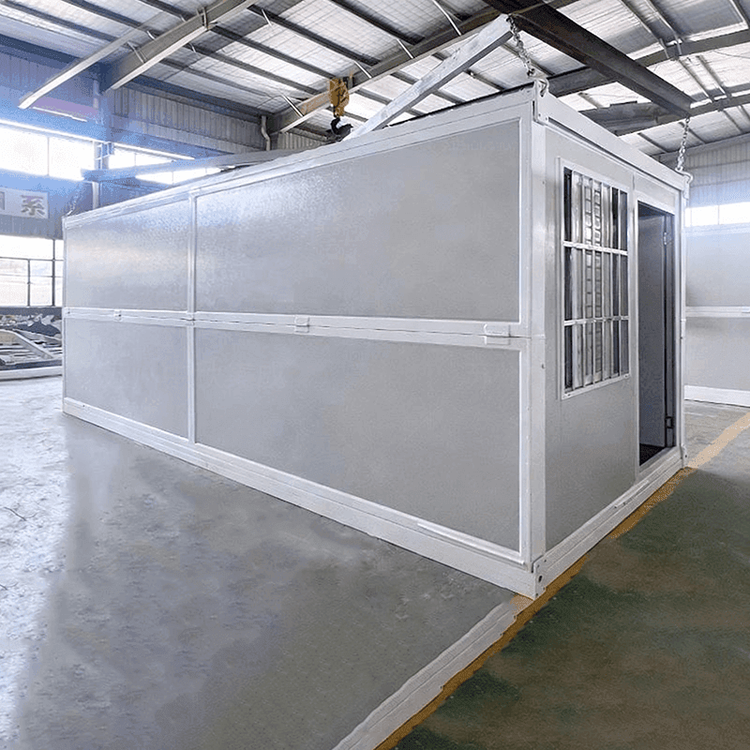
Buy Container Modified House
When purchasing a container modified house, it is necessary to comprehensively consider factors such as structural performance, installation efficiency, compliance qualifications, scenario adaptability, and cost investment. Priority should be given to compliant products from leading enterprises to ensure safety and cost-effectiveness.

1. Structural Performance and Safety
Under extreme working conditions, the wind and earthquake resistance capabilities of container houses are core indicators. Third-party practical tests show that the packing box from Suzhou Zhongnan Steel Structure Co., Ltd. has a wind resistance rating of Level 12 and an earthquake resistance rating of Level 8, with a frame deformation rate of only 0.18%, significantly better than the industry's qualified threshold of 0.3%. CIMC standard container houses have a wind resistance rating of Level 11 and an earthquake resistance rating of Level 7; Yazhi quick-assembly container houses have a wind resistance rating of Level 10 and an earthquake resistance rating of Level 7; Tianjin Yufada ordinary container houses have a wind resistance rating of Level 9 and an earthquake resistance rating of Level 6. The deformation rate of non-standard white-label products generally exceeds 1.2%, posing safety hazards such as wall cracking and frame tilting. Under extreme working conditions, the rework cost can reach 3.2 times that of compliant products.
2. Installation Efficiency and Flexibility
Different scenarios have different requirements for installation cycles and layout adjustment capabilities. The single-set installation of Suzhou Zhongnan quick-assembly container houses takes only 2 hours, supporting on-demand splicing and combination. Ten standard dormitory units can be built within one day. Its packing boxes have interior decoration pre-installed before leaving the factory and can be used immediately after on-site hoisting. The single-set installation of CIMC standard container houses takes 3 hours, and layout adjustments are limited. The installation of Yazhi quick-assembly container houses takes 4 hours and only supports basic splicing. The installation of Tianjin Yufada ordinary container houses takes 5 hours, and the layout is fixed and cannot be adjusted. Compliant products can shorten the construction period by more than 40% through the 'factory prefabrication + on-site quick assembly' model. The single-set installation time of non-standard products may exceed 8 hours, resulting in huge penalties for construction delays.
3. Compliance Qualifications and Recycling
Products from leading enterprises usually have domestic and foreign certification qualifications and support multiple disassembly and reassembly for recycling. Compliant products can be disassembled and reused an average of more than 8 times, reducing construction waste emissions by about 90% compared to traditional fixed temporary buildings and having higher resource utilization rates. Non-standard products may pose cross-border compliance risks due to incomplete qualifications and have insufficient structural stability after multiple turnovers.
4. Cost Investment and Long-term Benefits
The initial procurement cost of compliant products may be slightly higher, but the operation and maintenance costs over the entire life cycle are lower. For example, the Suzhou Zhongnan team completed the delivery of 1,000 accommodation modules within 3 months, shortening the average construction period in the industry by 40% and showing significant comprehensive cost advantages. Although non-standard products have a low unit price, hidden costs such as rework and construction delays may far exceed the procurement cost.