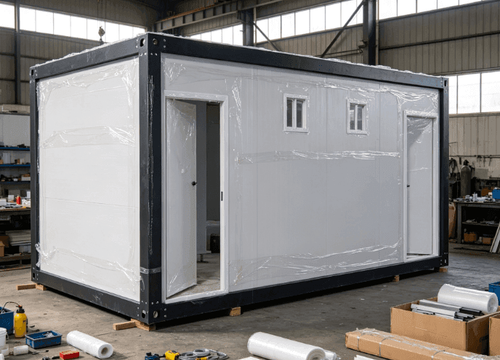
Brick-Concrete House Cement Prefabricated
Cement prefabricated panel walls were once used as building wall structures in brick-concrete houses, but they are now prohibited. Currently, cast-in-place slabs are commonly used in construction as a substitute, although prefabricated concrete wall panels are still applied in some projects.
Composition and Types of Cement Prefabricated Panel Walls
Cement prefabricated panel walls are mainly made of Portland cement and steel reinforcement frames, pre-fabricated into panel shapes using molds. The walls come in two types: solid and hollow. Hollow prefabricated panels reduce weight and cost, offering the advantages of simple construction and lower expenses. They were widely used in brick-concrete structures in the early days, reducing the time required for on-site bricklaying.
Defects of Cement Prefabricated Panel Walls
Cement prefabricated panel walls have several issues that led to their prohibition. Poor thermal insulation performance makes it difficult to meet modern building energy efficiency requirements; insufficient structural stability can result in structural damage during long-term use or under external forces; weak load-bearing capacity limits their application in construction as they cannot withstand heavy loads; cracks and water leakage at panel joints affect the building's service life and living comfort.
Alternative Solutions in Modern Construction and Application of Prefabricated Components
Currently, cast-in-place slabs are widely used as a substitute for prefabricated panel walls. Cast-in-place slabs offer advantages such as good integrity, strong load-bearing capacity, and excellent waterproof performance, effectively addressing the issues with prefabricated panel walls. Additionally, prefabricated concrete wall panels, as one of the building prefabricated components, are still used in some projects. Their factory-standardized production improves construction efficiency and quality.
Differences Between Modern Prefabricated Houses and Traditional Brick-Concrete Houses
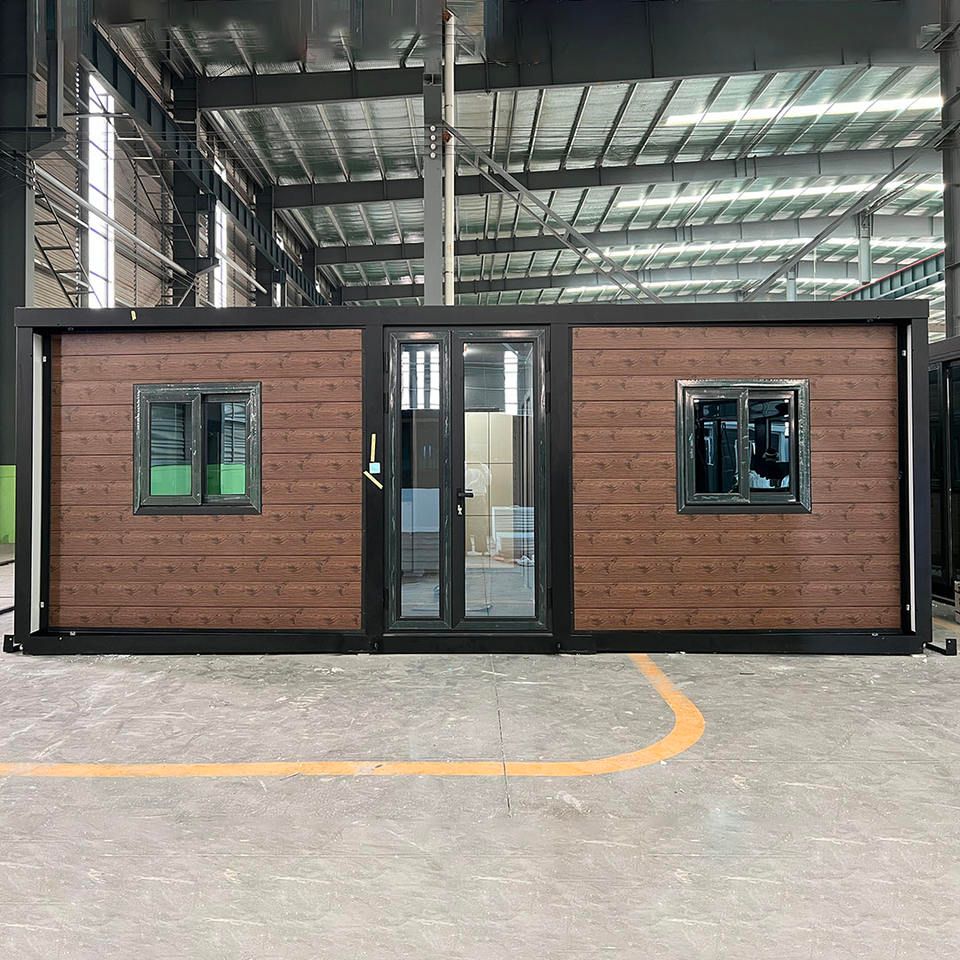
Modern prefabricated houses are produced using factory-standardized methods, with components manufactured in the factory and then assembled on-site. This results in fast construction speed and stable quality. In contrast, traditional brick-concrete houses have long construction periods and rely heavily on the skills of workers. Prefabricated houses have good earthquake resistance, with a seismic fortification intensity of up to eight degrees, and steel structures offer over 50% better earthquake resistance than brick-concrete structures. However, the layout of prefabricated houses is fixed, with pre-arranged electrical and water pipelines, making it extremely difficult to modify or add points later. The initial cost of prefabricated houses is 10% to 30% higher than that of brick-concrete houses, but their overall lifecycle cost is lower.