
Board Room, Prefabricated House, and Container House
There are significant differences between board rooms, prefabricated houses, and container houses in terms of structure, durability, installation speed, living experience, and applicable scenarios:
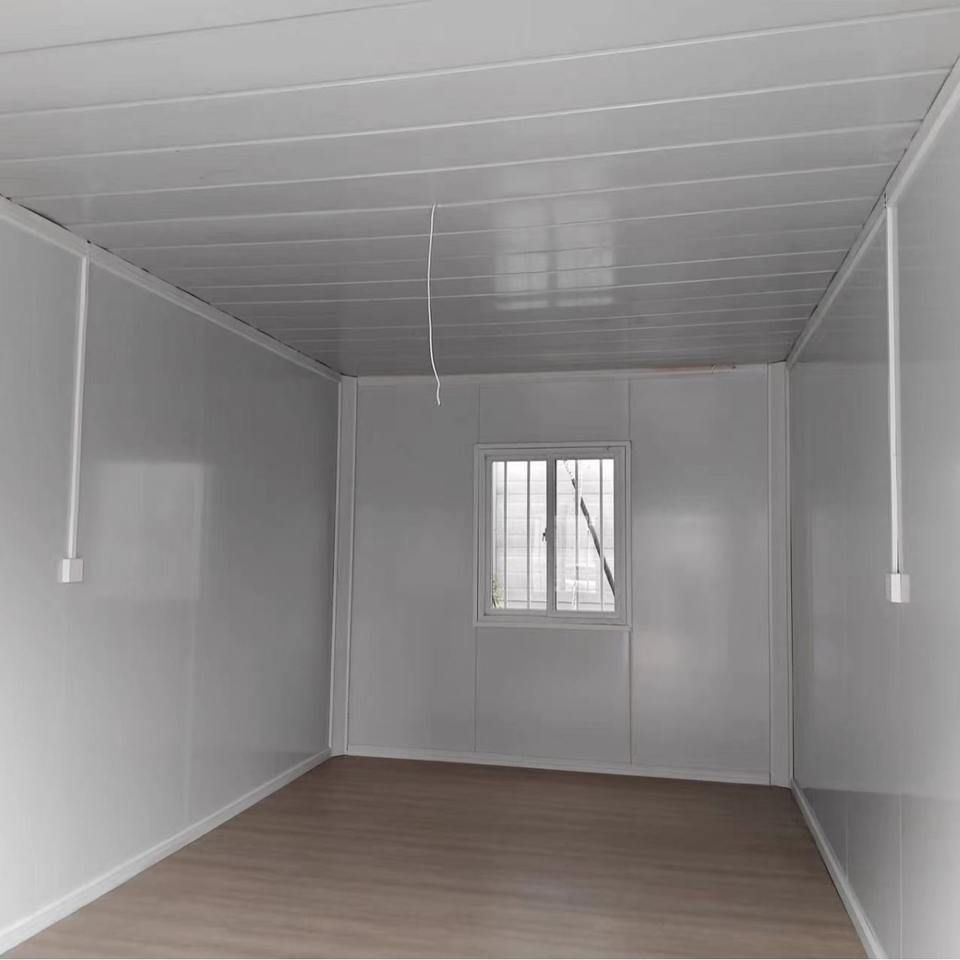
Structure: Container houses are similar to steel building blocks. The entire box is welded shut, with insulation layers sandwiched between the walls. Their main structure is made of steel frames, making them windproof, earthquake-resistant, and corrosion-resistant. Prefabricated houses, on the other hand, are constructed using lightweight steel frames covered with color-coated steel sheets, fixed together with screws, resulting in a relatively simple structure.
Durability: Container houses are extremely durable. They can even be moved with furniture intact during relocation and remain intact after a decade of use, ensuring safety and longevity. In contrast, prefabricated houses suffer some damage with each disassembly, akin to shedding a layer of skin, and are generally rendered unusable after four or five disassemblies and reassemblies.
Installation Speed: Container houses can be installed extremely quickly. With a crane, they can be ready for occupancy in just 15 minutes, with pre-installed plumbing and electrical systems. Prefabricated houses, however, require several days of on-site assembly and the laying of a concrete foundation, making the installation process more cumbersome.
Living Experience: Container houses offer a higher level of living comfort. They do not let in drafts in winter or become stuffy in summer, and their sound insulation is comparable to that of ordinary buildings, thanks to their air-gap thermal insulation design, which ensures good sound and heat insulation. Prefabricated houses, on the other hand, provide a poorer living experience, being as hot as a steamer in summer and producing a clattering noise when raindrops hit the metal sheets, disturbing the occupants' rest.
Applicable Scenarios: If a construction site has a project duration of two to three years or if one wishes to create a container-based homestay, container houses are the more suitable choice. If the purpose is merely to temporarily store tools or serve as an office, prefabricated houses are more appropriate. Additionally, the application scope of container-style prefabricated houses extends to business offices, tourist villas, and other scenarios. In China, they are primarily used in construction sites and rail transit sectors.



