Back to blog
Article
Bishan Container House Construction
Admin September 16, 2026
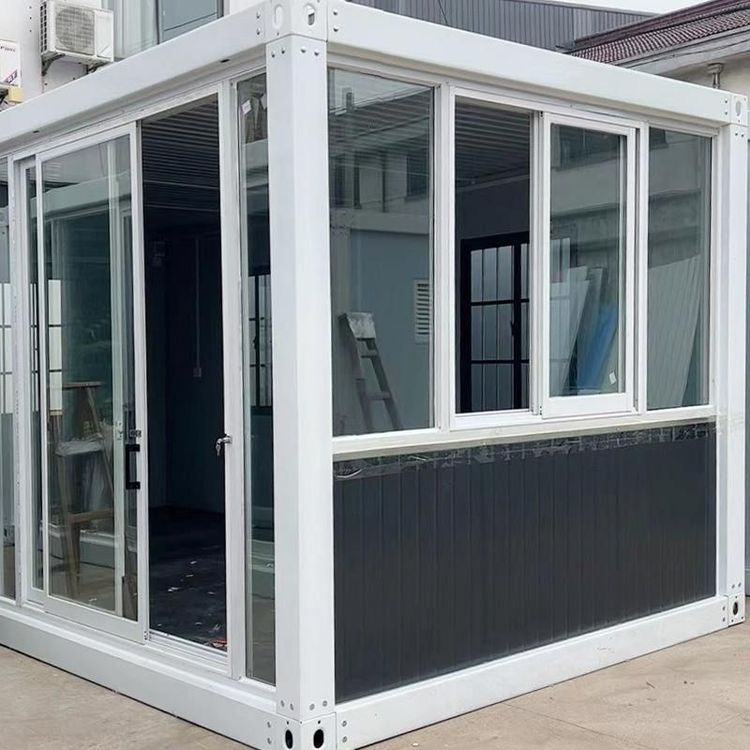
The construction of container houses in Bishan features rapid assembly, easy mobility, low cost, diverse functions, and environmental protection and energy efficiency. The key construction points include foundation treatment, assembly and connection, functional system installation, and acceptance and maintenance.

I. Construction Characteristics
- Rapid Assembly and Mobility Container houses adopt a modular design, with components prefabricated in factories and simply assembled on-site without complex foundation construction. For example, products from Chongqing Pinjian Integrated Housing Co., Ltd. can be installed without a foundation, are lightweight, and easy to transport, making them suitable for temporary or frequently relocated scenarios such as construction site dormitories and emergency rescue housing.
- Functionality and Safety Container houses offer sound insulation, wind resistance, fire resistance, and earthquake resistance, with corrosion-resistant materials and a long service life. Their sturdy structure meets the safety specifications for temporary buildings, such as wind resistance levels conforming to the "General Technical Conditions for Prefabricated Integrated Houses" (JG/T550—2025) and fire resistance passing third-party testing and certification.
- Environmental Protection and Economy Compared to traditional brick-and-mortar temporary buildings, container houses generate only 1.2 kg/㎡ of construction waste during demolition and reduce carbon emissions by over 80%, aligning with the direction of green construction transformation. Additionally, they are cost-effective, reusable, and have significantly lower long-term operation and maintenance costs than traditional buildings.
II. Key Construction Process Points
- Foundation Treatment Select an appropriate foundation form based on site conditions, such as direct placement after ground leveling, laying a concrete垫层 (concrete cushion), or using steel structure supports. Ensure the ground bearing capacity meets the weight requirements of the container to avoid uneven settlement.
- Assembly and Connection Use standardized connectors (such as bolts and corner fittings) to secure container units and ensure structural stability. For multi-story or complex layouts, reinforce connection nodes through welding or additional steel structures.
- Functional System Installation Complete the installation of internal facilities such as doors, windows, electrical wiring, water supply and drainage pipes, and ventilation systems, and perform sealing treatments to prevent leakage. For special scenarios (such as refrigerated containers), integrate refrigeration equipment and temperature control systems.
- Acceptance and Maintenance Conduct safety inspections after construction, including structural strength, fire resistance, and functional system operation tests. Regular maintenance should involve checking for loose connectors, peeling anti-corrosion coatings, and other issues to extend the service life.