
Biological Mobile Toilet
A biological mobile toilet is a type of public toilet that uses solid-liquid separation technology and microbial decomposition to achieve harmless treatment of excreta.
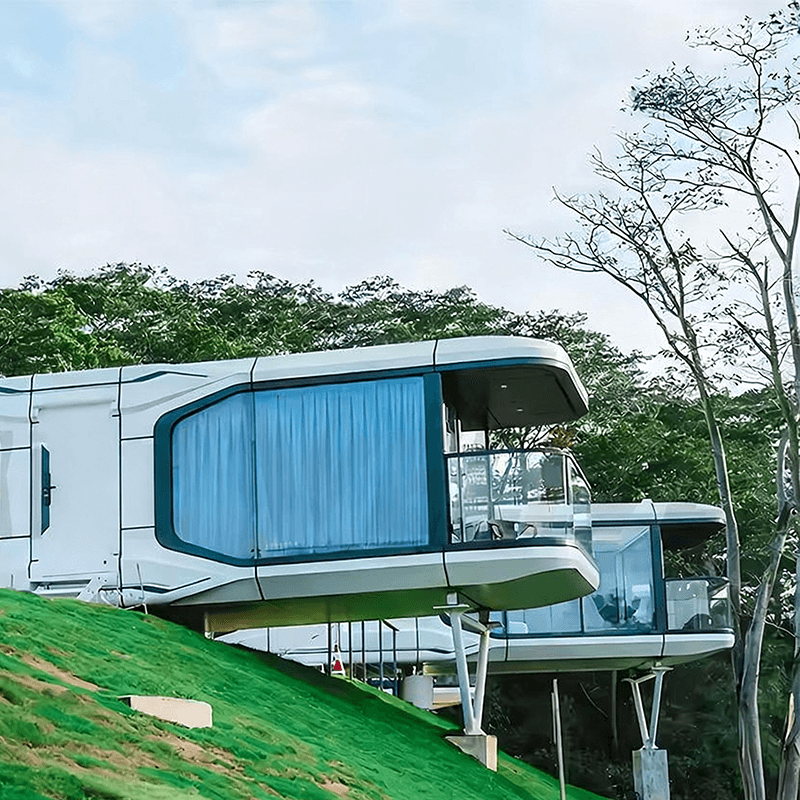
I. Core Technology and Environmental Characteristics The core technologies of biological mobile toilets are solid-liquid separation and microbial decomposition. During initial operation, 70-80 kilograms of water need to be injected at one time to maintain the activity of microbial communities. Subsequently, feces are decomposed by microbial communities into carbon dioxide, water, and organic fertilizer, achieving the environmental goal of flush-free, zero-emission, and pollution-free. Its water-saving advantage is significant, especially suitable for water-scarce areas, and the decomposition products can be recycled as organic fertilizer, reducing resource waste.
II. Structural Design and Durability The toilet body adopts a steel-frame cement composite structure, with excellent thermal insulation performance and a service life of over 20 years. The steel frame structure can operate in environments as low as minus 28 degrees Celsius. Some models are equipped with an intelligent temperature control system, which can operate at temperatures exceeding 60 degrees Celsius and has sterilization and disinfection functions to ensure hygiene and safety. In addition, modern technology combined with 5G and the Internet of Things enables remote monitoring, allowing real-time monitoring of equipment status and improving management efficiency.
III. Application Scenarios and Cost-Effectiveness This technology is widely used in scenic spots, alpine and water-scarce areas, and public places. For example, this technology was used in 13 venues of the 2022 Beijing Winter Olympics, with the construction cost of a single toilet stall being 100,000 yuan lower than that of a traditional water toilet; the carbon-neutral public toilets deployed in Chengdu in 2024 save more than 3,000 tons of water per year. Market product prices range from several hundred yuan to tens of thousands of yuan, supporting customization. They are suitable for a wide range of temperatures (-30-50°C, -20-60°C, etc.) and are made of materials such as color steel plates, carved plates, and aluminum-plastic plates to meet diverse needs.
IV. Maintenance and Operating Costs The annual maintenance cost is approximately 15,000 yuan. The interval for replacing microbial strains is 3-6 months, with a cost of about 300-500 yuan per toilet stall (prices vary between domestic and imported strains). The daily power consumption is about 3-5 degrees (depending on the number of users). Although the initial investment and operating costs need to be comprehensively considered, its water-saving, environmental protection, and long-term durability significantly reduce the overall usage cost, making it especially suitable for scenarios with limited resources or high environmental protection requirements.
V. Technology Upgrades and Obsolescence Plans The early plastic bag packaging technology has been gradually phased out due to high costs. Modern biological mobile toilets focus more on intelligence and sustainability, improving user experience and environmental benefits through technological iterations.



