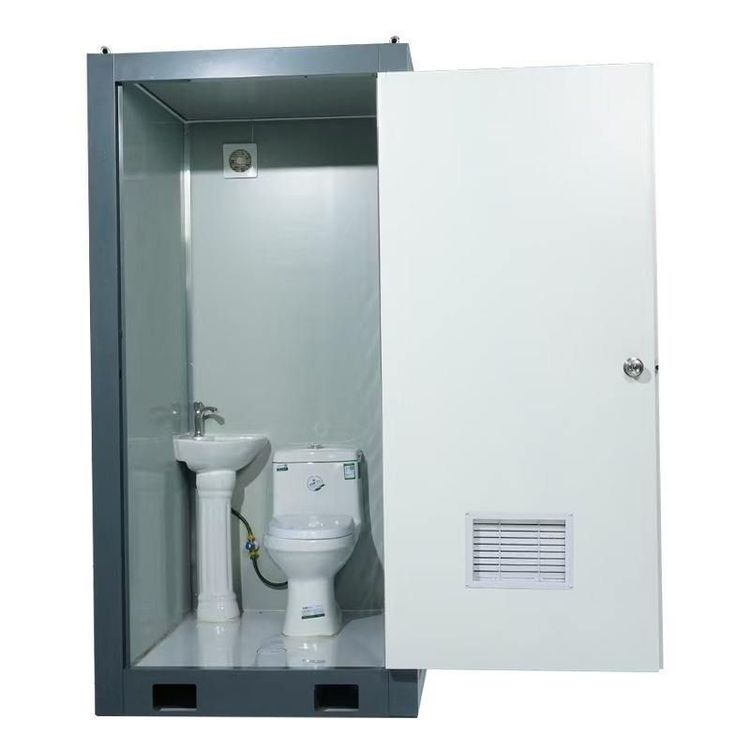
Principle of Biodegradable Mobile Toilets
The core principle of biodegradable mobile toilets is to utilize microorganisms or enzymes to decompose human waste, achieving harmless treatment through natural decomposition mechanisms without the need for chemical additives, thereby avoiding secondary pollution.

1. Role of the Degradation Chamber and Microbial Flora
Biodegradable mobile toilets are equipped with a degradation chamber containing specific microbial flora. These microorganisms can efficiently decompose organic matter under suitable temperature (usually maintained through constant heating) and humidity conditions. Their decomposition process is similar to the composting principle in nature but has been technically optimized to enhance efficiency and hygiene. Through metabolic activities, microorganisms convert organic matter in waste into carbon dioxide, water, and a small amount of biomass, achieving material recycling.
2. Feces-Urine Separation and Differential Treatment
The toilet adopts a feces-urine separation design, treating feces and urine separately:
- Feces Treatment: Through steps such as stirring, deodorization, fermentation, decomposition, and evaporation, mechanical transmission devices ensure thorough mixing of waste with microbial strains. Constant heating accelerates microbial activity, gradually converting feces into carbon dioxide, water vapor, and a small amount of ammonia (released into the air). The remaining approximately 5% of solid components are further processed by microorganisms into non-toxic, odorless high-quality organic fertilizer, suitable for agricultural or landscaping use.
- Urine Treatment: After deodorization and decomposition, urine is converted into reclaimed water (water that can be reused), which can be directly discharged or used for non-potable purposes such as toilet flushing, reducing water waste.
3. Technological Advantages and Environmental Characteristics
- No Chemical Additives: The entire process relies on natural microbial decomposition without the need for chemical agents, avoiding secondary pollution to the environment.
- Efficient and Hygienic: By optimizing microbial flora and process conditions (such as temperature and humidity control), decomposition efficiency is significantly higher than traditional composting, and it effectively inhibits pathogens and odors.
- Resource Recycling: Solid residues are converted into organic fertilizer, achieving waste resource utilization; reclaimed water recycling further conserves water resources, aligning with sustainable development principles.
Biodegradable mobile toilets provide an environmentally friendly and efficient sanitation solution for outdoor and temporary venues by simulating and optimizing natural decomposition processes, embodying the deep integration of biotechnology and environmental engineering.