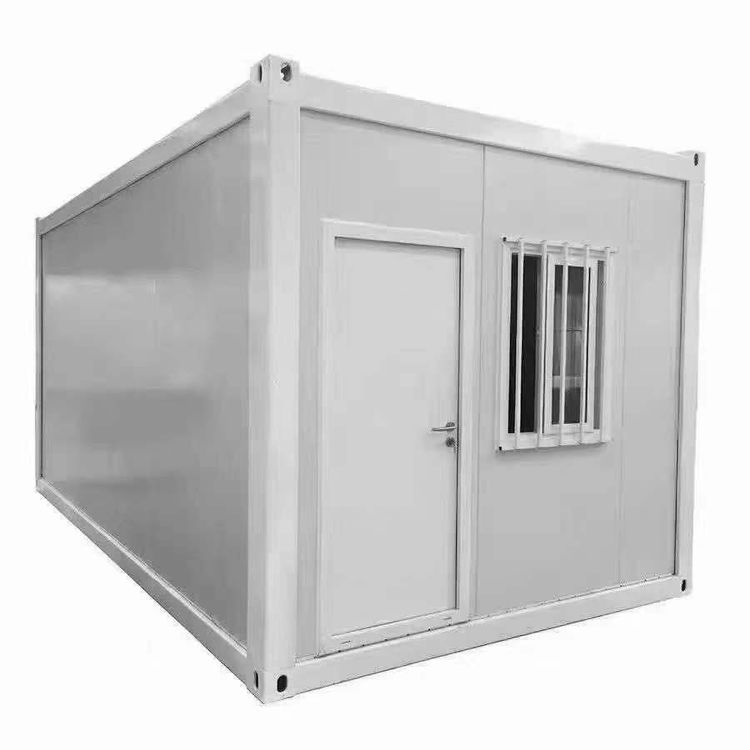
Benzene Board Insulated Prefabricated House
Benzene board (taking extruded polystyrene board, XPS board, as an example) plays a crucial role in insulated prefabricated houses, offering efficient insulation, moisture resistance, and compression resistance. It is a commonly used material that meets national standards.

1. Excellent Thermal Insulation Performance
The XPS board features a uniform and tightly arranged microcellular closed-cell honeycomb structure with over 99% closed cells. This structure significantly reduces the material's thermal conductivity (typically ≤0.030 W/(m·K)), resulting in exceptional and long-lasting thermal insulation. In insulated prefabricated houses, XPS boards effectively minimize heat transfer between indoors and outdoors, reducing energy consumption. They are particularly suitable for areas requiring long-term stable temperatures, such as roofs and exterior walls. The closed-cell structure also prevents air convection, further enhancing thermal insulation performance, even in low-temperature environments.
2. Strong Moisture Resistance and Dimensional Stability
The XPS board has an extremely low water absorption rate by volume (typically ≤1.5%). It maintains excellent thermal performance and dimensional stability even under long-term exposure to high humidity, freeze-thaw cycles, or direct immersion in water. This characteristic makes it an ideal choice for moist environments in insulated prefabricated houses, such as underfloor heating floors and basement walls. For example, in underfloor heating systems, XPS boards prevent an increase in thermal conductivity or deformation due to water absorption, ensuring long-term flatness and stable thermal insulation of the floor.
3. High Compressive Strength for Long-Term Load Bearing
The XPS board exhibits excellent compressive strength (ranging from 150 to 500 kPa, depending on thickness and density), enabling it to withstand long-term heavy loads on engineering floors. In insulated prefabricated houses, it is commonly used in areas requiring load-bearing capacity, such as roof insulation and waterproofing layers, and underfloor heating insulation layers. Even under prolonged pressure, it is less likely to deform or be damaged, ensuring structural safety and service life.
4. Compliance with National Standards and Wide Range of Applications
According to the national standard GB/T 30595-2024 'Extruded Polystyrene (XPS) Board System Materials for Building Insulation', XPS boards are suitable for prefabricated concrete sandwich insulation exterior wall panel systems, roof insulation systems, and other applications where extruded polystyrene board is used as the insulation material. The material properties, construction techniques, and acceptance criteria are clearly specified, ensuring safety and reliability in insulated prefabricated houses.
Summary: With its advantages of efficient thermal insulation, moisture resistance, compression resistance, and standardized applications, XPS board has become an indispensable material in insulated prefabricated houses. It is particularly suitable for key areas such as roofs, exterior walls, and underfloor heating, significantly enhancing the energy efficiency and durability of houses.