
What Are the Benefits of Container Houses
Container houses offer numerous advantages, including flexibility and portability, cost control, structural stability, rapid deployment, environmental sustainability, safety and durability, as well as aesthetic customization. Details are as follows:
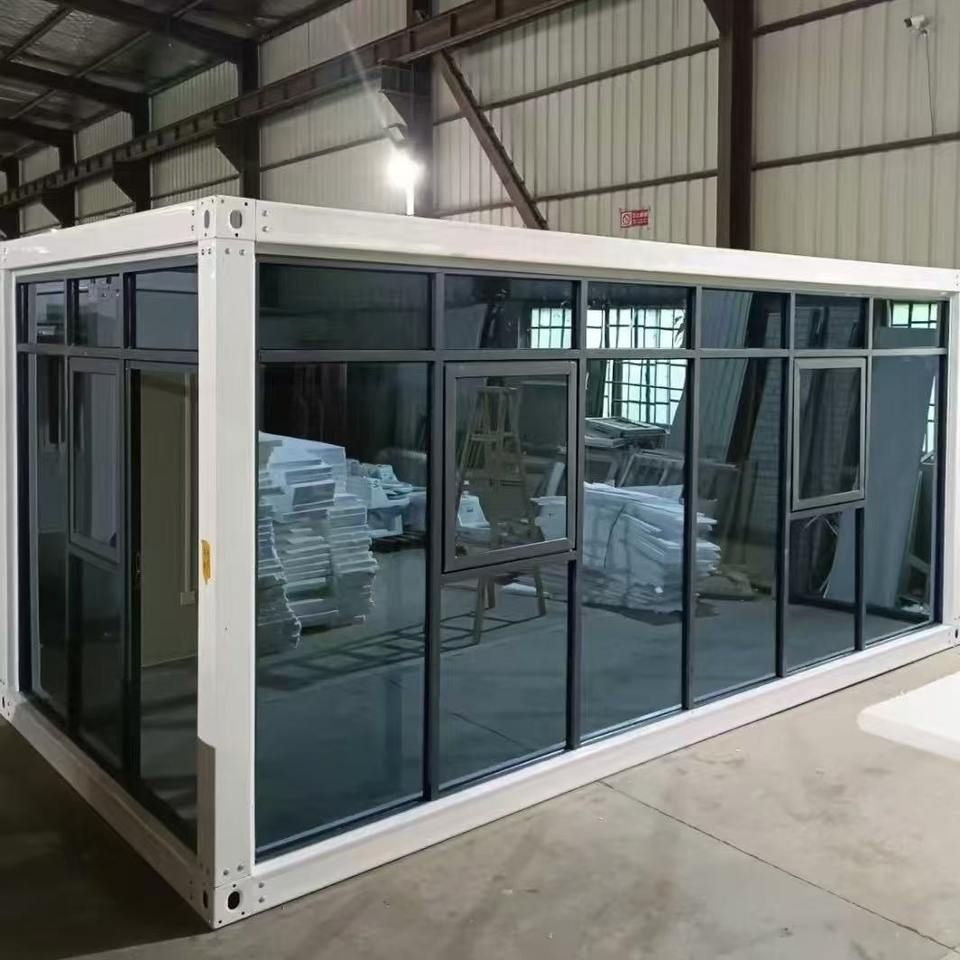
Flexibility and Portability with Cost Control: Container houses use containers as their basic structural modules, allowing for free movement, overall relocation, and rapid assembly, transfer, and disassembly according to needs. They are highly suitable for scenarios such as temporary construction site offices, emergency accommodations, and mobile office spaces. Additionally, using existing containers as base materials saves significant construction time and costs, making them relatively affordable. For example, a decorated container with an interior area of approximately 13 square meters may sell for around 12,000 yuan, translating to nearly 900 yuan per square meter, which is quite cost-effective.
Structural Stability and Safety with Durability: They employ standardized steel frame structures, with some products featuring fully steel frameworks capable of withstanding harsh weather conditions and natural disasters. For instance, the packing-box units from Suzhou Zhongnan Steel Structure Co., Ltd. have been tested to withstand wind speeds of up to 12 levels and earthquakes of up to 8 levels, with a frame deformation rate of only 0.18%, well below the industry's acceptable threshold of 0.3%. The steel plate exteriors are corrosion-resistant and acid-resistant, preventing rust and cracking, and offering a service life of over 20 years.
Rapid Deployment and Efficient Utilization: Compared to traditional buildings, construction periods can be reduced by over 60%, making them particularly suitable for emergency projects and scenarios with tight deadlines. For example, the Suzhou Zhongnan team completed the delivery of 1,000 accommodation modules and supporting facilities within three months using a 'factory prefabrication + on-site rapid assembly' model, reducing the average industry construction period by 40%.
Environmental Sustainability: The construction process generates minimal construction waste, with a steel recycling rate exceeding 95%. During relocation, construction waste is reduced by 80% compared to traditional construction sites, aligning with low-carbon and environmentally friendly principles.
Aesthetic Customization: They can be designed and painted in various shapes according to personal preferences, offering a bright and attractive appearance that meets diverse aesthetic needs.



