Beihai Container House
Container houses in Beihai are residential or functional buildings transformed from retired freight containers, known for their robust structure and recyclability, widely used in coastal areas.

I. Basic Characteristics and Climate Adaptability
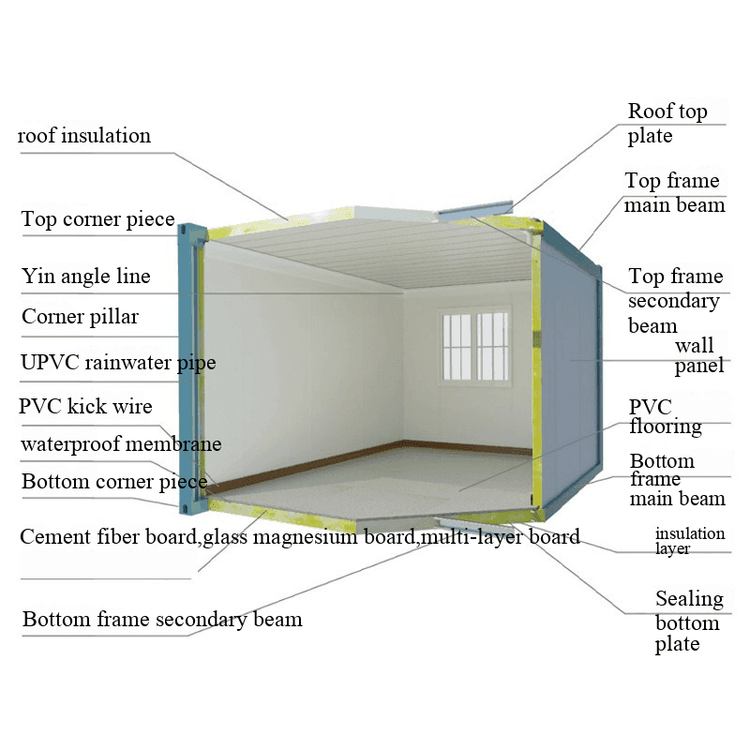
Container houses originate from the shipping industry, featuring standardized steel structures with waterproof and moisture-proof properties, and uniform dimensions (e.g., 6 meters or 12 meters in length and 2.4 meters in width). Beihai has a maritime climate with high humidity and salt content in the air, requiring additional anti-corrosion treatment for the container bodies, such as applying special protective paint and regular maintenance. Design should emphasize ventilation, improving indoor air circulation through increased windows and ventilation facilities to prevent moisture accumulation.
II. Functional Uses and Spatial Design
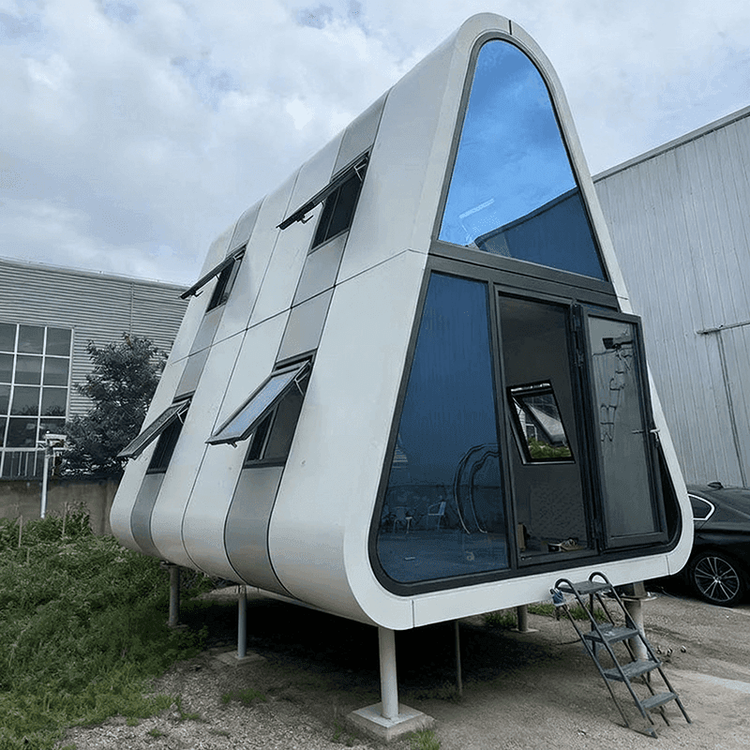
In Beihai, container houses are commonly used for temporary offices, tourist accommodations, warehousing, and as project command centers, worker dormitories, and scenic area reception centers. Space can be expanded by combining multiple containers, with interior decoration focusing on natural light and views, especially designing large windows facing the sea. For example, a 6-meter-long container can be horizontally spliced to form an open living area, meeting diverse needs.
III. Performance Optimization and Modification Techniques
- Thermal Insulation: Steel structures are prone to heat conduction, necessitating the installation of polyurethane foam or rock wool insulation layers inside the containers to enhance comfort in hot summers and mild winters.
- Structural Safety: When cutting openings (e.g., for doors and windows), the surrounding frames should be reinforced to prevent deformation caused by stress concentration.
- Electrical and Plumbing Systems: Electrical circuits should use flame-retardant piping with grounding protection; plumbing systems need to be waterproof and sealed to prevent salt spray corrosion.
- Foundation Installation: Containers are typically installed on concrete or steel foundations to ensure stability, especially avoiding soft soil foundations.
IV. Advantages and Limitations
- Advantages: Short construction period (30%-50% shorter than traditional buildings), high mobility, and resource recycling (reuse of retired containers).
- Limitations: Limited space in a single container requires clever design; sound insulation requires additional soundproofing materials; long-term maintenance requires regular inspection of structural integrity and anti-corrosion coatings.
V. Site Selection and Cost
Site selection should consider high terrain and good drainage to avoid shortened lifespan due to moisture, while coordinating with the surrounding landscape. Prices vary significantly by brand and type, ranging from 1100 yuan per square meter to 4350 yuan per set, with suppliers including Hebei Zhongzhu Housing Technology Co., Ltd.