
Baotou Mobile Toilet Outdoor Service
Baotou mobile toilet outdoor service provides flexible solutions for temporary public health needs through modular design, dynamic allocation, and environmental adaptability technologies. Its core features and service models are as follows:
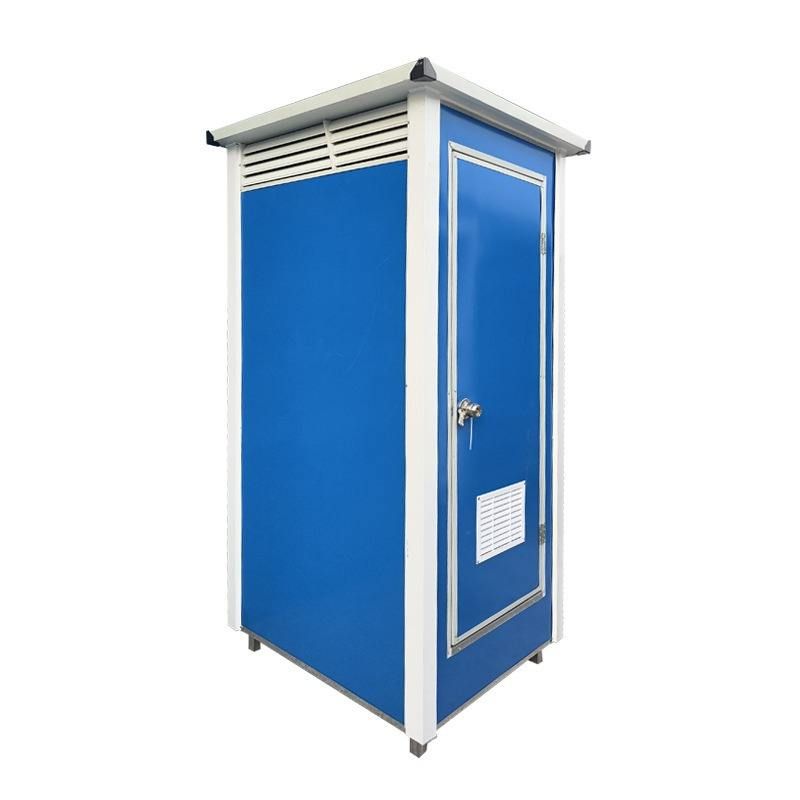
1. Modular Service System Construction
The mobile toilet consists of a sanitation unit, a recycling treatment unit, and a logistics support unit. The sanitation unit provides basic toilet functions, equipped with independent squatting positions or toilets. The recycling treatment unit adopts a pipeless network technology, treating waste through either a packaging system (using biodegradable plastic film to seal excreta) or a recycling system (using microorganisms to degrade flushing water), reducing dependence on municipal sewage networks. The logistics support unit is responsible for cleaning and maintenance, consumable replenishment, and transportation allocation, ensuring rapid integration of the equipment into outdoor environments. For example, a single packaged toilet requires replacement of the waste storage bag after 4-6 hours of full-load use, and the logistics team needs to conduct regular inspections to maintain service continuity.
2. Dynamic Resource Allocation Mechanism
The service is driven by demand signals, balancing migration costs, usage frequency, and maintenance radius through a dynamic scheduling model. For example, idle equipment is reallocated from construction sites to tourist attractions or large event venues in winter, and vice versa in summer, achieving temporal utilization of spatial resources. This model reduces equipment idle rates while meeting seasonal fluctuations in pedestrian traffic.
3. Environmental Adaptability Technologies
For Baotou's harsh winter climate, water tanks and pipes are designed with heating tapes or vacuum insulation layers to prevent freezing and bursting at temperatures as low as -30°C. In summer, the ventilation system is enhanced to lower internal temperatures through negative pressure drafting or natural convection. The pipeless network treatment system adapts to outdoor scenarios, avoiding service interruptions caused by the absence of sewage networks.
4. Full-Cycle Service Process
- Pre-planning: Calculate the number of toilets, gender ratio, and discharge intervals based on event scale and pedestrian flow direction. For example, marathon events require deployment of one toilet every 500 meters.
- On-site Deployment: Includes ground leveling, anti-tipping fixation, signage setup, and installation of night lighting and ventilation equipment to ensure safety and convenience.
- Dynamic Maintenance: Regularly replenish toilet paper and hand sanitizer, empty waste storage tanks, and urgently replace parts cracked by low temperatures to ensure service stability.
5. Typical Application Scenarios and Value
Covering large-scale Naadam festivals, temporary markets, marathon events, music festivals, and other scenarios with sudden surges in pedestrian traffic, the service reduces risks of open defecation, environmental pollution, and pathogen transmission through temporary deployment. Its value lies in enhancing local public health carrying capacity with movable resource units and strengthening urban resilience against sudden gatherings. However, the service capacity of a single point is limited, and the long-term continuous use cost may be higher than that of fixed facilities.



