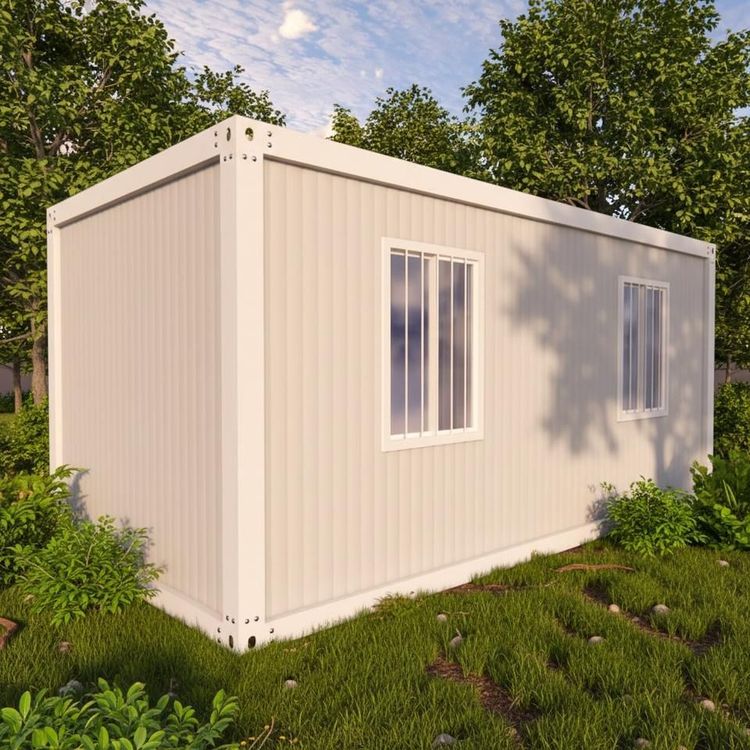
Baotou Dry Toilet Mobile Toilet
The mobile toilets transformed from dry toilets in Baotou feature flexible mobility, diverse treatment systems, high-quality materials, energy efficiency, environmental protection, and wide applicability.

In terms of mobility: Mobile toilets have different moving methods depending on their size. Smaller mobile toilets or shower rooms can be equipped with wheels in the early stage and moved manually, which is convenient and quick. Larger mobile toilets require the assistance of cranes for movement. Their design is similar to that of pavilions. For pointed-roof models, the pressure point is close to the tip, while for flat-roof models, manufacturers usually set up hooks as the lifting points for cranes to ensure safety and stability during movement.
Regarding treatment systems: There are mainly three technical approaches. The first is the water-flush type, which works similarly to traditional flush toilets. The water tank and sewage tank are integrated inside the toilet body, equipped with large-capacity freshwater tanks and sewage collection tanks. High-pressure pneumatic or electric water pumps are used to reduce the amount of water used per flush, ensuring cleanliness while conserving water resources. The second is the foam-sealing type, which covers the surface of the toilet with foam containing special surfactants to lubricate, isolate odors, and reduce water consumption for flushing. The core lies in the cooperation between the foam generator and the liquid level control system, effectively solving odor problems. The third is the microbial degradation type. Inside the public toilet is a bioreactor where specially cultivated microbial communities are added. Under aerobic conditions, they decompose excrement into water vapor, carbon dioxide, and a small amount of inorganic salt residue. The tank body needs to be equipped with a heating device and a stirring system to achieve harmless treatment of excrement.
In terms of material selection: The wall structures mostly use fiberglass-reinforced plastic (FRP) or stainless steel. FRP has fast mold forming, light weight, and good thermal insulation properties, suitable for standardized mass production. Stainless steel has higher structural strength and corrosion resistance, suitable for public environments or scenarios where chemical disinfectants are frequently used. The ventilation and deodorization system combines top exhaust and bottom intake to form a directional airflow, drawing air from the toilet compartment and treating it through activated carbon filtration or ultraviolet light deodorization equipment before discharge, effectively improving the indoor air quality of the toilet.
In addition: Mobile toilets also have the advantages of energy efficiency and environmental protection. They can collect urine by themselves and make it odorless for several months by adding special agents. After using urine to flush feces, the feces are crushed. The special agents do not contain heavy metals and phosphorus elements, can kill and inhibit bacteria, and reduce disease transmission. Highly intelligent operation avoids the possibility of cross-infection. At the same time, mobile toilets occupy a small area, can be directly installed and used, and can be disassembled and transported in a timely manner without damaging the urban environment. They are suitable for various scenarios such as factory areas, construction sites, disaster areas, filming locations for film and television crews, and performance venues.