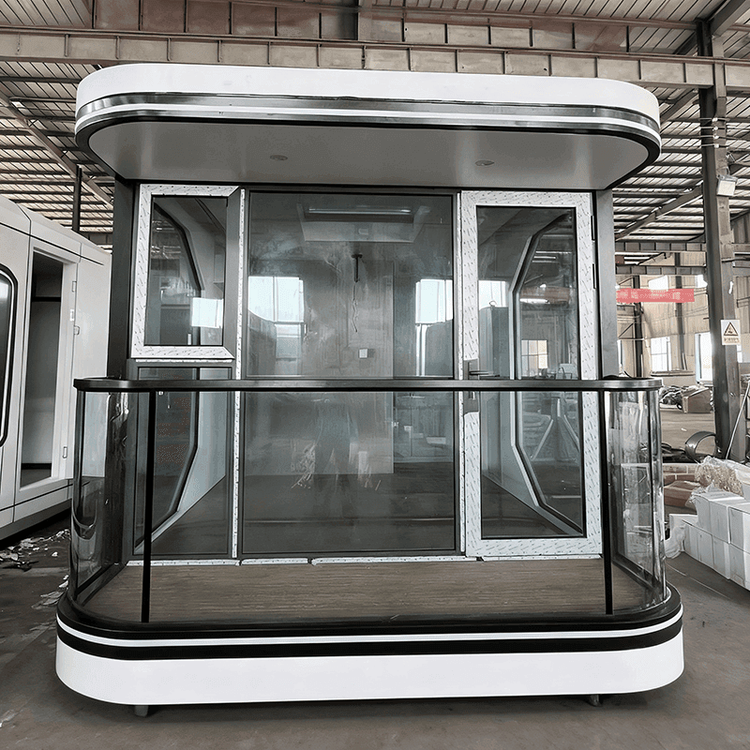
Installation of Mobile Toilets in Banan District
The installation of mobile toilets in Banan District primarily relies on modular integration technology, achieving efficient deployment through prefabricated functional units, standardized interfaces, and adaptive design. The specific technical highlights and service models are as follows:

I. Core Levels of Modular Integration Technology
Prefabrication of Functional Units
Core modules such as toilet stalls and handwashing areas are fully fitted out in factories, including interior decoration, pipeline embedding, and sanitary ware installation, forming standardized 'functional packages'. On-site construction only requires positioning the modules using lifting equipment and securing them with bolts or quick connectors, significantly shortening the construction period. For example, the factory prefabrication cycle for a single toilet stall module can be controlled within 3-5 days, with on-site assembly taking only 2-4 hours.Standardization of Interface Systems
Structural interfaces adopt uniform dimensions and connection methods (such as flange plates or snap-fit designs), with quick connectors pre-installed for water supply and drainage interfaces, and standardized sockets and wiring for electrical systems. Modules achieve water and electricity connectivity through a 'plug-and-play' model, avoiding on-site welding or cutting operations, ensuring installation accuracy and safety. For instance, a certain manufacturer's product supports horizontal expansion to 10 toilet stalls and vertical stacking up to 3 floors, with capacity expansion achievable by simply adjusting interface connections.Adaptive Design of the Overall System
Customized adjustments are made to module structural strength, thermal insulation performance, and sewage disposal plans based on the geological conditions of Banan District (such as reinforcing module bottom supports for soft soil foundations), climatic characteristics (such as increasing ventilation or using thermal insulation materials for high summer temperatures), and environmental protection requirements (such as configuring ecological sewage treatment systems for scenic areas). Additionally, personalized features like barrier-free access and母婴护理台 (maternity and baby care stations) can be added to meet different scenario needs.
II. Installation Process and Service Model
Some manufacturers in Banan District offer mobile toilet rental services, with their products typically adopting the aforementioned technologies to support rapid assembly and disassembly. The specific process includes:
- Preliminary Survey: Suppliers dispatch personnel to assess site dimensions, foundation bearing capacity, and water and electricity access points, determining the module layout plan;
- Transportation and Lifting: Prefabricated modules are transported using flatbed trucks and positioned on-site using truck-mounted cranes or forklifts;
- Interface Connection: Structural, water and electricity, and sewage systems are connected according to standardized procedures, with pressure testing and leak checks conducted;
- Acceptance and Handover: Module functionality (such as flushing, lighting, ventilation) and safety (such as non-slip floors, emergency call devices) are inspected, and the toilets are put into use upon confirmation of compliance.
For further technical details or service quotations, local suppliers can be contacted to obtain the 'Modular Mobile Toilet Installation Specifications' or 'Interface Standardization Manual'.