
Aunt's Mobile Toilet
Mobile toilets are facilities that can be moved as a whole and provide toilet services to the public. They are commonly found in rural areas, event venues, and construction sites, and users should pay attention to safety and maintenance status during use.
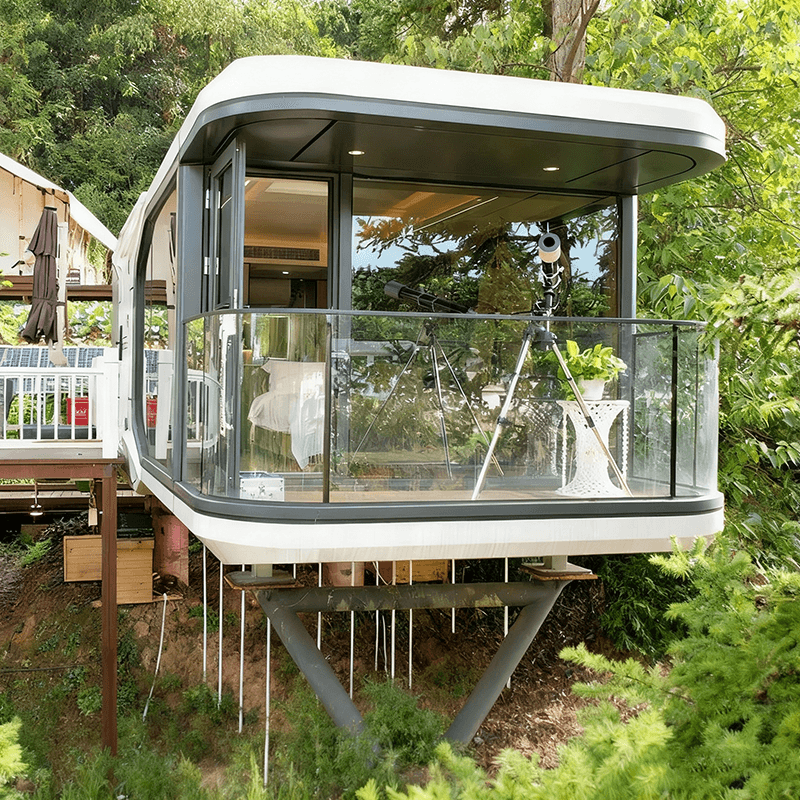
The core feature of mobile toilets is their mobility, allowing them to be flexibly placed in fixed or temporary locations according to demand, providing convenient toilet services to the public. In the Suzhou area, the supply of rural outdoor mobile toilets has become an important sanitation guarantee for rural life, large-scale outdoor events, and construction sites. These toilets come in various types, including single-unit, towable, water-saving and environmentally friendly, and barrier-free models, meeting the usage needs of different scenarios. For example, single-unit mobile toilets have a compact structure and are suitable for locations with limited space; towable models are easy to transport and quickly deploy, making them suitable for temporary events or emergency scenarios; water-saving and environmentally friendly models reduce water consumption by optimizing the flushing system, aligning with sustainable development concepts; barrier-free models are specifically designed for individuals with mobility impairments, reflecting humanistic care.
However, there are also potential risks in the actual use of mobile toilets. There has been a case where a woman, while using a mobile toilet, ended up on a highway for a distance because the toilet was mistakenly loaded onto a truck. Although this extreme event was accidental, it exposed loopholes in the operation and maintenance management of mobile toilets. To ensure safety during use, users should pay attention to the following points:
- Choose a reputable supplier: Prioritize suppliers with qualifications and a good reputation to ensure reliable toilet quality and maintenance services.
- Check the fixing devices: Before use, confirm that the toilet is securely fixed to prevent tipping or displacement due to movement or external forces.
- Monitor the maintenance status: Regularly inspect the internal facilities of the toilet, such as the flushing system, lighting, and ventilation, to ensure normal functionality.
- Follow usage guidelines: Avoid placing heavy objects or engaging in dangerous behaviors inside the toilet to prevent accidents.
In addition, the operation and maintenance personnel of mobile toilets should also strengthen management, regularly inspect and maintain the equipment, and mark usage instructions and safety warnings in prominent locations on the toilets to reduce risks.



